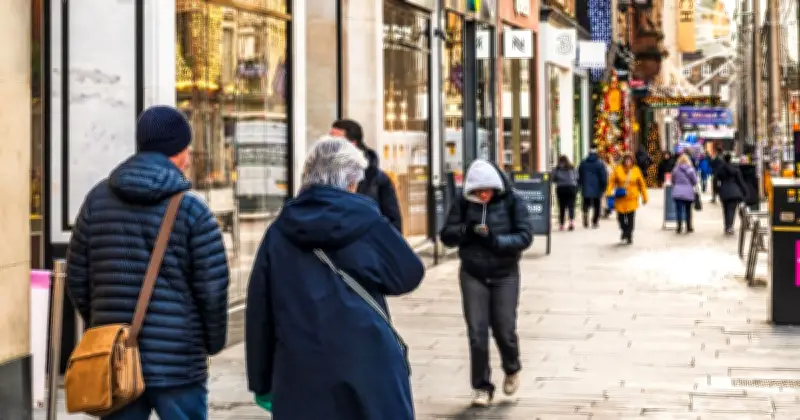
New data has revealed that UK high street footfall decreased by 3.1% in August year-on-year, as industry leaders urge the government to take action on retail costs.
The figures, from BRC-Sensormatic, show total UK footfall fell by 1.7% in August, including a 0.5% decrease in shopping centres. High street staples such as Poundland, River Island and New Look have disappeared from some towns and cities in recent years, alongside bank branches including NatWest, Halifax, Lloyds and Santander.
Regional variations in footfall
Footfall decreased by 0.1% in Scotland, 1.3% in Wales and 2.1% in England, but increased by 2.8% in Northern Ireland. The year-on-year decline in August is an improvement on July's 2.1% drop compared with the same period in 2025.

Some retail stores and high street amenities have been replaced by a rising number of takeaways and vape shops, prompting local concerns about the changing nature of high streets.
Industry calls for lower costs
Helen Dickinson, chief executive of the British Retail Consortium, said high street retailers need lower costs to combat these struggles. "With his first budget weeks away, chancellor Healey has a chance to throw Britain's high streets a lifeline," she said.
"Retail faces cost pressures, and households are watching every penny. Government action on business rates and energy costs would help keep prices down, support investment, and sustain the jobs and communities that retail underpins across the country."
Retail parks buck the trend
Andy Sumpter, head of consulting and analytics - EMEA for Sensormatic, said: "August delivered a modest improvement for UK retail footfall, with total visits down -1.7% year-on-year."
"While still firmly in negative territory, this marks a welcome improvement on both July and June, suggesting the pace of decline may be beginning to ease. However, it is worth remembering that this remains negative growth against last year's already modest performance, underlining the continued pressure facing retailers."
He added: "This performance was once again driven by retail parks, which recorded growth of +1.0%, making them the only retail destination to attract more visitors than a year ago. High streets remained under the greatest pressure at -3.1%, while shopping centres were comparatively resilient at -0.5%."
"Above-average temperatures may have continued to influence behaviour, although conditions were less extreme than July's record-breaking heat. Meanwhile, rising inflation, now at a two-year high, is likely placing renewed pressure on disposable incomes."