
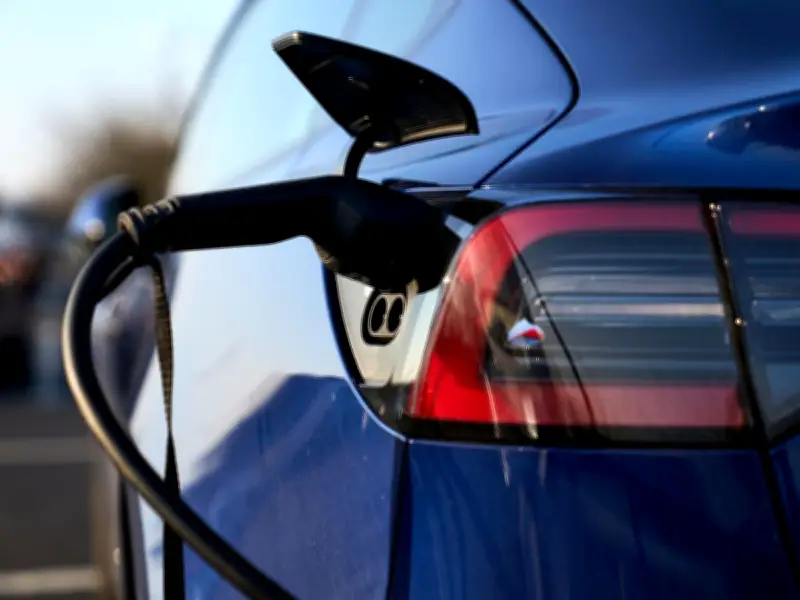
The UK Government has confirmed that owners of electric vehicles (EVs) will be required to pay a new pay-per-mile charge from April 2028, ending their exemption from road usage taxes. The scheme, named eVED (Electric Vehicle Excise Duty), will be administered by the DVLA and is designed to ensure EV drivers contribute to road maintenance and congestion, similar to fuel duty paid by petrol and diesel vehicle owners.
Details of the Pay-Per-Mile Scheme
Under the new system, EV drivers will pay 3p per mile, while owners of plug-in hybrid vehicles will be charged a lower rate of 1.5p per mile. These rates are significantly less than the 6p per mile that drivers of petrol and diesel cars currently pay in fuel duty. The Government stated that the rates will be adjusted annually from 2029-2030 in line with Consumer Prices Inflation (CPI) to maintain their real-terms value.
The eVED charge will be calculated based on driver mileage estimates, with an upfront payment required. Drivers can opt to spread the cost through monthly payments, similar to existing road tax arrangements. At the end of each year, drivers must submit their actual mileage reading, verified by the car's annual MOT or, for new cars, around the second or third registration anniversary. Any outstanding balance can be paid off or spread over the following 12 months.
Impact on New and Existing EV Owners
For new electric cars, purchasers will have the option to include the eVED mileage in the on-the-road pricing of the vehicle, or they can arrange payment independently. The Government has ruled out taxing drivers based on when and where they drive, but EV owners will still be required to pay eVED when travelling abroad.
While not currently a policy, the Government said it 'welcomes' an investigation into on-board telematics data that would relay mileage in real time. However, the scheme has faced criticism. Vicky Edmonds from the Electric Vehicle Association England stated: "The Government has made one welcome change for newer EVs, but the wider scheme remains too complex, risks leaving people out of pocket and fails to give drivers the confidence they need. At such a crucial point in the switch to electric, ministers should be making the system simpler, fairer and easier to understand, not pressing ahead with a policy whose key faults remain unresolved."
Rationale Behind the Charge
The Government explained that all vehicles contribute to congestion and road wear and tear, but drivers of petrol and diesel vehicles pay fuel duty at the pump to cover their share. Electric vehicle drivers currently do not pay an equivalent tax, prompting the introduction of eVED to ensure fairness across all road users.




