
From April 6, 2027, most unused pension funds and death benefits will be pulled into the inheritance tax (IHT) net for the first time, marking one of the biggest tax shake-ups in history. Critics have dubbed it a "tombstone lottery," as the amount loved ones inherit will now depend entirely on whether the benefactor survives past the 2027 deadline.
Double Taxation Threat
"Pensions have long been a tax-efficient way to pass on wealth," said Jason Hollands, managing director at wealth manager Evelyn Partners. "But that advantage is now being stripped away." Around 54% of total UK household wealth is held in private pensions, according to a new report by the Institute of Fiscal Studies, making this one of people's most valuable assets.
"In some cases, families could be hit especially hard," added Hollands. He explained that if someone dies after 75, their loved ones may face the prospect of IHT on their pension pot, as well as being clobbered by income tax at their marginal rate, creating a punishing double tax hit. The changes mean some families could face tax bills of 40% on an unused pension pot as well as potentially up to 45% income tax when they draw money from an inherited pension.
Government's Rationale
The new rules aim to ensure pensions are used mainly for retirement income rather than for inheritance planning. Chancellor Rachel Reeves described the move as "closing a big loophole" when she announced the plans during her maiden Budget in 2024. Coupled with freezing the tax-free allowances, the nil-rate band of £325,000 and residence nil-rate band (£175,000) until 2031, more people will be caught in the IHT net for the first time.
Government figures estimate a further 10,500 estates will be slapped with the tax, while 38,500 estates will be landed with higher tax bills. Despite this, HMRC says more than 90% of UK estates are still forecast to have no IHT liability in each of the next five years.
Impact on Savers
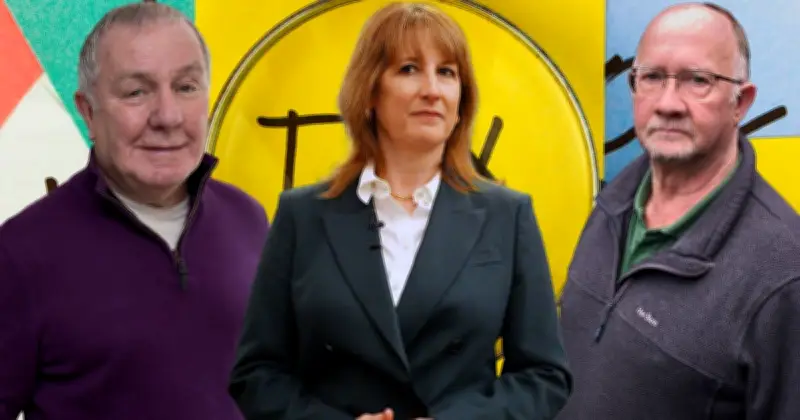
For Nigel Botterill, a 60-year-old father of four from Solihull and CEO of Entrepreneurs Circle, the changes represent an "unrelenting" squeeze on those the government aims to protect – the working people. "It's like a game of squash, and the government is trying to win every point," said Mr Botterill. "We've worked so hard. Now, they're undermining a set of pension assumptions that have been in place for years." He argues the "double tax" on pensions, which could see some pots taxed by up to 85% in a worst-case scenario, is punitive.
"There's no way that's fair, it's not equitable," he said. To protect his family and business, Mr Botterill has already begun passing chunks of the company to his children. He's also stopped contributing to his pension, a move the government have been tirelessly trying to discourage. "It's ridiculous when you think about it," he said. "For years, governments have told people to save, invest and take responsibility for their own future. Now, because of the policies they've introduced, I've had to completely rethink that."
The new rules have forced Mr Botterill to take out new life insurance policies, which is money he can't invest in his business. "It stops me from hiring people," he said. "Everyone is thinking harder, slowing down their expansion, and their willingness to commit to employing people."
Unmarried Couples Hit Hard
Keith Robinson, 69, from Patchington, South Staffordshire, has lived with his partner Nicky for 35 years. They have a life together, a home and a daughter, but they don't have a marriage certificate. Under the new rules, Keith realised that his defined contribution pension, which had previously been ring-fenced, would be dragged into his estate, likely pushing him well over the IHT threshold.
"It's quite complicated if people aren't married," he explained. "Previously, my pension wouldn't have been a concern. Now, we're going to have to tie the knot before death gets me, so to speak." Married couples are afforded a huge IHT perk; when one spouse dies, all of their assets can be left to the surviving spouse free of tax. Any unused nil-rate band and residence nil rate band (RNRB), which is worth up to £175,000 on property handed to a direct descendant, is also transferred to the surviving spouse. This means married couples could pass on up to £1 million of assets tax-free to their family. Couples who are just cohabitating do not get this perk.
Keith also pointed out the strategic dilemma created by Reeves's Budget – that he has been living off his ISAs to let his pension grow tax-free. Now, that prudence feels like a trap. "It's good in one way," he said. "But the bigger my pension is, the more it'll get taxed when I die."
Shift in Perspective
Conversely, retired solicitor Julian Ives, from Neston, Cheshire, said he was furious when he first heard about the government's plan, but his view has since changed. Currently, Julian, 78, is drawing down on a Self-Invested Personal Pension (SIPP). Any money left in the SIPP when he dies will go to his wife, but when she passes, unused funds left in the pot to the couple's loved ones would be subject to IHT from next April.
"I was up in arms about the changes, but in one way it means pensions are coming back to what they should be: an income for retirement, rather than estate planning," he said. "I welcome that. Pensions were never meant to take on the kind of role they have over the past 10 years."
Revenue Projections
The Treasury raked in £8.5 billion in IHT between April 2025 and March 2026, marking a £200 million increase on the same period the year before. Frozen tax thresholds and soaring house prices have done much of the heavy lifting so far. Taking the policies announced in the October 2024 Budget into account, the Office for Budget Responsibility (OBR) forecasts receipts of £15 billion in 2030/31.
A spokesperson from HM Treasury said: "We continue to incentivise pension savings for their intended purpose of funding retirement instead of being openly used as a vehicle to transfer wealth – more than 90% of estates each year will continue to pay no inheritance tax after these and other changes."
Planning Strategies
According to Evelyn Partners' Jason Hollands, these looming changes are prompting a radical rethink among his clients. "Some are withdrawing money early, either to spend, gift, or move into other tax-efficient options," he said. "But rushing into decisions can be risky. Pensions should now be considered as part of a wider financial strategy, not in isolation."
For many, the strategy will involve a total reversal of what once was. Rather than draining ISAs first, which was the traditional advice, retirees may now look to use their pensions as their primary source of income, effectively emptying the pot to avoid the double-tax hit while freeing up other assets to pass on during their lifetime.
One of the most effective tools remaining is lifetime gifting, but this strategy requires "careful handling," said Jason. While small annual gifts are allowed, larger sums only fall outside the estate for IHT purposes if the donor survives for seven years. "It's vital people don't give away too much too soon," warned Mr Hollands. "Retirees must make sure they can still fund their own lifestyle, rather than creating financial pressure later in life. Proper planning and cashflow modelling are essential."
For those with assets like the family business Nigel Botterill oversees, the solution may lie in specialised insurance. "Some may also look at taking out whole of life insurance cover, written in trust, to cover future inheritance tax bills, ensuring loved ones aren't forced to sell assets to pay the taxman," said Jason. "But these policies can be expensive, particularly later in life."
The broader message is that the tax landscape will be changing soon, and quite significantly. "Relying solely on pensions is not the best approach," added Jason. "ISAs, trusts and other investments such as offshore bonds all have a role to play. With 2027 fast approaching, people should act sooner rather than later. The earlier you plan, the more options you have – and professional advice will be key in avoiding costly mistakes."




