
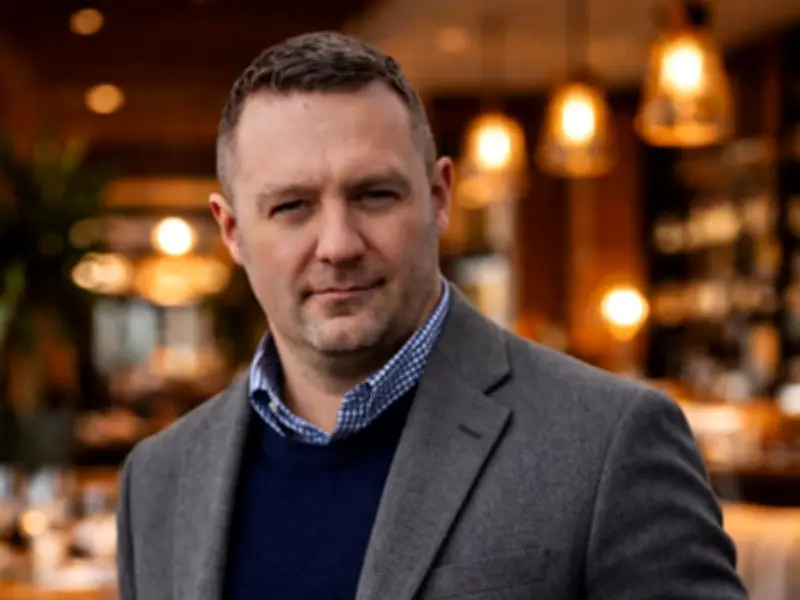
Restaurant owner Sam Morgan, whose group turns over £6 million, has warned that hospitality businesses could stop investing in the UK altogether unless the government takes meaningful action to support the struggling sector. Morgan is chief executive of Open Restaurant Group, which operates Liverpool’s three AA Rosette fine-dining venue Restaurant 8 and Oxton neighbourhood favourite Daise, alongside six other restaurants including Chester's Noted on Bridge Street.
Multiple challenges hitting the sector
Morgan said rising costs are only part of the problem, and several other issues often go unnoticed. The 44-year-old, originally from London but now living in Worcestershire, told the ECHO: “There's been a lot of focus on the current challenges facing hospitality, and campaigning for change is completely valid. However, it's not just taxation that's affecting the sector – consumer behaviour has changed dramatically too.”
“Platforms like Uber and food delivery services have changed the way people engage with hospitality. Dining out has always been about more than just the food – it’s about the social experience and the atmosphere, and that’s something the industry is having to adapt to.”
He also highlighted skills shortages: “We’re also facing skills shortages because the workforce has changed significantly. In the past, we benefited from a transient workforce from Europe, but that’s no longer the case, so there are multiple challenges hitting the sector at the same time.”
Anticipating changes before they hit
Rather than reacting to recent pressures, Morgan said his business had anticipated many of the changes several years ago, and it is thanks to these decisions that his business continues to turn over £6 million. Changing habits influenced the company’s restaurant designs, with an emphasis on smaller, community-focused venues – with its Liverpool offering being a prime example.
“We saw these changes coming some time ago, so we haven't just found ourselves reacting now,” he said. “Even looking at my own family, my twin daughters are nearly 21, they don't drink alcohol, they're far more health-conscious, and they socialise differently, so you can see the shift happening.”
“Our restaurants have been designed to adapt to those changes. We focus on small, community-based venues with a clear identity, and operational models that don't require huge teams of staff to deliver a great experience.” Restaurant 8 in Liverpool offers an intimate dining experience where the focus is on the relationship between the chef, a small team and the guests, rather than a large-scale operation.
“As a business, we've had to adapt because we can't control things like VAT or government policy. What we can do is take responsibility for the challenges we face and build a business that's capable of weathering those changes.”
VAT burden and calls for government action
The current 20% VAT rate is placing an unsustainable burden on hospitality businesses already facing rising wage, energy and food costs. The ECHO has reported on several businesses closing in the last month because of this. Industry consensus is that a reduction in VAT would provide immediate relief to restaurants, pubs and cafés, helping protect jobs, encourage investment and support local high streets. A competitive VAT rate would help level the playing field with other European countries, where hospitality benefits from lower indirect taxes.
Morgan said lowering VAT is not simply about supporting businesses, but about safeguarding jobs, tourism and the communities that rely on a vibrant hospitality sector. He warned that without meaningful intervention, the outlook could become increasingly bleak.
“If we don't see meaningful changes from the UK Government, the hospitality sector will continue to take heavy blows. Business owners will either stop investing in the UK and look at countries that are more supportive of hospitality, or they'll leave the industry altogether.”
Profitability squeezed despite turnover growth
Morgan acknowledged that turnover does not tell the full story. “Our turnover last year was £6 million, but turnover doesn't tell the full story. As the saying goes, 'Turnover is vanity, profit is sanity and cash is king' – profitability is what really matters.”
“We've continued opening new sites, so naturally our turnover has grown. That doesn't necessarily mean we're making more profit, because the rising costs imposed on businesses have significantly reduced our margins. We're having to work harder, invest more and open more sites simply to maintain our position. As government policies continue to eat into profitability, growth has become a necessity for survival rather than a sign of greater success.”




