
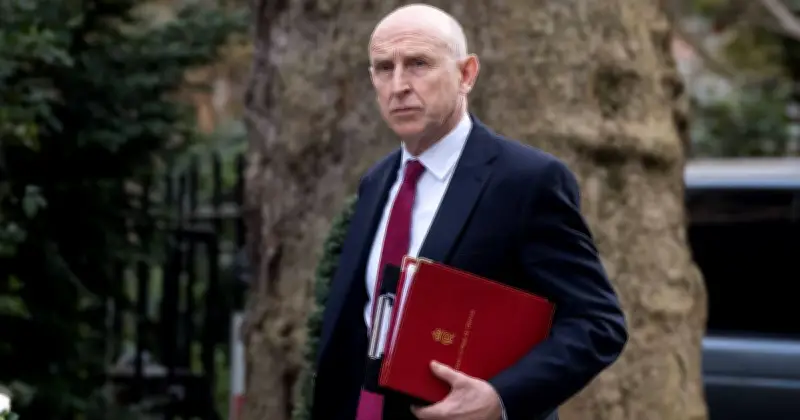
The personal tax allowance granted to workers before they must pay tax to HMRC is under the spotlight once more with a fortnight remaining until Chancellor John Healey's first Budget. Mr Healey will unveil his plans on Wednesday, October 28, 2026. With cost of living pressures showing scant signs of easing, one measure that has attracted attention is the personal tax allowance. The sum that workers can earn before they begin paying tax has been frozen at £12,570 since 2021 and is presently scheduled to remain unchanged until 2031.
Campaigns for an increase
This has prompted various campaigns and petitions calling for it to be increased. Those advocating for a rise - with figures including £15,000 and £18,000 being suggested - contend that it creates fiscal drag, whereby people are pulled into paying tax - or a higher rate of tax - as wages climb over time, while the tax-free allowance remains static.
Bank of England's PRA consultation
The Bank of England's Prudential Regulation Authority (PRA) launched a consultation last week on allowing 128 of its regulatory thresholds to rise automatically with the economy, cautioning that outdated thresholds can become "restrictive barriers to growth". Income tax thresholds remain frozen until April 2031, meaning a pay rise that merely keeps pace with inflation can push an employee into the higher rate band.
Tony Redondo, founder of Newquay-based Cosmos Currency Exchange, said: "The PRA's proposal to index regulatory thresholds to nominal GDP exposes a glaring contradiction: fixed thresholds are admitted to be a barrier to growth, yet frozen income tax bands are weaponised to raise revenue through fiscal drag. Capping the basic and higher rate bands until 2031 means workers on inflation-matching pay rises face stealth tax hikes, eroding purchasing power, creating brutal marginal rate traps, notably the effective 60% between £100,000 and £125,140 and destroying incentive.
"Ending the freeze at the October Budget would restore neutrality and the incentive to work. No wonder clients are piling into salary sacrifice, funnelling bonuses and pay rises into pensions and EV schemes to cut adjusted net income and dodge the cliffs. Here's a novel idea: index MPs' pay rises to per capita GDP growth. If that doesn't concentrate minds, nothing will."
Growth barrier for individuals
Eamonn Prendergast, Chartered Financial Adviser at Bromley-based Palantir Financial Planning Ltd, said: "If frozen thresholds can become a barrier to growth for businesses, why should we pretend they don't distort behaviour for individuals? Freezing income-tax thresholds is effectively a tax rise by stealth.
"Someone can receive a pay rise that does little more than keep pace with inflation, yet find more of their income pushed into higher tax bands. Over time, that brings millions more people into tax rates that were originally intended for higher earners.
"I increasingly see pension contributions and salary sacrifice considered as ways of managing adjusted net income, particularly around important tax thresholds. They can be valuable planning tools and build long-term wealth, but people shouldn't have to make career and remuneration decisions simply because tax thresholds haven't kept pace with the economy. If the principle is that thresholds should move as the economy grows, it is reasonable to ask why that shouldn't apply to taxpayers too."
Paying more tax
Nouran Moustafa, practice principal and Independent Financial Adviser at Roxton Wealth, said: "There is an obvious irony in the PRA warning that frozen thresholds can become restrictive while millions of workers are experiencing exactly that through the tax system. A salary increase that merely keeps pace with inflation can push somebody into a higher tax band even though they are no richer in real terms.
"Freezing thresholds raises substantial revenue, but it also makes the tax system progressively more distortive. Pensions are increasingly important around these cliff edges.
"Contributions can reduce adjusted net income, and salary sacrifice can reduce taxable pay, so for the right person putting more into a pension can be far more valuable than simply taking the extra salary. But nobody should contribute to a pension purely to dodge a tax threshold.
"You are exchanging money today for money later, so liquidity, allowances and wider goals still matter. Frozen thresholds do not freeze people's financial lives."




