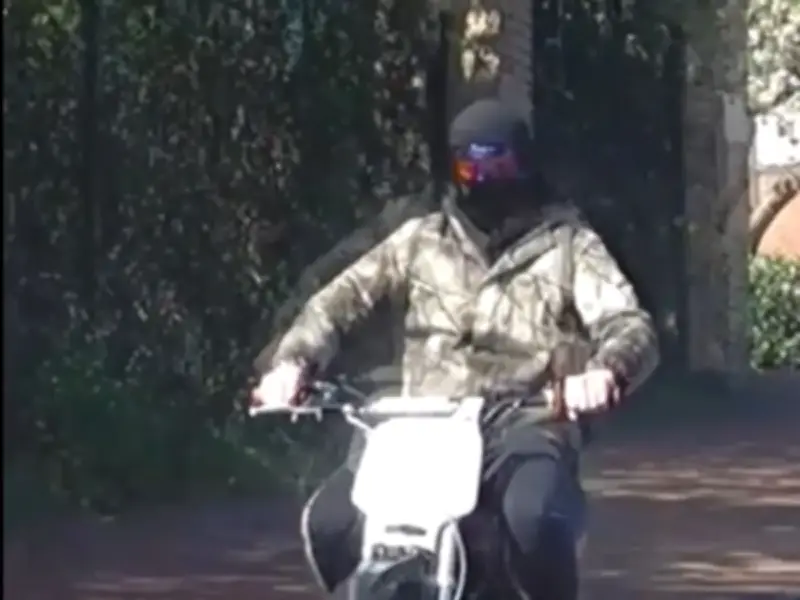
North East police are calling for tougher laws to crack down on the scourge of “terrifying” illegal e-bikes plaguing communities. City leaders in Newcastle were told this week that UK legislation had not kept up with the market for illegal e-bikes and scooters that have become a growing menace over recent years.
Northumbria Police says that it seized a total of 207 e-scooters, 463 e-bikes and 83 off-road motorcycles in the 12 months from August 2025. But Chief Inspector Dean Hood admitted on Monday that the scale of the problem in towns and villages across the region meant the public “don’t believe that is a priority for the police” and there is a perception among offenders that police can’t or won’t engage in pursuits with them.
Police call for legislative change
He said that the force now wants to intervene in schools to educate young people about the laws and dangers surrounding e-bikes “to prevent the issue becoming worse”, telling the Safe Newcastle Board that too many high-powered vehicles with performance similar to motorbikes were readily available to purchase despite being illegal on UK roads.
Legal e-bikes, known as electrically assisted pedal cycles (EAPCs), must meet certain safety regulations such as their electric motor having a maximum power output of 250 watts and cutting out when a speed of 15.5mph is reached. But many have been modified with conversion kits allowing them to travel at far greater speeds.
Crime and danger in Newcastle
Ch Insp Hood told city leaders at Newcastle Civic Centre on Monday that there was an increasing volume of such vehicles being used to commit crimes, ranging from drug deals to acts of serious violence, and that they were increasingly becoming a primary mode of transport for people who are willing to break the law. He said: “We are speaking to MPs around lobbying for change in a legislation to make the job of enforcing the existing law easier and more palatable for police forces and individual officers, and tightening up on the sale of those items and them entering the market in the first place.”
He added: “There are large-scale retailers across multiple branches selling things that are illegal for use on streets and roads. In my opinion, it is more than likely that they are going to get used on the streets and roads as soon as they are bought.”
Ch Insp Hood said there was a noted concentration of issues with e-bikes around Newcastle city centre, where they cause a "greater danger to pedestrians", as well as in outlying areas like Westerhope, Lemington, and Newburn. He added that it is "inherently dangerous” for police to try and knock offenders off illegal e-bikes while they are travelling, but that the force is doing so.
But he urged residents to report sightings of illegal e-bikes so help build intelligence about where they are being stored, so they can be seized. Ch Insp Hood said: “We need to get into primary and secondary schools, educate on the dangers of these vehicles and use case studies where people have had horrific injuries from road traffic collisions when they have been riding these vehicles.”
Council measures and public reporting
Ed Foster, Newcastle City Council’s head of public safety and regulation, confirmed that a new Public Spaces Protection Order (PSPO) planned for the city will include measures to combat illegal e-bikes and scooters. He raised concerns about their “terrifying” speeds and potential fire risks with how they have been modified.
Mr Foster said: “Some of the ways that these bikes are wired is an absolute hazard. If there is a fire with a lithium battery it is a nightmare.”
Lib Dem councillor Peter Lovatt, the council’s cabinet member for neighbourhoods and local services, said that it was “a real positive development” to hear that greater efforts were in the works to tackle illegal e-bikes.
Coun Lovatt, who chairs the Safe Newcastle partnership, added: “Trying to encourage residents to actually report is so difficult, the first thing they will do is ring 101 or 999 and give up. Everybody knows who their next door neighbour is and who has got these bikes. I know some residents habitually report their next door neighbour for having these bikes and the potential anti-social behaviour that goes along with that, which is really positive. But I know it can be quite intimidating and frightening for residents to report.”