

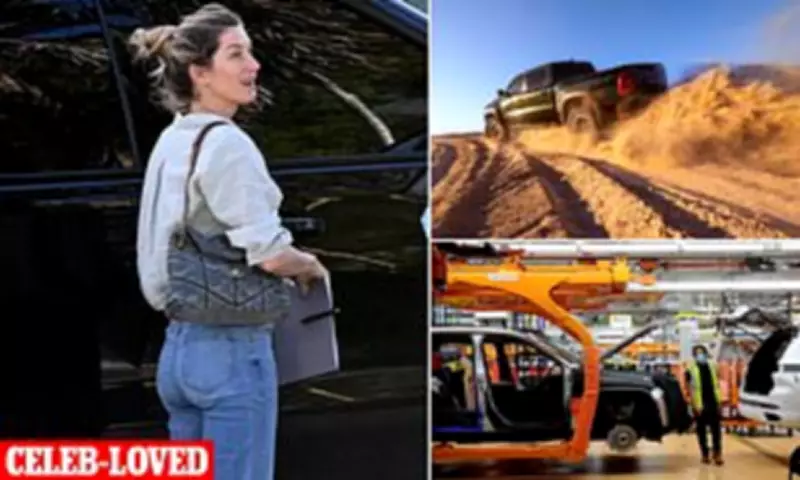
A much-hyped comeback of one of America's most iconic SUVs was thrown into chaos after a supplier dispute brought production to a standstill. Stellantis, the parent company of Jeep, launched legal action against parts supplier ZF Chassis Modules after a payment row forced a shutdown at its Toluca plant in Mexico on March 14.
The factory, which employs around 2,500 staff, builds key models for the Jeep brand, including the Compass, Ram and Cherokee - vehicles long associated with rugged, celebrity-driven appeal in the SUV market. The Jeep Grand Cherokee Trackhawk has become a celebrity favorite thanks to its mix of luxury and 707-horsepower performance, with stars like Lil Durk, Naz Reid, Tom Brady and Gisele Bündchen all linked to the model. Meanwhile, Harrison Ford has long been associated with the brand's iconic Wrangler. But now the car brand is facing a bottleneck on production.
Legal Dispute Halts Production
The Jeep Cherokee's return was delayed to the end of 2025 following a brief discontinuation after the 2023 model year due to the company disputes. In court filings, automaker Stellantis said it had already paid more than $26 million to its Mexican supplier and agreed to earlier price rises to keep production moving. But the supplier later demanded an additional $70 million, triggering the legal standoff and halting shipments of critical suspension components.

The disruption has exposed just how fragile modern car manufacturing is. With only hours' worth of parts typically kept on site, production lines can grind to a halt almost immediately when supplies stop flowing. The fallout has stretched beyond Mexico, putting pressure on Stellantis' Windsor, Ontario plant, which employs around 4,300 workers and relies on the same tightly linked supply chain across North America.
Impact on Jeep's Momentum
The Jeep brand has been gearing up for renewed demand, particularly for the returning Cherokee. But this dispute temporarily derailed that momentum. ZF Chassis Modules, a joint venture between Germany's ZF and Foxconn, also threatened wider disruption across Stellantis operations before a temporary court order forced continued shipments to stabilize output.
Stellantis operates multiple high-volume plants in Mexico producing Jeep and Ram vehicles, with tens of thousands of units exported each month. In February, the automaker produced 40,865 vehicles in the country, up 29.4 percent year on year, and exported 30,401 vehicles, a 38.6 percent increase.
While the auto giant insisted the dispute was a commercial issue, the impact was far more visible on the ground. Idle production lines, uncertain workers, and a flagship SUV launch caught in the crossfire of a payment fight made for an unfortunate mix.
Dispute Resolved, Production Resumed
The legal dispute between Stellantis and ZF Chassis Modules finally came to an end, a company spokesperson confirmed to the Daily Mail. 'Production has resumed,' they stated. A temporary court order forced the supplier to continue shipping parts to prevent wider shutdowns, particularly at key North American plants. A hearing in the case was scheduled for April 6 but no widely reported final outcome emerged from that hearing.
The disruption has exposed just how fragile modern car manufacturing is. With only hours' worth of parts typically kept on site, production lines can grind to a halt almost immediately when supplies stop flowing. The Jeep brand has been gearing up for renewed demand, particularly for the returning Cherokee.
Stellantis Faces Broader Challenges
The dispute aside, it has been a rocky time for Stellantis, which was formed in 2021 from the merger of Fiat Chrysler and PSA Group, and is currently led by CEO Antonio Filosa. The company laid off 900 American workers right after the Trump administration enacted its 25 percent tariffs on all imported vehicles. The employees, who worked at stamping and transmission lines, built parts that the company had sent to Canadian and Mexican assembly plants.

Some investors and analysts have suggested Stellantis should shut down some brands, which often overlapped particularly in Europe, in order to save money and reduce inefficiencies. Lancia, DS, Citroen and Opel have all been named as candidates. However, Filosa, who became Stellantis CEO last year with a mandate to turn around its fortunes, is reported as not wanting to go down this route as he sees such brands as having potential in regions or large national markets.





