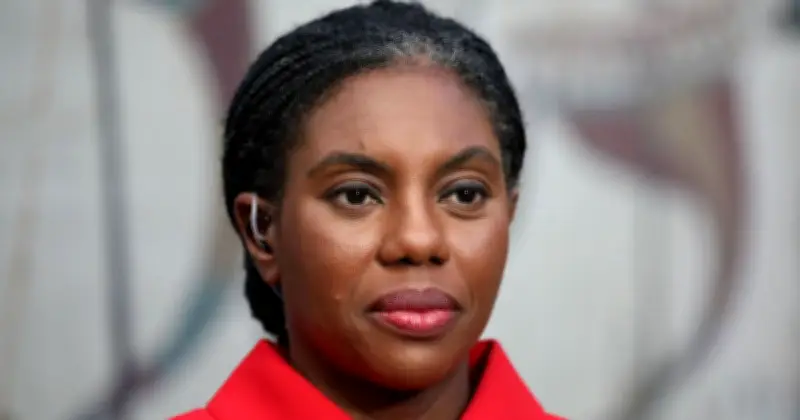
Kemi Badenoch has warned that British families will pay the price for Labour’s economic failures, saying Andy Burnham’s brand of “old-fashioned tax-and-spend socialism” risks dragging the country into a 1970s-style Winter of Discontent.
Writing exclusively for the Express, the Conservative leader warned of brutal tax rises in next month’s Budget as the government attempts to balance the books. Her message comes as Britain faces an economic tsunami amid rocketing inflation and borrowing costs, mammoth energy price rises and a shattered jobs market.
Badenoch attacks Burnham's economic nostalgia
Mrs Badenoch said: “Andy Burnham seems strangely nostalgic for an economic era that many Express readers will remember rather less fondly.

“In his return to the Commons, Burnham moaned that Britain had been going down the wrong path since the late 1970s.
“For any reader too young to remember that era: it was the time of the Winter of Discontent, rubbish piled high in the streets, public services on strike. Even the gravediggers walked out.”
Alluding to the Prime Minister’s love of social media videos, she added: “Old-fashioned tax-and-spend socialism risks becoming an old-fashioned Labour Winter of Discontent but with an algorithm.”
Burnham warns of difficult decisions
Mr Burnham was yesterday scrambling to get a grip on the economy as he warned of “difficult decisions” after grim figures showed the cost of living is rising. The Prime Minister blamed the Middle East chaos and insisted the UK economy remained “resilient”.
He said the threat of spiralling prices would be taken “fully into account” in Chancellor John Healey’s big announcement on October 28.
In another blow, the PM was savaged by old ally Andy Haldane about the lack of commitment to curbing spending. The former Bank of England chief economist told LBC that financial markets now suspect the PM is leading “a traditional tax-and-spend socialist government with better TikTok videos”.
Speaking during a visit to McLaren Technology Centre in Woking, Mr Burnham refuted the claims. He added that Mr Healey would use the “highest degree of prudence” on the economy, but also said he would look to protect living standards.
“We won’t take risks with people’s living standards or with the economy as a whole, so we will take it all into account,” he said.
Reform UK and market concerns
Reform UK's Robert Jenrick said: “Burnham is rolling the pitch for a tax raid nobody voted for.
“It’s a different Prime Minister but the same old tax and spend agenda that’s failed the country. The only way out of this economic doom loop is to cut wasteful spending so we can raise the tax-free personal allowance to £15,000 to give Express readers some much-needed relief.”
There is mounting concern in government about the scale of the challenge posed by the Budget, especially because of the rocketing cost of government borrowing. Economists believe the Chancellor will need to find £10 billion of tax rises or spending cuts to balance the books, with the situation deteriorating daily.
There is also concern in the markets about Mr Burnham’s ability to constrain public spending after he made a series of pledges to help with the cost of living at the start of his premiership.
It emerged last night that Labour has appointed self-declared socialist trade union baron Paul Nowak to the board of the Bank of England. It has triggered fears from economists and MPs that the appointment could spook investors, and raises concerns about conflicts of interest at the bank.
Inflation and energy costs
Official figures show inflation hit 3.1% in August, up from 2.9% the previous month, with analysts expecting worse to come through the Autumn and surpassing 4% next year.
Oil costs have been running at eye-watering levels, with Brent Crude at $108 a barrel. Drivers are already feeling the pinch at the pumps, where diesel is at a four-year high. There are estimates that energy bills could be set to rise by a quarter - a mammoth £442 - in January.
The Monetary Policy Committee - which targets 2% inflation - will make its latest decision on interest rates today, although it is widely predicted to hold them at 3.75% this time.

ONS chief economist Grant Fitzner said: “Sharp price rises for petrol and diesel pushed inflation up again in August.
“Higher airfares, particularly for long-haul journeys, also contributed to the increase.”
The jump in fuel costs highlights the early impact of the breakdown of the US-Iran ceasefire in July, which led to a fresh uptick in oil and gas prices. Elsewhere in the transport sector, the latest figures also showed a 6.2% increase in airfares for the month after an increase in the cost of long-haul flights.
Meanwhile, food and drink inflation remained steady at 1.3% despite warnings that it could be pushed higher by rising energy costs.
Mr Healey said: “The war in the Middle East is impacting on inflation worldwide, not just here at home, in our bills, our weekly shop and at the petrol pumps.
“We have taken early action to help give families and businesses breathing space, by cutting tax on electricity bills, capping bus fares at £2 and lowering rates for pubs, social clubs and live music venues.
“Despite this serious global uncertainty, our UK economy is proving resilient, and our determination to deliver growth in every postcode continues.”