
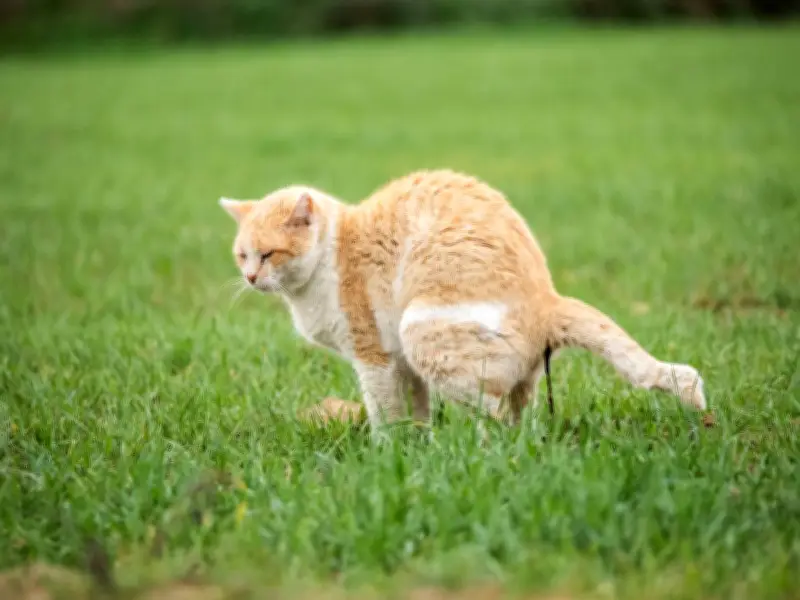
According to UK law, cats possess a legal 'right to roam'. This means that owners bear no responsibility for their pets' whereabouts, and neighbours have no automatic legal recourse regarding cat fouling.
Jill Carey, Property Litigation Partner at Freeths, explained: "Unlike other animals such as dogs or horses, cats in the UK are free spirits with the right to roam, on the basis that cats do not have the same capacity to cause injury and damage as those animals do. The right to roam is not set out explicitly in a single statute, but is rather the consequence of how cats are treated by the law."
"First, the law treats cats as property, belonging to their owner. Secondly, cats are excluded from any specific legislation that obliges animal owners to keep their animals confined, such as the Dangerous Dogs Act 1991. This means that cats can stroll coolly into your garden, or even your house, and not commit a trespass."
What to do if cats use your garden as a toilet
The specialists initially advise open dialogue between yourself and the cat's owner. Joanne Ellis, partner and dispute resolution specialist at Stephensons, said: "It's also usually best to start with a friendly conversation. Your neighbour may not realise there's an issue and could be willing to take steps to help."
"Practical solutions should also be explored first, including natural, non-harmful deterrents. Some gardeners find that planting certain plants can help discourage cats from entering a garden."
Daniel Stern, partner and Head of Property Litigation at Slater Heelis in Manchester, shared this view. He said: "In practice, most disputes are best resolved through open communication. Owners may install additional litter facilities, while affected neighbours often use deterrents such as motion-activated sprinklers, protective netting or cat-repellent planting."
Jill added: "To lower both risks and blood pressure, cat and garden owners should therefore work together to look for humane and practical solutions such as the use of certain scents, or laying gravel and stones rather than loose soil, to encourage the cats to move on wherever possible."
Potential legal repercussions
The specialists outlined that if the cat is inflicting damage, such as repeatedly harming plants or destroying patches of lawn, there may potentially be grounds for a nuisance or negligence claim. Nevertheless, they cautioned that such cases can prove "difficult and costly" to take forward.
Joanne elaborated: "From a legal perspective, if the cat is causing actual damage, such as repeatedly damaging plants or killing areas of grass, there could potentially be grounds for a nuisance or negligence claim. However, these cases can be difficult and costly to pursue in practice. If the neighbour is already taking reasonable steps to address the problem, obtaining any meaningful recourse through the courts is likely to be challenging."
She recommended: "Homeowners should also check the paperwork from when they bought their property, as there may be covenants or other restrictions that are relevant. If the property is leasehold, or there's a managing agent involved, they may also be able to assist in resolving the issue."
"In most cases, a combination of evidence, communication and practical deterrents is likely to be a more effective solution than going down the legal route."
Further advice
Joanne recommends turning to organisations such as the Citizens Advice Bureau, though she noted that "it's quite a niche concern". Alternatively, animal charities can be contacted for advice on how to discourage cats from venturing into your garden.
In cases where negligence or nuisance claims are pursued, Joanne explained: "For a negligence or nuisance case you'd ask for an injunction to prevent the ongoing issues and also a damages claim to put the garden back into good repair. You do have the issue of how the court is going to force the neighbour from allowing the cat out though. It is very unlikely the court would curtail the actions of the cat to, for example, stop it from going out. The court can also award costs although it's unlikely you'd obtain the full costs back. The neighbour might not have any money to enforce costs or damages for example."




