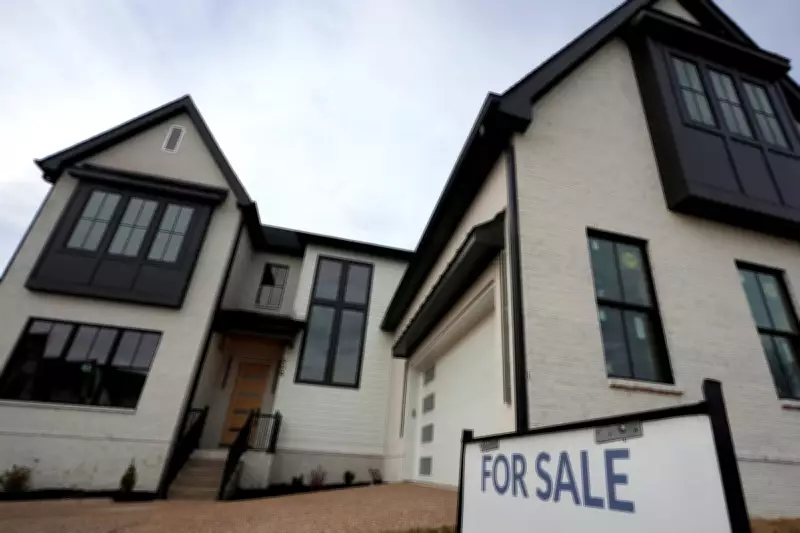
The average long-term US mortgage rate increased this week, pushing up borrowing costs for prospective homebuyers during the spring homebuying season. The benchmark 30-year fixed-rate mortgage rose to 6.3% from 6.23% last week, according to Freddie Mac. This figure remains below the 6.76% recorded one year ago.
The uptick ends a three-week decline, bringing the average rate back to levels seen two weeks earlier. Rates on 15-year fixed-rate mortgages, popular among homeowners refinancing, also rose to 5.64% from 5.58% last week. A year ago, that rate stood at 5.92%.
Mortgage rates are influenced by Federal Reserve policy decisions and bond market expectations for the economy and inflation. This week's rise follows an increase in the yield on US 10-year Treasury bonds, which lenders use as a pricing guide. The 10-year yield reached 4.39% in midday trading Thursday, up from 4.34% a week ago. In late February, before the conflict with Iran, the yield was at 3.97%.

As recently as late February, the average 30-year mortgage rate briefly fell below 6% for the first time since late 2022. However, it has not dipped below that threshold since the Middle East conflict began, which has driven energy prices higher and raised inflation concerns. Bond yields and mortgage rates have remained volatile as the conflict persists.
High oil prices contributed to the Federal Reserve's decision to hold off on interest rate cuts, announced Wednesday. While the central bank does not set mortgage rates directly, its decisions influence bond investors and can affect 10-year Treasury yields. Lower rates could boost the economy but risk worsening inflation, potentially leading to higher mortgage rates.
The US housing market has been sluggish since 2022, when mortgage rates began climbing from pandemic-era lows. Sales of previously occupied homes were essentially flat last year, stuck at a 30-year low. They have remained weak this year, declining in January, February, and March compared with the same months in 2025.
Despite recent fluctuations, the average 30-year mortgage rate remains nearly half a percentage point below its level a year ago. However, uncertainty over rates has clouded the outlook for the spring homebuying season, traditionally the busiest period for housing.
A recent measure of pending US home sales, tracking contract signings, showed a mixed picture. Pending sales rose 1.5% in March compared with February but fell 1.1% compared with March last year, according to the National Association of Realtors. Pending sales typically precede completed sales by one to two months.
"There are some signs of life among buyers, as pending sales have inched up slightly over the past four weeks," said Lisa Sturtevant, chief economist at Bright MLS. "But the fact remains that we are not going to see rates fall below 6% anytime soon, and the spring housing market is going to be much more subdued than forecasts suggested at the end of last year."