Build America, Buy America Law Creates Construction Bottleneck Amid Housing Crisis
A federal law designed to boost American manufacturing is causing significant construction delays and increased costs for affordable housing projects across the United States, exacerbating the nation's ongoing housing crisis.
Manufacturing Mandate Meets Housing Shortage
The Build America, Buy America Act, known as BABA, requires that most materials used in federally funded affordable housing projects must carry the Made in the USA label. This includes everything from HVAC systems and lighting fixtures to smaller components like sink hooks and ceiling fans. While the law aims to bring manufacturing jobs back to the United States, developers report that numerous essential products are not available from domestic suppliers, having long been imported from overseas markets with lower labor costs.
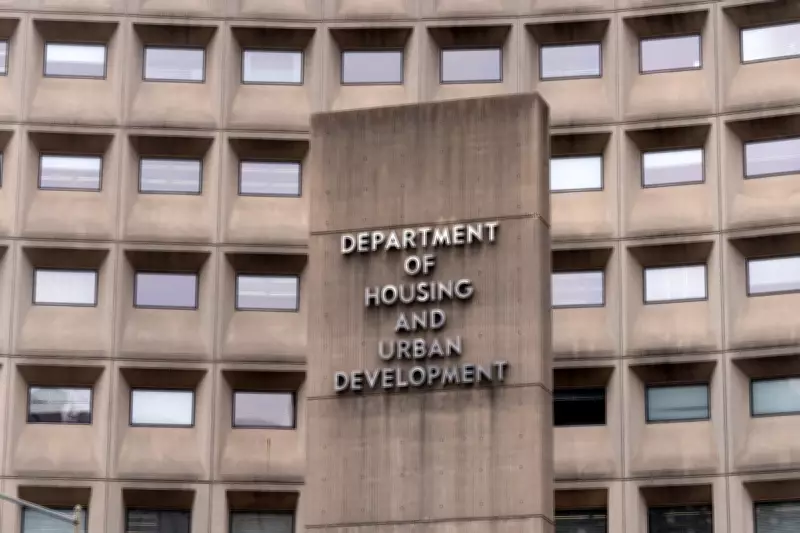
Although builders can apply for waivers when American-made materials are unavailable, the approval process has slowed to a near standstill. The Department of Housing and Urban Development, which has seen its staff reduced during the Trump administration, has only approved a handful of waiver requests. This bureaucratic bottleneck has resulted in construction delays and hundreds of thousands of dollars in additional costs for housing projects nationwide.

Developers Face Mounting Challenges
"They need to be treating this like the fire that it is," said Tyler Norod, president of Westbrook Development Corporation, which builds affordable housing in Maine. "We've sort of resigned ourselves that we're just gonna build less units across the entire country during a housing crisis."
Denver developer Julie Hoebel has spent over $60,000 just on a consultant to search for American-made materials, not including additional labor costs. Despite submitting waiver requests to HUD in November for approximately 125 materials needed for an 85-unit building, she has yet to receive approval. "If they take much longer then we'll come to a standstill," she warned.
Human Impact of Construction Delays
The delays have real consequences for Americans struggling to find affordable housing. Diana Lene, a 76-year-old resident of Fargo, North Dakota, has been on affordable housing waitlists for five years. Living primarily on Social Security income, she finds her current apartment increasingly unaffordable. "It's just maxing my budget down to pennies," Lene explained. "I'm just trying to keep a roof over my head, but it's getting more and more difficult."
Lene is waiting for an apartment from nonprofit developer Beyond Shelter, whose CEO Dan Madler is building a 36-unit building for people in similar situations. However, Madler has had to postpone lumber orders to verify compliance with BABA regulations and cannot find American-made ceiling fans. He remains uncertain when HUD will approve his waiver requests.
Bureaucratic Hurdles and Industry Response
HUD is taking at least six months to approve many waiver requests, creating significant project delays. Even supporters of the BABA legislation agree that HUD must accelerate the waiver process and provide clearer guidance to the industry. Other federal agencies have implemented more efficient systems for similar requirements.
In response to questions about waiver approval delays and transparency concerns, HUD issued a statement emphasizing its commitment to "ensuring that federal spending supports America's industrial base" while "closely monitoring how compliance with these policies impact costs for builders."
HUD Secretary Scott Turner acknowledged the challenges in January, stating that the agency was examining how to provide "flexibility to certain projects in certain places around our country" while assuring developers would receive "the flexibility they need as it pertains to building."
Industry Perspectives and Economic Realities
Supporters of the law argue that taxpayer dollars should fund American-made materials and that suppliers will eventually adjust to meet demand. "You've got a system in place that leans heavily on using imported materials to make a better profit," said Scott Paul, president of the Alliance for American Manufacturing. "I don't know if that serves the public good."

However, industry experts note significant practical challenges. Jennifer Schwartz, director of tax and housing advocacy at the National Council of State Housing Agencies, observed that the waiver process is "failing" because requirements were implemented before assessing domestic manufacturing capacity.
Kaitlyn Snyder, managing director of the National Housing and Rehabilitation Association, explained that while producing more raw materials in the U.S. might be feasible, manufactured products like appliances and elevators will take time to become available domestically. "I don't know that it economically, financially makes sense for people to be producing door hinges," Snyder noted. "We are an advanced country and we've outsourced a lot of that stuff."
Financial Burden on Developers
Vermont-based developer Jessica Neubelt estimates spending an additional $150,000 just to verify that iron and steel used in her project were American-made. She expressed frustration over the hundreds of hours required for compliance, time that could otherwise be spent on additional housing projects. "I would like every member of Congress to sit in on a construction meeting," Neubelt said. "The amount of detail that goes into figuring out if a specific thing is compliant or not is enormous."
Political Debates and Alternative Solutions
U.S. Representative Mike Flood, a Nebraska Republican, has advocated for exempting some HUD funding from BABA requirements. "Owning a home is the American dream, but it's out of reach in a very big way and anything that adds cost to that isn't allowing hardworking Americans to achieve the dream," Flood told The Associated Press.
Meanwhile, some developers are exploring ways to avoid federal funding altogether, though this presents its own challenges. Federal dollars often represent a critical portion of funding for affordable housing projects, even when they constitute a small percentage of the total budget.
Kentucky developer Scott McReynolds has adopted a different strategy: instead of applying for federal grants to build 20 to 30 affordable homes, he plans to construct two four-unit projects small enough to avoid BABA requirements. "It's a nightmare," McReynolds said of finding American-made materials in rural areas.
Looking Forward
The housing bill that passed the Senate in March did not include provisions requiring HUD to address BABA implementation problems. Jessie Handforth Kome, who spent nearly 40 years working at HUD until 2024, summarized the situation: "The process isn't working for affordable housing. People want to comply, but it's unclear how to."
As the affordable housing crisis continues to affect millions of Americans, the tension between supporting domestic manufacturing and addressing urgent housing needs remains unresolved, with developers, policymakers, and housing advocates seeking solutions that balance both priorities.