US Foreclosures Accelerate for Eleventh Consecutive Month
The American housing crisis is intensifying rather than abating, with the number of homeowners losing their properties to banks climbing for an unbroken eleven-month period. Fresh data reveals that US foreclosure activity surged again in January 2026, presenting a stark picture of mounting financial distress across the nation.
January 2026 Sees Sharp Year-on-Year Increase
A total of 40,534 properties confronted foreclosure filings in January, marking a substantial 32 percent rise compared to the same month last year. These filings encompass every phase of the foreclosure process, from the initial legal notice issued by a lender to the eventual seizure of a home following missed mortgage payments.
Although the January figure was marginally lower than December's total, it still represented the eleventh straight month of increasing year-on-year foreclosure activity. This persistent upward trend clearly indicates that pressure on homeowners is building, not easing, across the country.

CEO Warns of Rising Foreclosures Across the Board
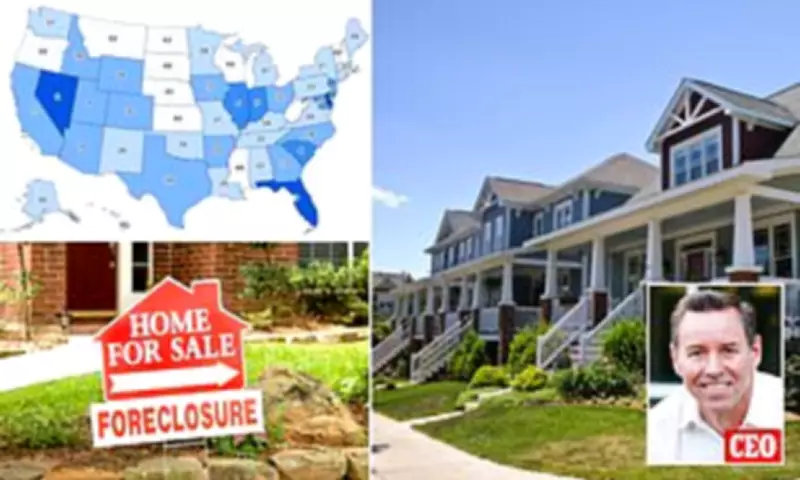
‘Foreclosures are rising across the board,’ stated Rob Barber, the Chief Executive Officer of ATTOM, a leading property data provider. He detailed that foreclosure starts—the point at which lenders formally initiate proceedings to repossess a home—have escalated by 26 percent. Meanwhile, completed repossessions have skyrocketed by nearly 59 percent, underscoring the severity of the situation.
This strain is already sending ripples through local communities. As financial institutions gain control of more properties, they frequently release these homes back onto the market at discounted prices. This practice drags down the value of surrounding properties and erodes equity for neighboring homeowners who have consistently met their mortgage obligations.
Broader Financial Troubles Underpin the Crisis
The spike in foreclosure filings mirrors wider monetary difficulties facing American households. Escalating taxes and interest rates are pushing more homeowners behind on their mortgage payments, while unpaid credit card balances and auto loans continue to accumulate.
There is a growing apprehension that the current housing slowdown could deteriorate into a more severe downturn, with unsettling echoes of the period preceding the 2008 financial crash. When Americans struggle to afford their mortgages, they are likely forced to cut back on essential expenditures such as food, transportation, and healthcare. This affordability squeeze subsequently weighs on broader economic growth.
Geographic Concentration of Foreclosure Activity
Foreclosures were most heavily concentrated in a select group of states. Delaware, Nevada, and Florida recorded the highest foreclosure rates nationwide. In Delaware, one in every 1,612 homes faced foreclosure filings. Other states, including South Carolina and Maryland, also experienced similarly elevated rates.
At the metropolitan level, Trenton, New Jersey, reported the worst foreclosure rate, with one in every 1,087 homes affected. Punta Gorda, Florida, and Fayetteville, North Carolina, followed closely behind, highlighting regional hotspots of housing distress.
Foreclosure Starts Spike in Major Housing Markets
Lenders initiated the foreclosure process on 26,369 homes in January 2026, a 26 percent increase from the previous year. Florida led the nation with 3,523 foreclosure starts, followed by Texas and California.
The impact is particularly acute in some of the country's largest urban centers. Metropolitan areas with populations exceeding 200,000 recorded especially high numbers of foreclosure starts. New York City topped this list with 1,295 filings, followed by Chicago with 1,053 and Houston with 1,040. Miami and Los Angeles also ranked among the hardest-hit major cities, with 851 and 781 foreclosure starts respectively.
This concentration of distress in significant housing markets underscores how widespread the pressure has become and explains why concerns about a broader housing downturn are gaining urgency among analysts and policymakers.

Building on an Already Difficult Previous Year
The bleak commencement of 2026 follows an already challenging 2025, during which 367,460 US properties faced foreclosure filings—an increase of 14 percent from the year before, according to prior ATTOM reports.
While current foreclosure activity has not yet reached the catastrophic levels witnessed during the 2008 housing crisis, the relentless economic pressures suggest the road ahead may grow increasingly bumpy for many American homeowners. The sustained monthly increases serve as a clear warning sign that the housing market's troubles are far from over.