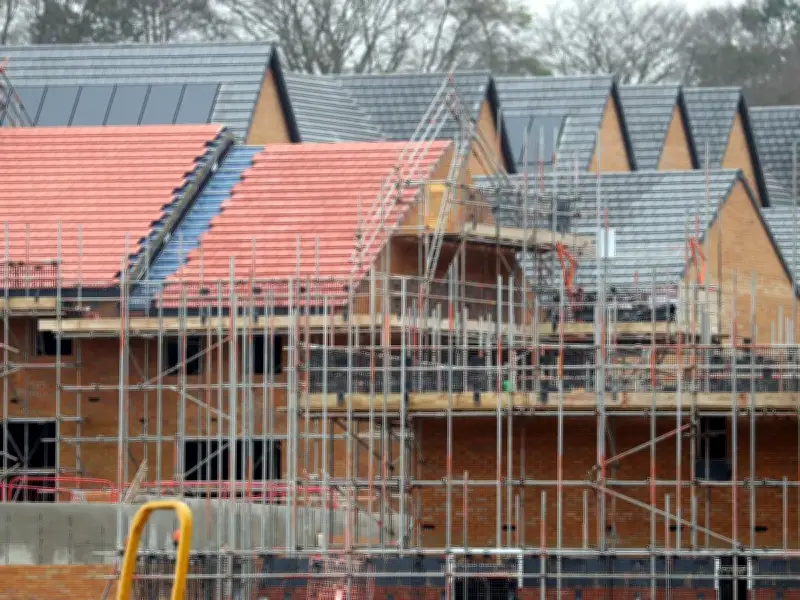
The number of new homes registered in the UK fell by 13% year-on-year in the third quarter of 2026, according to figures from the National House Building Council (NHBC), which warned that the housing pipeline continues to shrink.
The NHBC reported that 26,231 new homes were registered in the third quarter, down from 30,279 in the same period of 2025. Private sector registrations fell by 8% to 18,359, compared with 20,054 a year earlier, while registrations in the rental and affordable sector declined by 23% to 7,872, down from 10,225.
Affordability pressures are continuing to weigh on demand and supply-side barriers are hampering delivery, the NHBC said. The organisation holds a 70%-plus share of the UK warranty and insurance market for new build homes, and its figures reflect the pipeline of new properties as homes are registered before construction.
Government Support for First-Time Buyers
The Government recently launched the Your First Home initiative, which will offer first-time buyers the opportunity to purchase a new build property with a 2.5% deposit, with the Government providing an additional 20% towards the purchase price. Full details will be set out in the Budget, including a household income cap and local property price caps, with the aim of ensuring the support reaches those who need it most.
Daniel Pearce, chief strategy officer at the NHBC, said: "The housing industry is at a critical point. Demand remains fragile, affordability is stretched and our latest figures show that the pipeline of new homes is continuing to shrink."
He added: "Without action to support demand and tackle the barriers to delivery, increasing housing supply will remain extremely challenging. The Government's proposed Your First Home equity loan scheme is a significant and welcome step towards tackling one of the market's biggest challenges – affordability."
Regional Variations in Registrations
The most significant year-on-year percentage drops in new home registrations during the third quarter were recorded in the South East of England and Northern Ireland, both of which saw a 32% decline. However, Yorkshire and the Humber witnessed a 27% rise and the West Midlands saw a 10% uptick.
After a 170% annual surge in the second quarter of 2026, new home registrations in London largely reverted to levels seen in the third quarter of 2025, the NHBC reported. It noted that registrations in the capital can be particularly unpredictable, reflecting when major developments come forward. The longer-term outlook for London remains muted, with registrations dropping from 5,130 in the third quarter of 2019 to 1,223 in the third quarter of 2026.
Government Targets and Budget Outlook
The Government has committed to delivering 1.5 million new homes in England during this Parliament. Last month, Housing Secretary Angela Rayner said she would not "give up" on the target, though she acknowledged that international "headwinds" had made it more difficult to achieve. When questioned in September on the BBC's Sunday With Laura Kuenssberg programme, she said: "It's a slim chance, but I'm definitely not giving it up."
Looking towards the Budget, Mr Pearce said: "Our new homes data underlines the scale of the challenge facing Government and the industry if it is to materially increase housing supply. The proposed Your First Home scheme is a welcome and important step, but there is no single solution."
He added: "Sustainable growth will require action on both demand and supply – improving affordability for buyers while creating conditions for developers and investors to build with confidence by considering delivery costs, planning and regulatory constraints and investment barriers. The Budget is an important opportunity to make progress on both sides of the equation."
The Budget will include more than £1 billion for social and affordable housing and councils will be given extra borrowing powers to fund housebuilding.
Below are the new home registrations recorded in the third quarter and the annual change, according to the NHBC:
- North East, 1,336, minus 18%
- North West, 3,073, minus 17%
- Yorkshire and the Humber, 1,971, 27%
- West Midlands, 2,580, 10%
- East Midlands, 2,681, minus 19%
- East of England, 3,486, minus 20%
- South West, 3,024, minus 3%
- London, 1,223, minus 1%
- South East, 3,517, minus 32%
- Scotland, 2,330, minus 5%
- Wales, 647, minus 24%
- Northern Ireland and Isle of Man, 363, minus 32%