

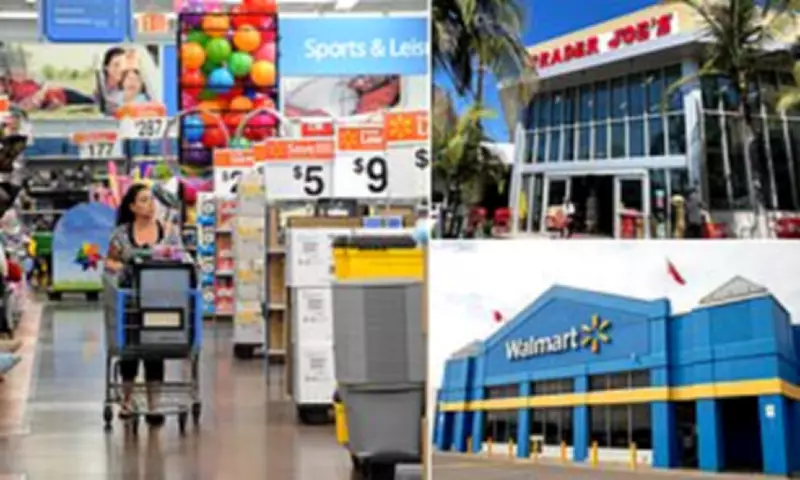
That Trader Joe's down your street could be doing more for your household wealth than your investment portfolio. Conversely, if your nearest store is Walmart, the impact might be moving in the opposite direction. Grocery stores are not merely purveyors of food; they actively shape the identity and economic trajectory of the neighborhoods surrounding them.
New Data Reveals Stark Home Value Divergence
Fresh housing analysis now suggests these retailers may significantly influence how much your property is worth. A comprehensive study by housing strategist Aziz Sunderji, examining over 32,000 grocery store openings since 1975 alongside Federal Housing Finance Agency home price data, uncovered striking patterns.
Home prices in neighborhoods where a Trader Joe's opens tend to outperform the national average by approximately 6 percent in the three years following launch. In contrast, areas that welcome a new Walmart see prices lag behind by about 4 percent over the same period.

The $40,000+ Neighborhood Premium
For the average U.S. home valued near $420,000, this divergence is substantial. A Trader Joe's nearby could add roughly $25,000 in value over three years, elevating it to around $445,000. A Walmart, however, could reduce value by about $17,000, leaving it closer to $403,000. This represents a potential swing exceeding $40,000 tied directly to the grocery store in your community.
Correlation, Not Causation: The Expert View
Industry experts emphasize that the stores themselves are not causing these changes. Instead, they are adept at selecting locations already on an upward or downward trajectory. Trader Joe's, the quirky grocer famous for its rotating seasonal items and playful packaging, has a particular talent for planting roots in neighborhoods with highly educated, upwardly mobile residents.
Sprouts Farmers Market, a natural and organic chain prevalent in major Sun Belt cities, emerged as the retailer most strongly associated with rising home values. It follows a similar strategy, targeting areas primed for growth where increasing property values are almost inevitable.
'What seems to be happening is that Trader Joe's and Sprouts tend to open in ZIP codes where home prices are rising fast—and they continue to rise fast after opening,' Sunderji explained.
The Selective Location Strategies
In simple terms, these chains are experts at picking winning neighborhoods. Sprouts, for instance, according to planning documents from Prince George's County, Maryland, seeks areas where at least 40 percent of residents hold college degrees and many work in white-collar professions.
Trader Joe's employs even more selective criteria, focusing on neighborhoods with a median age of 44, a minimum of 36,000 college-educated residents within a five-mile radius, and homeownership rates above 60 percent.
Budget Retailers and Struggling Communities
Meanwhile, budget grocery stores like Walmart and Dollar General understand their customer base. Their business model thrives in targeting rural or economically struggling areas. These neighborhoods are more susceptible to declining home prices, lacking the momentum and appeal that attract wealthier buyers.
'The big takeaway is that these large companies choose their locations very carefully,' stated Realtor.com senior economist Jake Krimmel. 'When it comes to grocery store openings, correlation is not causation. Instead, particular stores choose their location where their particular customer base is likely to grow.'
Krimmel added that Walmart may intentionally open new stores in ZIP codes where home prices and incomes are likely to fall or are already declining, aligning with its model as a one-stop shop for value. The opposite is true for specialized retailers like Trader Joe's.
Affluent Areas and Market Saturation
Retailers focusing exclusively on the wealthiest neighborhoods do not always see robust home price growth, largely because values there are already so high there is limited room for appreciation. Sunderji notes that Costco and Target both tend to move into affluent areas, with Target neighborhoods boasting the highest home values of any chain.

However, after new stores open, home prices in Costco areas grow at about the national pace, while Target neighborhoods actually lag behind.
The Dollar General Anomaly
One surprising outlier is Dollar General. Unlike most chains, it appears to provide a modest boost to home values post-opening. In the three years before a Dollar General arrives, local home prices typically trail the national average significantly. After the store opens, that gap shrinks noticeably.
This may be because Dollar General often establishes itself in rural or underserved areas—places too small or struggling to attract big-box retailers like Walmart. A new store can bring jobs, convenience, and a welcome lift to the local economy, providing a positive economic signal.
The analysis underscores a fundamental real estate truth: your local grocery store is more than a place to buy milk; it's a powerful indicator of your neighborhood's economic health and future property value trajectory.





