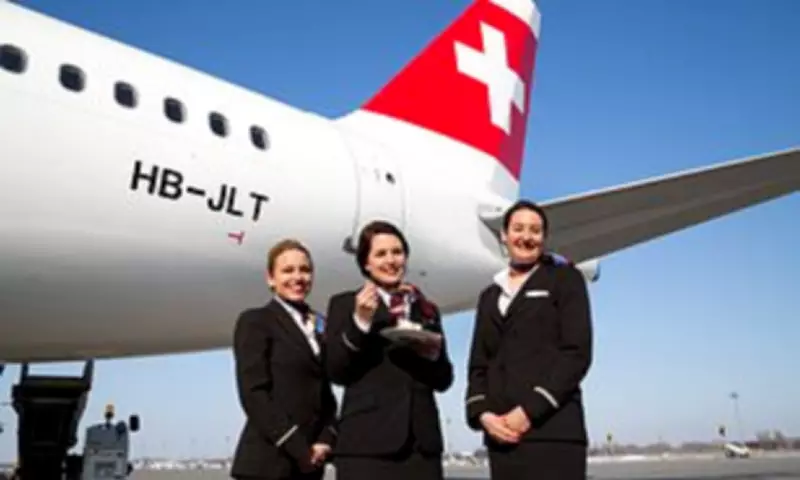
In a significant move to rebalance its workforce, Swiss Airlines is offering substantial financial incentives to cabin crew members willing to voluntarily depart from their roles. The European carrier has proposed lump-sum payouts of up to CHF 15,000, equivalent to approximately £14,000, for flight attendants based in Zurich who choose to terminate their employment contracts by the 30th of April, 2026.
Addressing Operational Imbalances
The initiative comes as Swiss Airlines grapples with a temporary surplus of cabin crew, estimated to be between 300 and 400 employees above operational requirements. This overstaffing situation has arisen primarily due to a combination of pilot shortages and ongoing engine issues that have grounded several aircraft, resulting in fewer flights than originally scheduled. Consequently, the airline finds itself with more crew members than available flying duties, prompting the need for strategic workforce adjustments.
Voluntary Redundancy Programme Details
To qualify for the generous voluntary redundancy payment, employees must formally submit their resignation between the 13th of March and the 30th of April. Those who accept the offer are required to leave their positions by the end of August. The lump-sum bonus is designed for full-time staff, with part-time employees receiving a pro-rata adjusted amount. For many, this payout represents roughly four months' salary, providing a substantial financial cushion during the transition period.

Additionally, cabin crew have the option to switch to a 'dormant contract' for a minimum of one year while still receiving the indemnity. This alternative is available to employees with at least six years of service and guarantees their position upon return, offering flexibility for those seeking temporary breaks without severing ties with the airline completely.
Airline's Strategic Response
A spokeswoman for Swiss Airlines explained to the AWP news agency that cabin crew requirements are subject to constant fluctuation based on flight schedules, seasonal demands, and operational developments. She stated, 'At present, we estimate that up to around 300 cabin crew are temporarily overstaffed in some months compared to what we can deploy. We expect this situation to gradually normalise over the coming months and to be brought back into balance by early 2027 at the latest.'
The airline has previously introduced voluntary measures such as unpaid leave or individual breaks, which have been utilised by many colleagues according to their personal circumstances. However, the new redundancy proposal, announced on Friday the 13th of March, represents a more definitive step towards resolving the staffing imbalance. According to Swiss Info, the carrier currently employs around 400 excess cabin crew, despite persistent challenges with aircraft engines and pilot availability.
Broader Context and Previous Measures
This workforce adjustment follows Swiss Airlines' decision to cut approximately 1,400 summer flights in 2025, equating to around 1.5 per cent of its schedule, due to critical pilot shortages and aircraft unavailability. The cancellations impacted short, medium, and long-haul routes, with significant reductions on services to destinations such as Shanghai Pudong and Chicago O'Hare through October 2025.
To mitigate crew-related issues, the airline has implemented several strategies, including calling on older pilots to delay retirement, requesting part-time staff to increase their working hours, and introducing a voluntary vacation buyback scheme. Furthermore, the commencement of training for the new A350-900 fleet has reduced the number of pilots available for regular flights, exacerbating the staffing challenges.
The spokeswoman noted that it is too early to evaluate feedback regarding the redundancy proposal, as the programme has only recently been announced. Swiss Airlines continues to monitor the situation closely as it works towards operational stability and workforce equilibrium in the coming years.