Renée Gailhoustet's Visionary Eco-Brutalist Architecture
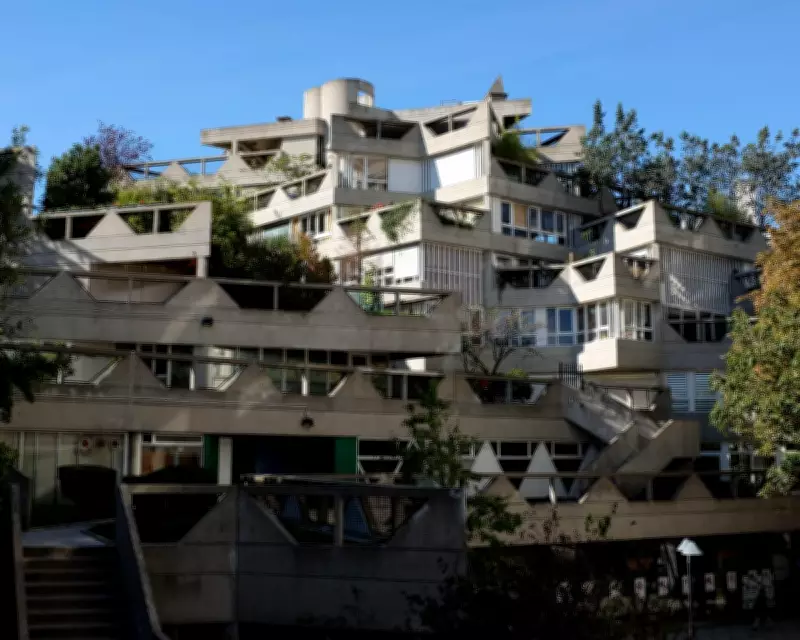
When French architect Renée Gailhoustet passed away in 2023, residents of Le Liégat, a social housing block she completed in 1982, displayed a heartfelt handmade sign reading: "Merci Renée." Unlike many architects accused of designing impersonal dwellings they would never inhabit, Gailhoustet lived in her duplex at Le Liégat in Ivry-sur-Seine for over four decades. Her work, characterised by cascading terraces and lush greenery, redefined social housing with a focus on space, light, and air.
Sky Gardens and Social Ideals
Gailhoustet's apartment blocks, such as Le Liégat, feature terraces and loggias covered with soil, allowing residents to cultivate private gardens high above the ground. Over time, planting has softened the concrete structures, creating a post-apocalyptic aesthetic that resonates on social media. This design was not merely aesthetic; it sprang from a socially minded vision to provide green space, anticipating today's eco-architecture trends aimed at mitigating rising temperatures. For instance, during France's 2003 heatwave, which claimed around 15,000 lives, such greenery offered natural shade and cooling benefits.
Often described as an "eco-brutalist," Gailhoustet's work defies easy categorization. After graduating from Paris's École des Beaux-Arts in 1961, she specialized in social housing and urban planning in Paris's less privileged suburbs beyond the périphérique. Her megastructures combined housing with communal facilities like shops and cafes, forming modern mini-cities. Designed for adaptability, apartments were generously proportioned, with flexible layouts to accommodate changing living arrangements.

Challenging Modernist Dogma
While Le Corbusier famously called a house "a machine for living in," Gailhoustet took an opposing stance. She believed homes should be shaped by occupants, with architecture serving as a template for enrichment rather than constriction. In her words, "The idea of social housing as an addition of little functional room boxes should not be given sociological sanction. Almost no one living in those conditions chose to. We are not so pretentious as to propose an ideal dwelling. We merely wish to create possibilities for choice."
Architect and academic Nichola Barrington-Leach, editor of an upcoming book on Gailhoustet, explains her appeal: "Her work invites us to imagine new ways of living together as an ecosystem, to reframe our relationship with nature, the city, with each other and ourselves. Homes are not machines for living in – but gentle, human, individual spaces."
Collaborative Design and Lasting Impact
In a career dedicated to building over 2,000 social homes, Gailhoustet offered a visionary alternative to the standardized postwar housing developments common in French cities. Commissioned by leftwing municipalities, she worked within budget constraints to develop innovative designs. Barrington-Leach notes, "She used those constraints to develop her vision and ideas. And I think that's the message I get from her – which is, actually, you can do so much with so little."
Her design process was highly collaborative, involving residents through large-scale models to discuss concepts like open-plan living and garden terraces. Although some initially struggled with the unconventional geometries, her homes remain loved and sought after. Most are still council-owned, and resident groups actively campaign for their preservation, successfully listing several buildings as protected sites.
Legacy and Recognition
Born in Oran, Algeria, in 1929, Gailhoustet moved to Paris for university, switching from philosophy to architecture to pursue her building ambitions, fueled by political convictions. Active in the Young Communist movement, she even had her nose broken by Jean-Marie Le Pen during clashes with far-right groups. Her major projects include transforming Ivry-sur-Seine and designing La Maladrerie in Aubervilliers, a complex with 850 dwellings and abundant civic spaces.

Despite political shifts in the 1990s that reduced large-scale housing projects, Gailhoustet's legacy is gaining recognition. In 2022, she received the Royal Academy architecture prize, with jury chair Farshid Moussavi praising her achievements as surpassing contemporary social housing standards. An exhibition, A Thousand and One Ways of Living, at London's Architectural Association, showcases her work through installations and models, highlighting her role as "an artisan of a difficult material: space."
Her architecture continues to inspire, proving that alternative, sustainable living frameworks can thrive, evolving with each resident and season.