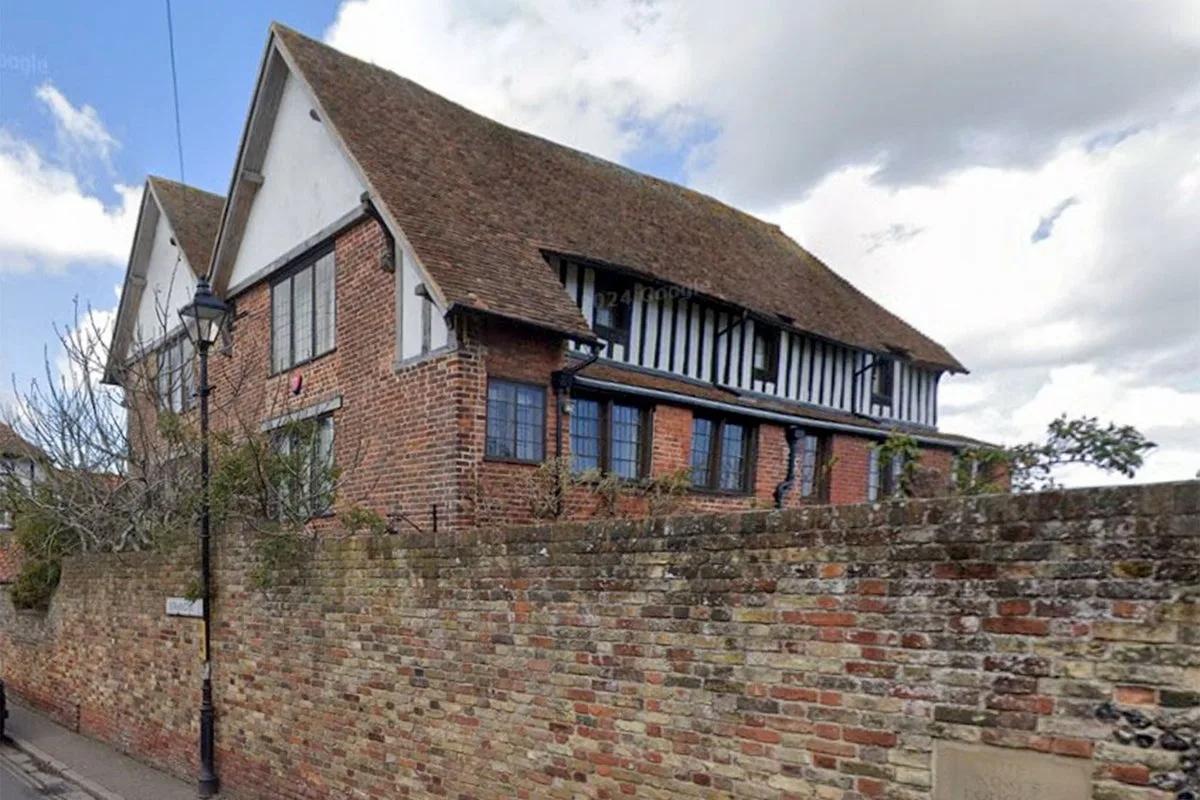
Pensioners Sue Environment Agency for £4.5m Over Damage to Historic Royal Home
A retired couple is taking legal action against the Environment Agency, seeking £4.5 million in compensation for severe damp and structural damage to their historic riverside home. The property, a Grade-II listed Tudor residence in Sandwich, Kent, was once used by King Henry VIII to survey his fleet before sailing to France.
Historic Property Suffers Modern Damage
Roger and Suzanne Brookhouse, keen amateur historians, purchased The King's Lodging in 1991. The timber-framed medieval house on the banks of the River Stour has a rich history, notably hosting King Henry VIII in 1520 as he prepared to sail for the Field of the Cloth of Gold summit with King Francis of France.
Despite its considerable age, the property was deemed in "satisfactory" condition in 2013. However, the couple alleges that subsequent flood defence work by the Environment Agency led to a significant rise in groundwater levels, resulting in widespread damp, cracked and bulging walls, and a ruined garden.
Their lawyers told the judge that the house has "suffered more in the last few years than it has done in the last few hundred."
Legal Battle Over Compensation Amount
The £4.5 million claim includes substantial sums for repairing the house and resolving the groundwater issues, alongside about £1.3 million to reinstate their previously "thriving" garden and replace an outdoor swimming pool, which they contend was damaged beyond repair by river water in the surrounding soil.
The Environment Agency, while accepting its liability to pay compensation, is contesting the amount, arguing that the sum requested is "excessive and disproportionate." The agency highlights that the £4.5 million claim is more than double the property's maximum estimated value of £1.9 million.
Court Rulings and Evidence
This week's tribunal follows a 2023 ruling where a judge found the agency liable for the damage, concluding that its work had indeed caused higher groundwater levels. In that earlier decision, Upper Tribunal Judge Elizabeth Cooke recounted the property's storied past and its more recent plight.
"In 1520, King Henry VIII stood at the window of the building now known as The King’s Lodging in Sandwich to review his fleet before setting sail for the Field of the Cloth of Gold," Judge Cooke said. "From the same window today, the most striking feature is the wall between the property and the River Stour, built by the Environment Agency."
The property had long been separated from the river by a wall, but in 2014, the agency constructed a new wall a metre further into the river, filling the space with drainage material. Following this, the Brookhouses reported regular water ingress into their garden, which Mr Brookhouse said had never previously been "boggy."
Videos presented to the court showed water leaking through the new wall, with a 2019 incident depicting river water seeping along the entire 53-metre length of the garden.
Ongoing Damage and Restoration Efforts
While a pre-work survey found the 15th or early 16th-century wooden-framed house in "satisfactory" condition with only minor cracks and damp, the couple claim that since the work, cracks have widened, paint and plasterwork have deteriorated, and part of the house front now "bows outwards." They argue that the rise in groundwater means the house is now standing in wet ground, causing ongoing and future damage.
Their garden, once "thriving," is now unplantable due to water levels and salinity, and their 1980s swimming pool is beyond repair due to concrete movement.
Judge Cooke, after hearing expert evidence, ruled in the couple's favour, confirming that groundwater levels were up to a metre higher after the agency's work. She concluded: "The building at The King’s Lodging has been damaged by the respondent’s works and will be further damaged in the future."
Legal Arguments and Future Proceedings
Back in court this week, James Pereira KC, representing the couple, argued for the £4.5 million compensation to cover damage and the cost of rectifying the groundwater rise. "The building appears to have suffered more in the last few years than it has done in the last few hundred," he told Judge Cooke.
He emphasised the couple's commitment to restoring their home, describing them as "custodians of this special place" with a "unique property" that holds national interest. Mr Pereira proposed installing sheet piles connected to the agency's flood wall with drainage valves as "the only adequately designed and costed proposal" for a "longterm sustainable future."
However, Galina Ward KC, for the Environment Agency, said that the Brookhouses' claims are excessive and lack sufficient evidence. "The evidence of the experts instructed on behalf of the Agency indicates that the extensive work suggested by the claimants is not necessary, and also that the cost of any work that is required will be very much less than is asserted by the claimants," she said.
Ms Ward added that the agency has always sought to deal fairly with the claimants and accepts compensation is due for the garden and house damage. She suggested that damage could be managed through "ordinary process of repair and maintenance" and that any intervention to lower groundwater should be "as conservative as possible." She also argued that the claim for a replacement swimming pool should be rejected, as it was "near the end of its useful life" in 2014.
The trial, now focused solely on determining the compensation amount, continues.






