
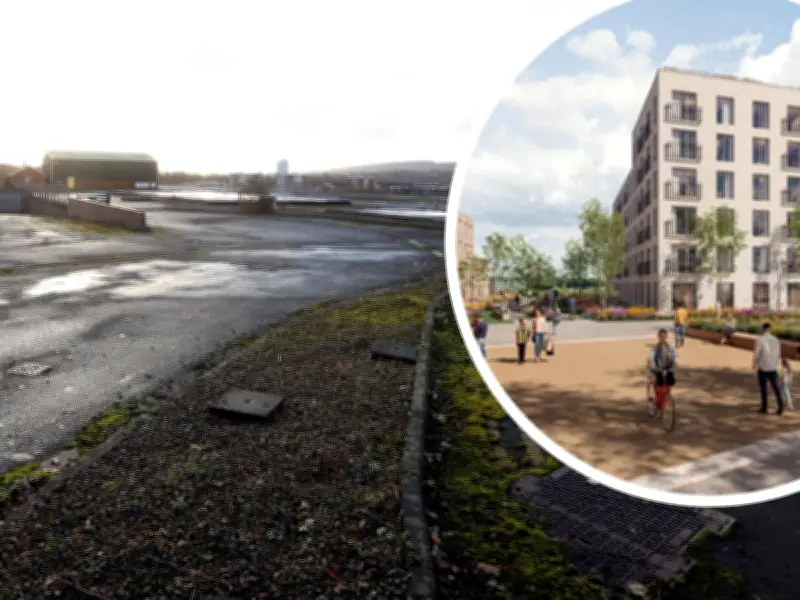
A planning inspector has dismissed an appeal by landowner MB European Limited to build up to 356 apartments on the Newcastle City Heliport site, upholding the city council's refusal of the £87 million project. The decision, issued on Tuesday evening by inspector John Dowsett, marks the second rejection of the proposal, which was initially refused permission in 2024.
Inspector's Ruling and Key Concerns
Inspector John Dowsett concluded that "the adverse effects of granting permission would significantly and demonstrably outweigh the benefits" of the development, which would have comprised apartment blocks up to seven storeys tall. He identified several critical issues, including poor accessibility for pedestrians and cyclists, the visual impact on the Tyne Gorge, and excessive noise from an adjacent gas pumping station affecting 116 of the proposed flats.
Dowsett noted that access routes under railway bridges on Dunn Street and Tyneside Road would be "perceived as threatening" and create a "strong psychological barrier." He also described the housing as "visually incongruous," undermining a key view from the south side of the River Tyne. Additionally, inadequate drainage plans and loss of grassland habitat weighed against the proposal.
Background and Council Position
The heliport site, in Railway Street, is part of the wider Forth Yards area, which city leaders view as critical for Newcastle's future regeneration. Over £120 million in government funding has been pledged for the neighbouring Quayside West project on the former Calders leadworks site, now owned by Homes England. The council argued that housing on the heliport would depend on Quayside West's infrastructure, which could take up to 20 years to complete, and that the area is currently "dark, dirty, isolated, and inactive."
Councillor James Coles, Cabinet member for Sustainable Housing and Green Investment, said: "I am pleased that the planning inspector has found in the council’s favour and dismissed this appeal. The council believed that MB European’s scheme was not the right scheme for the area and fell short in a number of ways." He added that the council aims for a strategic, master-planned approach to the Forth Yards development, which is expected to deliver thousands of homes and jobs.
Landowner's Response
A spokesperson for MB European Limited confirmed the company is "reviewing the decision carefully to enable the team to decide our next steps." The spokesperson expressed confidence that the site's value as an allocated housing opportunity remains intact, stating: "Any future sale of the site shall be predicated on residential land values, with or without a planning permission in place given that it is allocated."
The landowner criticised the inspectorate for not aligning with central government housing delivery goals, arguing that little weight was given to brownfield remediation, affordable housing, and job creation. The spokesperson said: "On the face of it, it looks like it has been turned down because he didn’t like the scale, even though the site is a highly sustainable location in close proximity the city centre and Central Station." They expressed hope that the wider site's delivery would not be delayed another twenty years.
Economic and Environmental Considerations
Despite rejecting the appeal, the inspector acknowledged "undoubtably economic benefits" from the scheme and that the land could be made safe for construction despite underground coal seams and a geological fault. However, the substantial and enduring harm to the character and appearance of the area, along with poor living conditions from noise, outweighed these benefits. The inspector also noted insufficient certainty on foul water drainage and mitigation for habitat loss.




