
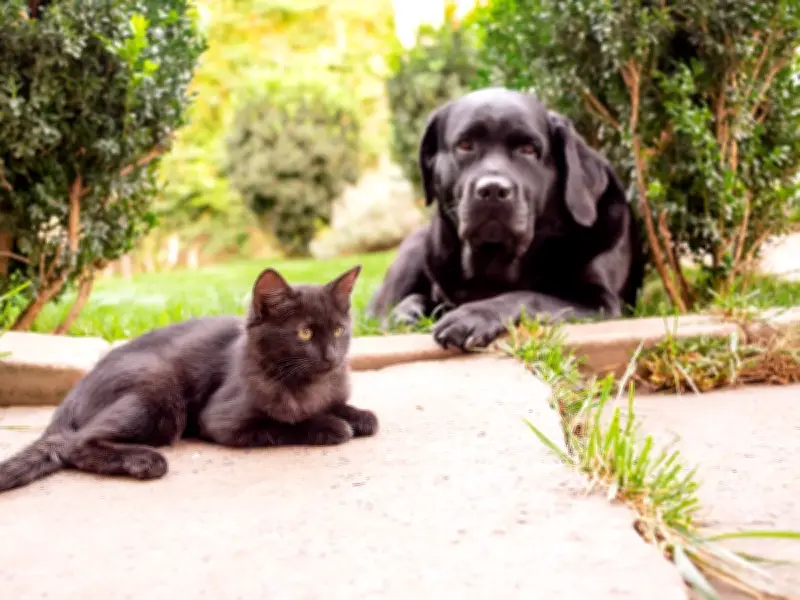
Your rights when a neighbour's pet fouls your garden depend heavily on whether it is a cat or a dog, and the first step is always the same: talk to the owner before considering anything else.
Under UK law, cats have a legal 'right to roam', which means owners are not generally liable if their cat wanders into private gardens and fouls outdoors. Homeowners cannot trap, harm or relocate a neighbour's cat, as doing so could constitute animal cruelty or criminal damage under the Animal Welfare Act 2006, says Manjinder Kaur Atwal, Director of Housing and Property Litigation at Duncan Lewis Solicitors.
Dogs are treated differently. Owners have a statutory duty to clean up after their pets in public spaces, and local councils can enforce Public Spaces Protection Orders (PSPOs) with fixed penalty notices. If fouling happens in communal areas such as shared corridors, courtyards or gardens, it may breach a neighbour's tenancy or leasehold rules on nuisance behaviour.
Start with a polite conversation
All the experts agree that the first move should be a calm, polite conversation with the neighbour. 'From my experience as a lawyer, I would not begin with legal threats. Start with a polite and honest conversation. The owner may not know what their animal is doing. Explain what has happened and ask them to help prevent it from happening again,' says David Gammill, trial attorney and founder of Gammill Law Accident & Injury Lawyers.
Keep a written and visual record
Before approaching the neighbour, and certainly before any escalation, document everything. Benson Varghese, a Board Certified Criminal Lawyer, says: 'The first thing that homeowners suffering from a long-lasting problem should do is to keep a journal of the situation with pictures or video evidence. Having a clear example of the ongoing problem will be much more effective compared to a one-off case. Usually, before any legal action is taken, mediation is the preferable way to settle a dispute, as it often proves to be quicker and cheaper.'
Follow up in writing if needed
If a conversation fails to resolve the problem, send a short, polite written request. 'If speaking to the owner does not work, the homeowner can send a short and polite written request. This also creates a record showing that the owner was told about the problem,' says Everett Lupton from Slaughter and Lupton.
Legal action is a last resort
All the specialists consulted agree that court action should only be used as an absolute last resort, because it is costly, time-consuming and can damage the relationship permanently. Mediation services are widely available as a cheaper and quicker alternative.
Instead of harming the animals, homeowners can try pet-safe barriers, citrus peels, a low fence, motion-activated sprinklers, or adding gravel to flowerbeds. Keeping soil damp is another tip that some cats reportedly dislike.




