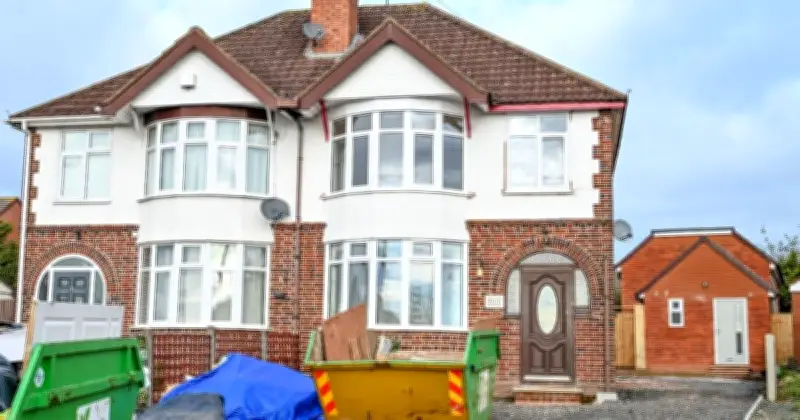
A woman who spent £170,000 on a two-storey annexe for her disabled daughter faces having to tear it down after losing a planning appeal. Clair Birch, 59, built the structure in the back garden of her semi-detached home in Worcester so her daughter could live more independently.
Neighbours were left fuming when the two-storey building appeared just metres from their homes without any planning permission. Clair now faces having to either demolish it within six months or make changes to comply with Worcester City Council's demands.
Planning application refused
Plans for a one-bedroom annexe to replace an existing garage and outbuilding at the property were retrospectively submitted on March 6 last year. Worcester City Council refused the application in November 2025 and a subsequent appeal was dismissed on February 16.
A separate appeal to extend the notice of compliance to 18 months was heard on August 12. The Planning Inspectorate threw out the challenge, claiming six months is adequate time for Clair to have the work done.
Mother's response
Speaking previously, Clair said: "I've done this building in good faith and thought since June I have the relevant permissions." The mum added: "I'm left with a building my disabled daughter is no longer able to use. She wants her independence. She's got a phobia of being on the ground floor at night, so we put a second floor in. That building was built to meet my daughter's needs. I was assured by someone who works in the department and my planner that it was all good. My snotty neighbours were fully aware of this and they were told from the start."
After the ruling by the Planning Inspectorate, Clair has until February to either bulldoze the annexe or amend it to comply with the council's requirements. Clair would not comment any further when approached this week.
Neighbour and inspector comments
A neighbour, who wished to remain anonymous, said: "At the moment, just take it down or do it as the council demands. I'm a bit fed up of it."
Planning inspector Sarah Hanson concluded in her report that the personal circumstances of Clair's daughter do not alter the fact the development has been found unacceptable on its planning merits. She said the compliance period is intended to provide a reasonable opportunity to make the necessary arrangements and carry out the required works. Ms Hanson said it also provides Clair with time to explore whether some other form of development might be considered more acceptable by the council. The inspector added that the steps required by the notice are straightforward and involve removal of the unauthorised building as well as any materials. She added: "I am satisfied that a period of six months provides sufficient time to comply with the requirements of the notice." Worcester City Council refused to comment.