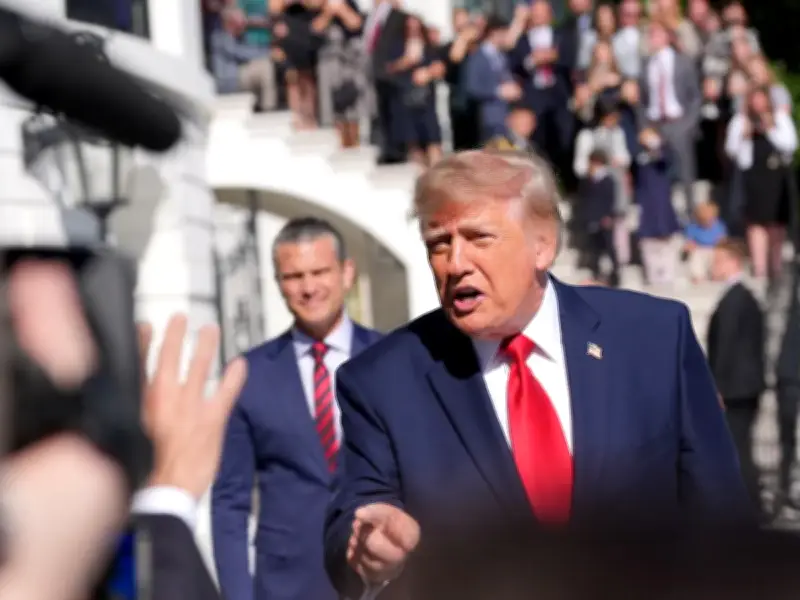
Donald Trump believes the world will 'find out soon enough' if the reported plague outbreak in Russia has been caused by a bioweapon.
Speaking at a press conference on Wednesday (October 7), the US President also compared Russia's 'silence' on the matter to China's approach to releasing information on the Covid-19 outbreak.
Quarantines and casualties
Trump was quizzed on the reported plague that is said to have claimed the life of bio-lab worker Darya Shipilova, 28, after she broke a test tube at the Irkutsk Anti-Plague Research Institute in Siberia.
Five hospitals have been quarantined along with more than 200 people Shipilova came into contact with.
White House response
Amid fears the plague could become another global pandemic, the US President has sought to calm the situation by saying the Kremlin has told him Russian officials 'have it under control'.
But Trump could not give a firm answer when asked if the plague was a bioweapon. He said: "Well, we don't think so. We're going to find out soon enough.
"We don't think so. If you listen to them it's under control."
Comparison to China
He also compared Russia's stance on the matter to China's at the start of the Covid-19 pandemic, which is believed to have originated in Wuhan.
"China did not say much, and Russia's not saying very much either but they do say they have it under control," he added.
CDC concern
His comments come as the man who led the American Centre for Disease Control (CDC) in early 2020, Dr Robert Redfield, speculated the plague could be a 'manipulated' form of the disease.
"If [Shipilova] was working in a plague lab and had an accident, there would have been a protocol for her to go on antibiotics within 24 hours [of exposure], and she would have likely responded effectively," he told NewsNation's Elizabeth Vargas Reports.
He added: "Now, if the plague that she was working with had been manipulated, to not be sensitive to antibiotics, which some of the bio-offensive programs that the Russians have done... have changed the susceptibility of these organisms to traditional antibiotics, that would explain why maybe they didn't work."