The old Mortlake Brewery site in south-west London has been mothballed, with owners failing to find a buyer. The 22-acre complex on the south bank of the Thames was expected to provide over 1,000 homes, many affordable, plus shops, a school and leisure and community facilities. Instead, it is being used for film sets and storage.
Formerly known as the Stag Brewery, the site is a short walk from Mortlake Station, which is clearly visible from the former brewery entrance. By any criteria, it fulfils the declared aim of Angela Rayner for more house-building on land close to Tube and railway stations.
Planning approval but no buyers
Rayner has said: "By unlocking thousands of homes around well-connected transport hubs, we're helping people live closer to work, school and the services they rely on, while backing local businesses and driving growth in our communities. That's how we'll tackle the housing crisis and raise living standards."

Sir Sadiq Khan, the Mayor of London, said of Rayner's move: "London needs more affordable homes and building near stations can help us deliver them."
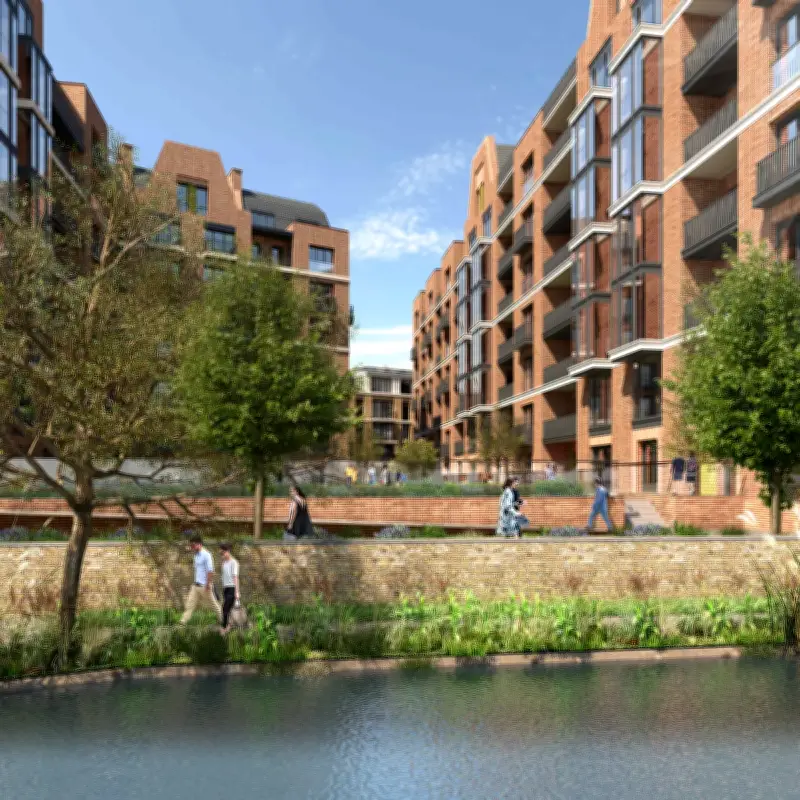
Despite these ambitions, prospective buyers cannot make the sums work. The site was bought by Singapore-based City Development Limited in 2015 for £158m. A 10-year planning process ensued, culminating in approval in May 2025 for a £1.3bn, riverside 1,068-home neighbourhood with a school, shops, offices and nine acres of green space. But now, no one wishes to know.
Industry challenges and community disappointment
Today's builders contend with increased material and funding costs, a shortage of skilled workers, post-Brexit difficulty bringing them in from the EU, extra regulations introduced after the Grenfell disaster including fire-safe cladding, and a collapsed London apartments market. The site has been taken off the market, with owners resigned to keeping it until conditions improve.
The Mortlake Brewery Community Group (MBCG), which has campaigned for a change of use acceptable to locals, said: "This is a huge disappointment for those of us who have campaigned for a sustainable development bringing the heart back to Mortlake. MBCG believes that if the council and developers had been more responsive to plans put forward by the community, we would now be seeing the construction of a thriving mixed development."
The developers initially proposed a scheme that would have yielded a profit, but protests saw the plans go back and forth. By the time there was resolution, it was too late. The result is loss to the neighbourhood, to people desperately short of somewhere to live, to the nearby state-funded Thomson House School, to the aesthetics of the riverside, and to the owner, who cannot have begun to recover what it spent despite receiving rental income from The Story Works film studios and warehousing.
National house-building at 12-year low
Only 1,220 private housing developments obtained planning approval in England in the first three months of this year. Last year, permission was given for 216,000 residential units, far short of the 300,000 figure the Government requires if its manifesto pledge of 1.5m new homes over the five-year parliamentary term were to be achieved. Nationally, house-building is at a 12-year low.
In London, builders broke ground on only 6,325 homes in the first quarter of 2026, equal to 7 per cent of the Mayor's yearly 88,000 target. Across the capital, 22,000 properties remain unsold or under construction, according to research from real estate consultants JLL.
Rayner is awarding a "default yes" to housing within walking distance of railway stations, including some green belt land. But this comes with new minimum density levels, regulations to safeguard pubs and community facilities, and the requirement that at least 40 per cent of large developments meet higher accessibility standards. Green belt sites face additional affordable housing and infrastructure rules.
Government support stalled
Nick Kilby, an expert in government and planning who runs the Cratus Group communications agency, said: "The problems are now very complex and multi-layered and have increased since Angela Rayner's first term as housing minister."

There is still no sign of promised government financial assistance for the sector. Announced in July last year, the £39bn Social and Affordable Homes Programme has stalled. Some developers must also contend with paying a lot at the top of the market, agreeing to prices that will now struggle to yield a healthy return.
The cost-of-living crisis has caused issues. The increase in student fees and loan repayments has hit first-time buyers, who must persuade mortgage lenders they can meet repayments and that their jobs are guaranteed, at a time when AI is wreaking havoc. The "bank of mum and dad" is not what it was either, with parents facing possible increased taxes themselves.
Kilby said: "The Government really needs to sit down, listen and consider suspending tax increases, stamp duty and the rest, if they want to build and sell homes. They must unlock and speed up the system, end the delays which cost money and bring forward affordable housing grants."
Rayner and her ministerial colleagues, and Khan, should ask why house-building capacity is going down, not up. If the minister needs a case study, she could do worse than examine the debacle that is the Mortlake Brewery.