Design Expert Reveals How to Make a Small Home Feel Luxurious and Expensive
Interior designer and television presenter Julia Kendell, a veteran speaker at the Homebuilding & Renovation Show for nearly two decades, challenges the traditional notion that property value hinges solely on square footage. In a recent discussion, she highlighted a significant shift in housing trends, driven by rising costs and changing priorities among homeowners.
The Shift from Size to Smart Design
Kendell notes that in the past, bigger homes were universally seen as better, with extensions and new builds maximising space to boost value. However, she observes a dramatic change in recent years, as moving house has become less frequent due to financial constraints. Many people, including younger generations, now view their first home as a forever home, prompting a focus on functionality and personal comfort over sheer size.
"With build costs per square meter so monumental now," Kendell explains, "it makes more sense to build what you need, not what you can get away with." She adds that extravagant living to impress neighbours feels outdated, with modern homeowners prioritising a sense of safety, security, and daily support from their living spaces.

Clever Design Tips for a Richer Feel
Kendell emphasises that clever design can make a compact home feel more luxurious and liveable than a poorly planned larger one. Here are her top strategies to create that illusion.
Height Before Width – Rethink the Ceiling
Ceiling height is a crucial yet underrated quality indicator, according to Kendell. Even a modest increase from 2.4 to 2.6 metres can transform a room by improving light, airflow, and visual breathing space, making it feel calmer and more expensive. She compares this to fashion, where elongated proportions enhance appearance.
If structural changes aren't feasible, Kendell suggests using tricks like ceiling-mounted curtain tracks, full-height doors, and vertical panelling to draw the eye upward. Painting ceilings the same colour as walls, through techniques like colour drenching, removes hard visual breaks and creates a taller, more cohesive look. "Height creates drama, width simply fills space," she asserts.
Natural Light is the Ultimate Luxury
"Light is what makes rooms feel alive," Kendell underlines, stating that a small, well-lit space outperforms a large, gloomy one. She recommends maximising natural light with taller, narrower windows for elegance, and using sheer curtains, shutters, or well-fitted blinds to maintain privacy without sacrificing daylight.
For darker areas, she advises considering internal glazing, glass doors, or borrowed light from hallways and stairwells. "Capturing daylight in a property is everything," she explains, noting how light can be stolen from brighter parts of a home to illuminate darker spaces.
Layered Lighting Signals Quality
Kendell warns that a single ceiling pendant is a budget giveaway, while high-end interiors use layered lighting. She urges homeowners to prioritise lighting in redesigns or new builds, as it often gets overlooked. "It will bring the room to life," she says, recommending at least three sources per room: ambient lighting (e.g., downlights), task lighting (e.g., reading lamps), and accent lighting (e.g., table lamps).
She stresses that even with expensive furnishings, a boring lighting scheme won't make a space feel fabulous. "Whatever you want to highlight and draw attention to, it will absolutely transform the space," she adds.
Built-in Storage Beats Extra Rooms
"Clutter is the enemy of luxury," Kendell notes, advocating for built-in storage to make a home feel expensive by hiding clutter. Suggestions include built-in wardrobes, window seats with hidden compartments, and floor-to-ceiling shelving to free up floor space and create clean lines.
She highlights the TV as a design challenge, suggesting media walls to disguise it and make rooms feel considered and functional. "It's about everything feeling like it's been thought through, not patched together," she says.

Choose Fewer and Better Quality Materials
Premium interiors rely on fewer, quality materials for cohesion, according to Kendell. She advises limiting your palette and repeating finishes across rooms to create flow. For example, engineered wood flooring throughout feels more luxurious than a mix of carpet, tile, and laminate.
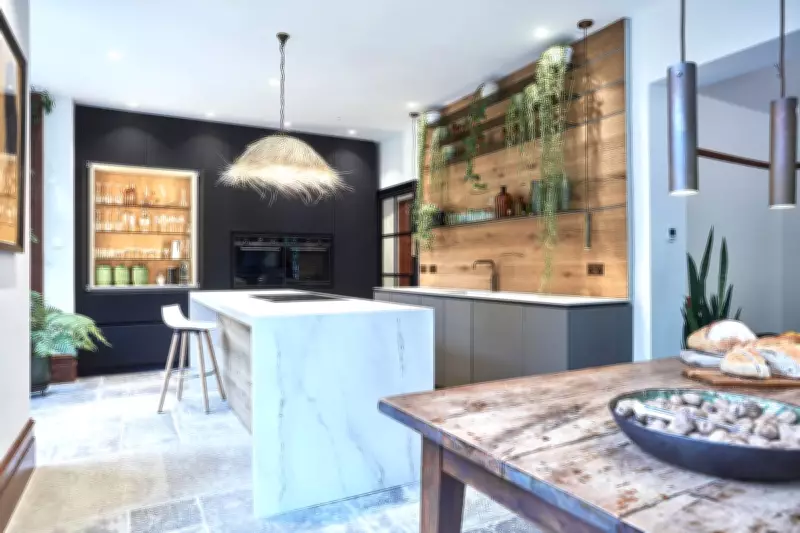
In kitchens and bathrooms, she recommends prioritising worktops, taps, and handles over expensive cabinets, as these are touched daily and quality shows. "A small room finished beautifully will always feel more expensive than a large one finished cheaply," she concludes.
Readers can meet Julia Kendell for a free one-to-one consultation at the Homebuilding & Renovation Show in Birmingham from March 19 to 22.