

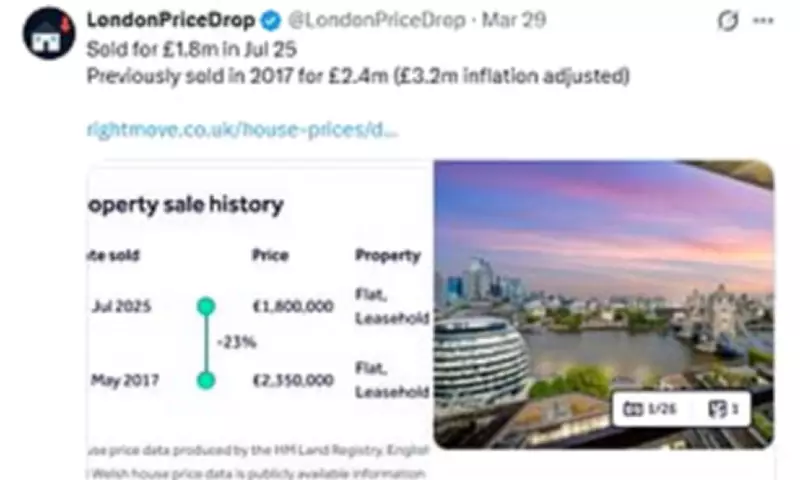
An anonymous social media vigilante operating under the handle LondonPriceDrop has gained over 13,000 followers in just one month by exposing devastating property losses across London. The account posts daily screenshots from RightMove showing homes in the capital selling for significantly less than their original purchase prices, striking fear into the estate agency sector and highlighting a grim new reality for homeowners.
Shocking Examples of Property Value Collapse
The posts present simple yet powerful evidence of substantial financial losses. One particularly stark example involves a Southwark apartment that was purchased for £2.4 million in 2017 but sold for just £1.8 million in July 2025, representing a loss of £600,000. Another eye-watering case saw a Limehouse apartment that sold for £825,000 in 2018 being bought for only £550,000 in November last year.
Even luxury properties haven't been immune. A six-bedroom house in Chelsea purchased for £7.8 million in 2014 lost over a million pounds in value when it sold for £6.4 million in July last year. These examples demonstrate that no segment of the London property market is safe from the current downturn.

The Statistical Reality Behind the Social Media Posts
Research from estate agent Hamptons reveals that 11 percent of London homes were either put on the market or sold in 2026 for less than their purchase price. The City of London was hit hardest, with almost 24 percent of properties selling at a loss. According to Office for National Statistics data, the average London home value experienced its steepest decline in nearly two years this January, falling 1.7 percent to £556,000.
Industry Professionals Express Grave Concerns
Marc Schneiderman, Director of Sales at Arlington Residential, described the plummeting house prices as 'totally gut wrenching' for many people, noting that property often represents their 'single biggest asset.' He cited the example of Primrose Hill homeowners who bought for £9 million and needed 'a few weeks to come to terms' with listing at £7.5 million.
James Perris from De Villiers Surveyors reported seeing discounts of up to 40 percent across various London properties, with mid-range stock and flats 'struggling' the most to sell. He attributed this to the retreat of overseas buyers scared off by rising interest rates and stamp duties, making previously popular two-bedroom flats and new builds difficult to move.
The End of Property as a Reliable Investment
Senior analyst Adam Hoyes from Rathbones declared that the period up until the mid-2010s, when house prices increased faster than inflation, is definitively over. 'Property is not the same investment proposition it was in the mid-90s,' he stated, explaining how stock market investments have proven far more fruitful.
Hoyes provided compelling comparative figures: £100,000 invested in the average London property in January 2016 would have grown to just under £113,200 by January 2026. Meanwhile, the same amount invested in a typical basket of stocks would have reached just under £224,600 during the same period.
Government Policy and Market Transformation
Anthony Payne, Managing Director of LonRes, believes the Government 'made a conscious decision' to stop what could have been seen as 'runaway growth in the property market.' Policy interventions over the past decade, including changes to stamp duty and the Renters' Right Act, have made property investment progressively less appealing.
The data confirms this dramatic shift. Between 1995 and 2016, London house prices rose by 9.1 percent per year according to ONS and Land Registry figures. However, between 2016 and 2025, that figure plummeted to just 1.3 percent. When adjusted for inflation, prices went from rising 7 percent annually in real terms during the first period to falling 2.2 percent per year in the second period.
Leasehold Flats Hit Particularly Hard
Leasehold properties face especially severe challenges. While sellers accounted for 60 percent of London sales in 2025, a staggering 90 percent of these actually sold at a loss according to Hamptons. Harry Scoffin, founder of campaign group Free Leaseholders, attributes this to futile attempts at leasehold system reform that have discouraged ownership.

'There’s much greater awareness that the first rung of the property ladder is toxic for first-time buyers, but also elderly downsizers,' Scoffin explained, highlighting how the current market conditions affect multiple demographics.
The LondonPriceDrop social media phenomenon has tapped into a growing awareness that London property is no longer the safe investment it once was. With daily posts documenting real losses and industry professionals confirming the trend, the account has become a stark symbol of a transformed market reality that continues to unsettle homeowners and professionals alike.





