London E-Bike Wars: Bolt Accuses Rivals of Sabotage by Moving Bikes to Get Them Impounded
A major e-bike company operating in London has made explosive claims that its rivals are deliberately moving its vehicles out of designated parking bays in the middle of the night to get them seized by council authorities. Bolt, which operates 600 rental e-bikes in the borough of Kensington & Chelsea, has accused competitors Lime, Forest and Voi of engaging in underhand tactics that have led to a surge in impoundments and fines.
Allegations of Systematic Sabotage
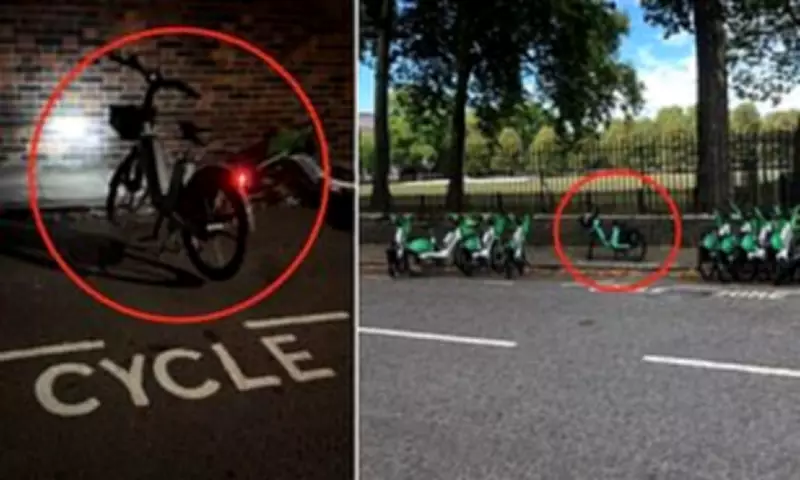
Bolt executives have presented a dossier containing what they describe as 'before and after' photographic evidence showing their bikes being moved from correctly parked positions. In one documented instance, a Bolt rider captured an image of their bike properly parked in a designated bay, only for council officers to later photograph the same vehicle outside the permitted zone, surrounded by rival company bikes.
Another case shows a Bolt bike correctly positioned within a bay on Walton Place in Knightsbridge, with subsequent council photographs showing it relocated to the pavement where it obstructed pedestrian access. The company believes these movements are occurring late at night when staff from competing operators come to clean parking bays or deploy additional vehicles.

'We've recorded repeated instances in Kensington & Chelsea where Bolt e-bikes that were parked correctly inside designated bays are later found outside them,' said John Buckley, a Bolt executive. 'In several cases, our bikes appear to have been moved shortly after a trip ended, and are then surrounded by large numbers of bikes from other operators.'
Financial Impact and Enforcement Issues
The consequences of these alleged actions are substantial. Since January 2025, more than 1,500 rental e-bikes from the four major operators have been impounded in Kensington & Chelsea, resulting in fines exceeding £130,000. When a bike is seized, operators face an £84.45 fine plus an £11.25 daily storage fee, while the vehicle remains out of service.
Buckley suggested the problem stems from 'significant overdeployment by other operators sharing the same parking infrastructure.' He explained: 'When bays become filled beyond capacity, bikes are displaced and moved, creating enforcement issues for compliant operators. That's not fair on residents who've parked properly, and it's not fair on operators who are sticking to the rules. Parking caps only work if everyone respects them.'
Rival Companies Respond to Allegations
Forest, one of the accused competitors, claimed they have experienced similar discrepancies between customer photographs and council enforcement images. Alex Berwin, head of policy at Forest, stated: 'Our policy is that staff must never move bikes that belong to other operators. We have raised this discrepancy with the relevant boroughs on multiple occasions, as it is important that enforcement processes are accurate and evidence-based.'
A Voi spokesperson also reported evidence of their vehicles being moved and claimed they have made multiple complaints to Transport for London, council boroughs, and directly to other e-bike companies. 'We have seen repeated examples of properly parked Voi vehicles being shifted into unsuitable locations over the past three years,' the spokesperson said. 'The key driver of this issue is that certain operators are putting more vehicles on the street than permitted.'
Lime offered a different perspective, suggesting their popularity might be contributing to parking pressure. A Lime spokesperson noted: 'All these photos show is that Bolt bikes are being used less frequently and likely being moved by riders to access other vehicles. Lime does not instruct its on-street teams to overdeploy in parking bays, nor to move the bikes of other operators.'

Council Response and Industry Tensions
Kensington & Chelsea Council currently maintains 246 rental e-bike parking bays, though the total fleet size operating in the borough is believed to number in the thousands. Councillor Johnny Thalassites, lead member for environment and planning, defended the council's enforcement approach: 'Our priority is ensuring our pavements are safe and accessible for everyone, and we make no apologies for our enforcement policy. If an e-bike is causing an obstruction or parked dangerously, we will remove it, regardless of which operator it belongs to or how it ended up there.'
Thalassites acknowledged the competitive tensions, stating: 'While allegations of "turf wars" and sabotage are matters for the operators to resolve among themselves, they highlight the chaotic nature of the current market where some operators are flooding our borough with more bikes than our agreed parking bays can accommodate. Long term, we need a solution from Government about how the demand and operations are managed by the providers.'
Calls for Regulatory Intervention
Bolt is now calling for 'closer oversight and enforcement to ensure that parking caps are respected by all operators.' Buckley detailed his company's approach: 'We've deliberately taken a responsible and cautious approach in Kensington and Chelsea, going beyond industry practice. Our app won't allow riders to end a trip if a bay is already full, we limit how many bikes we deploy, and we have local patrollers repositioning bikes throughout the day. We also provide the borough with transparent, real-time data on every Bolt e-bike.'
The controversy highlights growing tensions in London's competitive e-bike rental market as companies vie for limited parking infrastructure. With thousands of bikes operating across just 246 designated bays in Kensington & Chelsea alone, the pressure on parking space has created what some are describing as a 'turf war' with significant financial consequences for operators and potential safety implications for pedestrians.