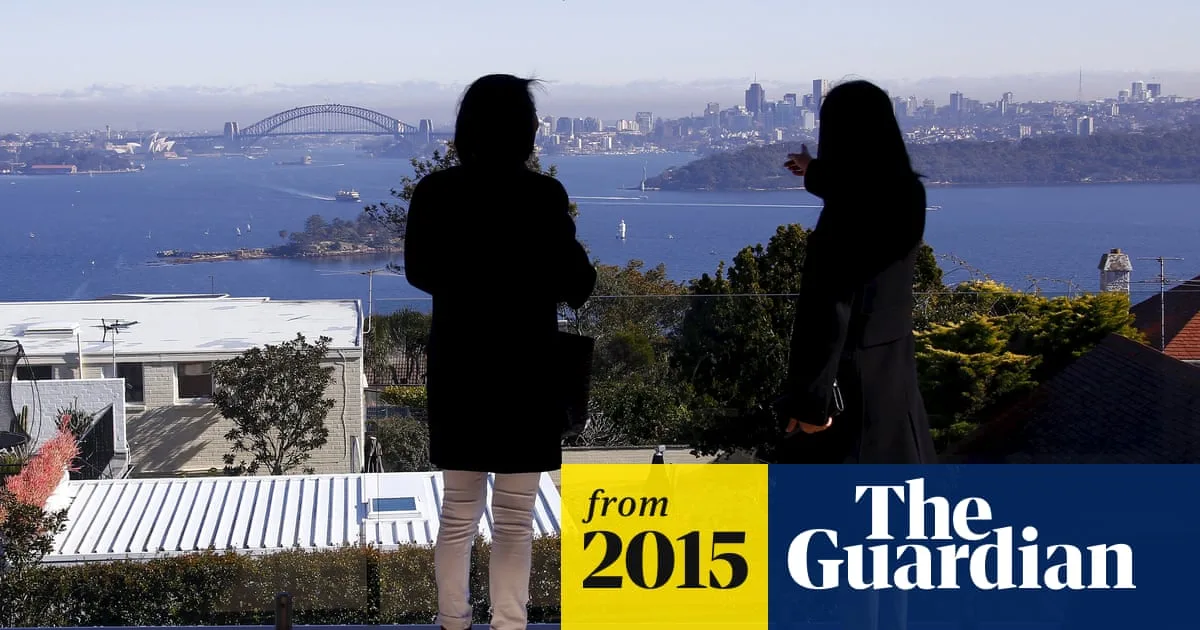
Real estate agents in Australia, Britain, and Canada are preparing for a surge in interest from wealthy Chinese investors seeking safe-haven property markets following recent volatility in Shanghai's stock market. Sydney agent Michael Pallier of Sydney Sotheby's International Realty reported selling two new apartments and showing a A$13.8m house to Chinese buyers in the past week alone. 'A lot of high-net-worth individuals had already taken money out of the stock market because it was getting just too hot,' he said.
Chinese shares have fallen around 20% since mid-June, despite government efforts to stem the decline. Many wealthy investors had already cashed out, with major shareholders selling 360bn yuan (US$58bn) in the first five months of 2015, compared to 190bn yuan in all of 2014, according to Bank of America Merrill Lynch. While much of this capital may initially go into liquid assets like US Treasury bonds or the Swiss franc, evidence suggests foreign property sales could receive a boost.
Tom Bill, head of London residential research at Knight Frank, noted anecdotal evidence of increased Chinese interest in safe-haven global property markets, including London, due to the stock market volatility. Ed Mead, executive director of London realtor Douglas & Gordon, said his firm had seen two buyers from China looking to purchase whole blocks of flats, calling it 'unusual' and implying a capital movement rather than individual parking.
Since 2000, China has had the world's largest outflow of high-net-worth individuals, with around 91,000 seeking second citizenship between 2000 and 2014, according to Lion Global. Most move to the US, Hong Kong, Singapore, and Britain. In London, Alex Newall of Hanover Private Office said he had seen increased interest from Chinese investors looking to park between £25m and £150m in homes, though no transactions have yet occurred.
Australia and Canada are also gaining popularity due to weakening currencies, making property cheaper in yuan terms. However, the rush has drawn criticism in London, Sydney, and Vancouver for pushing up prices. The Australian government has introduced fees and jail terms for foreign investment rule violations, and the Chinese owner of a A$39m Sydney mansion was forced to sell after buying illegally through shell companies. Some worry that Chinese investors who did not exit stocks in time could drag on international property markets, especially after Beijing banned large shareholders from selling for six months.