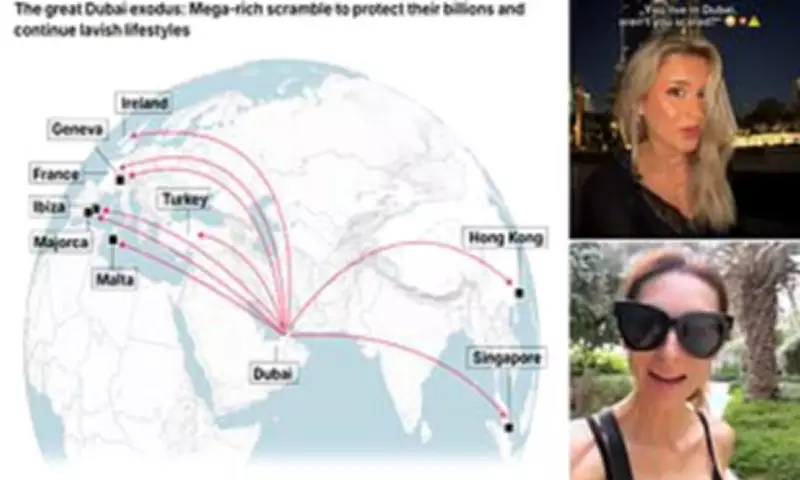
Dubai's Wealthy Residents Flee Amid Regional Conflict
As the US-Israeli war with Iran continues to destabilise the Middle East, thousands of Dubai's ultra-rich residents are hastily departing the city to safeguard their billions. The glitzy Gulf state, once a magnet for wealthy expats due to its tax-free salaries, low crime rates, and booming job market, is seeing its allure tarnished as infrastructure faces attacks.
Mass Exodus and Tax Implications
Foreign Secretary Yvette Cooper recently revealed that 100,000 UK nationals have returned from Dubai since the conflict began. However, Britain is not an attractive option for high-net-worth individuals seeking to avoid hefty tax bills upon homecoming. With less than three weeks left in the current financial year, many overseas residents have already used their tax-free days in the UK.
For Britons looking to escape the threat of drones and missiles while dodging HMRC, countries like France and Ireland are emerging as temporary safe havens. Meanwhile, holidaymakers are swapping Dubai's Burj Khalifa for the nightclubs and beach bars of Majorca and Ibiza, reconsidering Easter break plans.

Property Market Collapse and Luxury Alternatives
Majorca luxury real estate agent Marcel Remus reported a surge in inquiries after cancellations of Dubai and Abu Dhabi bookings. 'Now everyone wants to go to Mallorca again!' he told Bild. Property sales in Dubai have collapsed, with local media reporting a 51% fall in transactions and projections of a 20% slump in value.
Remus noted skyrocketing demand for luxury villas in Majorca, with prices reaching up to €100,000 per week—a 25% increase—and yacht charter companies also seeing significant demand.
Influencers and Safety Concerns
Despite missiles raining down over the UAE, influencers in Dubai have posted identical videos emphasising the city's safety, viewed millions of times. This has led to online speculation about state-sponsored propaganda. Former Love Island star Sam Gowland, who built a property empire in Dubai, is left with an 'unsellable' villa, while Vicky Pattison claims the city remains 'one of the safest places in the world.'
On February 28, the first day of the war, Dubai's Fairmont hotel on Palm Jumeirah was set ablaze, and flames licked the Burj Al Arab hotel. Dramatic footage showed a fireball near the Burj Khalifa as a weapon was intercepted. Two weeks later, a drone strike sparked a fire near Dubai's international airport, halting flights and causing thick black smoke.
Evacuation Challenges and Rising Costs
Evrim, a mother of two from Turkey, described fleeing with her family after missile debris hit the Fairmont hotel near their home. 'When we saw the fire, we said OK, it’s time to go,' she said, paying $200,000 to fly from Oman to Geneva. The journey involved a six-hour desert drive to Muscat.
Bernardus Vorster, CEO of SHY Aviation, noted private jet flights from Muscat, Dubai, and Riyadh spiked from 10-15 daily to 98 less than a week after the war began. Increased demand, limited aircraft, and surging insurance costs have driven prices up, with one flight from Muscat to Istanbul costing $145,000—a 142% increase from pre-conflict rates.
Popular destinations include Istanbul, Athens, and Mumbai, but private jets offer limited relief due to high costs and capacity constraints. John Matthews of AirX reported requests from ultra-high-net-worth families and corporations relocating executives.
Alternative Destinations Gaining Popularity
For those seeking safety and tax advantages, Malta is emerging as a desirable option. Mike Harvey of 1st Move International noted enquiries for removals to Malta more than doubled in early 2026, citing over 300 days of sunshine, an English-speaking population, and favourable tax policies, including no inheritance or Capital Gains tax.
Geneva is also seeing an influx of wealthy individuals from Dubai, with Switzerland bracing for billions in new Gulf cash holdings. Patrik Spiller of Deloitte Switzerland expects increased assets from the Middle East, as the Swiss franc hit its highest level against the euro in over a decade after US-Israeli strikes on Iran.

Asian Investors Rethink Dubai Exposure
Many of Asia's richest families are reconsidering their investments in Dubai, with consultants receiving calls from panicked clients delaying relocations or reducing exposure. Nick Xiao of Annum Capital noted Asian investors are moving money back to Hong Kong or Singapore, while Felix Lai of JMS Group arranged a $300,000 private jet for 15 clients from Oman to Hong Kong.
A Bloomberg analysis of UK company filings showed a spike in departing business leaders due to taxes, with the UAE and Geneva as top destinations. Notable figures include Egypt's richest man Nassef Sawiris and Checkout.com founder Guillaume Pousaz.
However, it may take time for Dubai to restore its reputation for safety and stability, as wealthy residents weigh permanent moves amid ongoing conflict.