
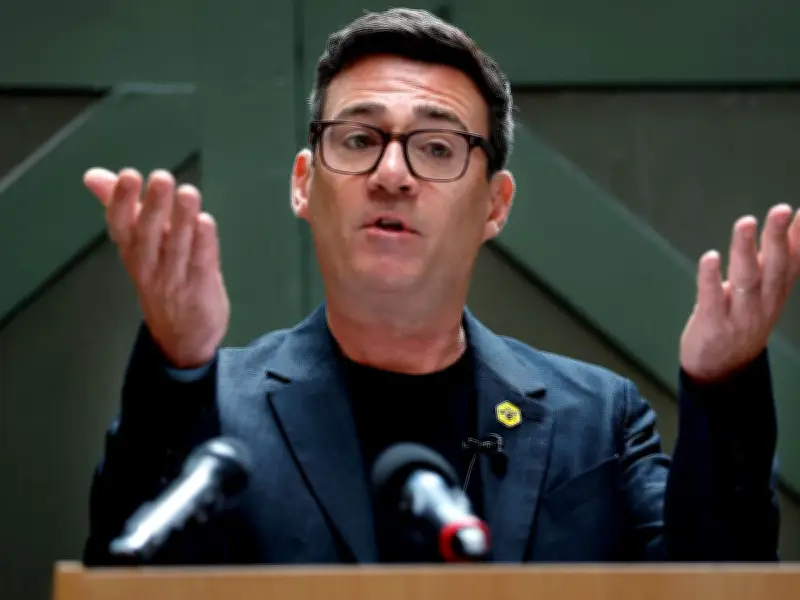
Andy Burnham has promised the biggest council house building drive since the post-war era as he unveiled his blueprint for power. In his first speech since Keir Starmer said he would step down, the would-be Prime Minister said the country was stuck in a 'housing trap' with nearly 1.5 million fewer council homes since the 1980s when Margaret Thatcher's Right to Buy policy triggered a massive drop in public housing stock.
Housing Crisis Impact on Public Finances
Burnham warned the crisis was having a 'ruinous' effect on the public finances. He criticised the freeze on the local housing allowance, saying it pushes families into homelessness and then drives up costs for temporary accommodation for cash-strapped councils. New homes will be built on vacant public land in a push to rival the post-war housing boom, driven by a new No10 North operation based in Manchester, he said. He didn't give further details on the figures, but last year suggested a target of half a million social homes by 2030.
Devolution and Economic Rebalancing
At the heart of his plans is an overhaul of the way Britain is governed. He promised to usher in 'the biggest rebalancing of power our country has seen', with a decade-long plan to make people better off and transform essential services. The new No10 North unit would act as the 'nerve centre of a rewired Britain', driving re-industrialisation, reform of utilities like water, housing, energy and transport, and revitalisation of overlooked communities, he said. Powers will be handed to mayors and local leaders, he added: 'It is time for Whitehall to accept that growth cannot be ordered from the top down. Instead, it can only be nurtured from the bottom up.'
Education and Aspiration
A secure home and a good technical education were the foundation of working class aspirations when he was growing up in the 1970s, he told an audience in Manchester. 'Those things have been taken away in the decades since,' he said. 'No wonder so many young people struggle to make it work and don't make it work. Don't blame them, blame ourselves. We haven't been giving people this stability, this ability to get on in life. It's time we did. And brought back working class aspiration – the chance of somebody growing up here to be everything they can be.'
He promised to overhaul the education system so university isn't seen as the only route for young people, and said there needed to be a 'complete rethink of how we support the next generation to succeed'. He said: 'University is great for those who want it, but when are we going to focus on the life chances of those kids who want something different? The country hasn't done that for a long, long time.' Pointing to a damning report by Alan Milburn on the crisis of young people locked out of employment, education and training (NEETs), he said he would answer calls from mayors for devolution of employment support to help jobless youngsters. He added that mental health support should be provided as part of in-work support.
Business Rates and Living Standards
Burnham also pledged to reform business rates for pubs and high street outfits to get town centres thriving again. 'Rather than being a marker of decline, shouldn't we make our high streets the symbols of Britain's renaissance,' he said. While he said he would lead a 10-year mission to raise living standards, he said people can't wait for change. He said: 'I heard on doorsteps in Makerfield how people need a bit extra now to help with rising costs. I will do my very best to deliver it and, whilst not taking risks with the public finances, will seek to give Britain some breathing space as soon as I can. People need to be able to look forward to a night out or a holiday with the kids. People need hope.'
He went on: 'Imagine if we could bring down the cost of energy for people and businesses, and the good things that would come from that. Imagine good growth in every postcode and hope in every heart... Well, imagine no more. Let's make it happen.' As speculation hits fever pitch in Westminster about who could be in his Cabinet, he said he would not make any announcements about his top team until the end of the leadership race. If no one stands against him, he will be named as Labour leader on July 17, and will enter Downing Street on July 20.




