Major East London Development Receives Green Light with 20,000 New Homes
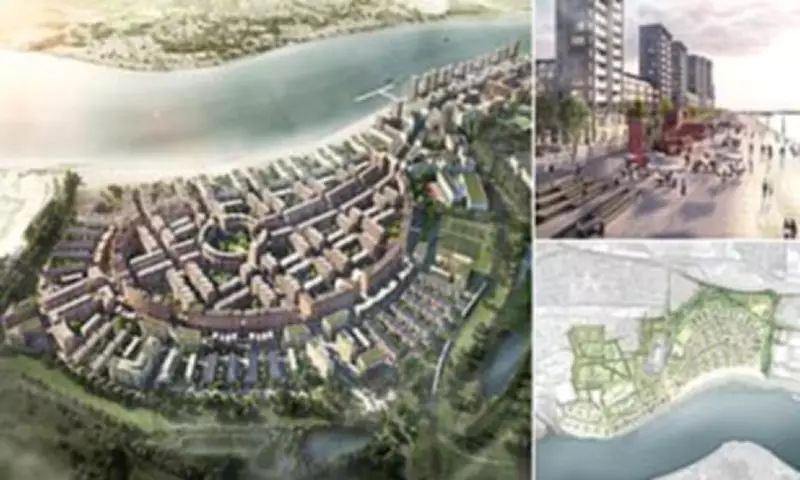
A transformative new town project in east London has been officially approved, set to deliver 20,000 homes alongside comprehensive community infrastructure as part of a concerted push to address Britain's acute housing shortage. The Barking Riverside scheme, spanning 443 acres, has been granted outline planning permission by Barking and Dagenham Council, nearly doubling the previously authorised allocation of 10,800 properties.
Comprehensive Community Infrastructure Planned
The ambitious masterplan extends far beyond residential units, incorporating significant public amenities designed to create a fully integrated neighbourhood. Among the key features are two substantial public parks, three additional schools, a new health facility, and dedicated commercial spaces. The development will also prioritise sustainable transport with enhanced walking and cycling routes, alongside improved riverfront access for residents.
Notably, 4,000 of the total homes have been specifically earmarked as affordable housing, representing a crucial component in addressing London's affordability crisis. The development could ultimately accommodate approximately 50,000 people, making it one of the largest regeneration projects currently underway in the United Kingdom.

Political Support and Brownfield Emphasis
The project represents a joint venture between London Mayor Sir Sadiq Khan and housing association L&Q, with substantial financial backing exceeding £170 million in grant and loan funding from government agency Homes England over the past five years. This approval aligns with the Labour government's updated planning framework, which explicitly prioritises brownfield development and suggests local objections should not obstruct housing on such sites.
Prime Minister Sir Keir Starmer has positioned himself as a vocal "yimby" (yes in my backyard), criticising "nimbys" and "blockers" who oppose new housing. The government's planning policy framework states that brownfield schemes "should be approved unless substantial harm would be caused," reflecting this pro-development stance.
Official Reactions and Strategic Significance
Tom Copley, Deputy Mayor for Housing and Residential Development, hailed the approval as "one of the most significant and exciting housing developments not just in London but anywhere in the UK." He emphasised its role as "a fantastic example of a major brownfield regeneration" delivering for the local community in east London.
Leigh Johnson, Managing Director of Barking Riverside Limited, noted that the 4,000 affordable homes "represent an opportunity for households to come off the housing waiting list and for local families to take their first step on the property ladder." Meanwhile, L&Q Group Chief Executive Fiona Fletcher-Smith suggested the project "could be a blueprint for brownfield development across the country," highlighting its potential national significance.
Broader Housing Context and Challenges
This approval comes against a backdrop of concerning housing delivery statistics. Official figures from January revealed that just 47,600 new homes have been built in London since Labour came to power in July 2024, far short of the government's annual target of 88,000 for the capital. Nationally, 309,600 homes have been completed across England during this period.
The Labour government has set an ambitious target of building 1.5 million new homes by the end of the current Parliament in July 2029. However, significant industry challenges threaten this goal. The UK construction workforce declined to 2 million in the third quarter of last year, the lowest level in 25 years, with 35% of workers aged over 50 and only 20% under 30.
The Construction Industry Training Board warns that 61,000 new workers annually would be needed to meet the 2029 housebuilding target. Meanwhile, the Office for Budget Responsibility forecasts only 305,000 new homes built per year by decade's end, resulting in approximately 1.3 million total homes from 2024 to 2029/30—200,000 short of the government's target.

Planning Reforms and Future Prospects
In response to these challenges, the government has introduced sweeping planning reforms designed to accelerate development. A new draft National Planning Policy Framework promises to streamline applications and facilitate approvals, particularly for developments near busy railway stations. Councils will be instructed to give a "default yes" to applications within a 15-minute walk of stations that deliver at least 20 homes per acre.
Additionally, council planning committees will lose decision-making authority over small developments, with these determinations transferred to "expert trained planners." The reforms also modify biodiversity protections, exempting sites under half an acre from existing rules, with potential extensions to six acres in certain cases.
Despite current construction slowdowns—with only 115,700 homes started across England in Labour's first year, just 39% of the 300,000 annual pace needed—the government maintains that its planning reforms will generate a construction surge in the latter part of the parliament. A Ministry of Housing, Communities and Local Government spokesperson affirmed: "We will leave no stone unturned to build the 1.5 million homes this country desperately needs and restore the dream of homeownership."
The Barking Riverside development, with its London Overground station and Uber Boat pier already operational since 2022, now enters its next phase as a flagship example of large-scale brownfield regeneration, testing whether ambitious housing targets can be realised through strategic partnerships and reformed planning processes.