
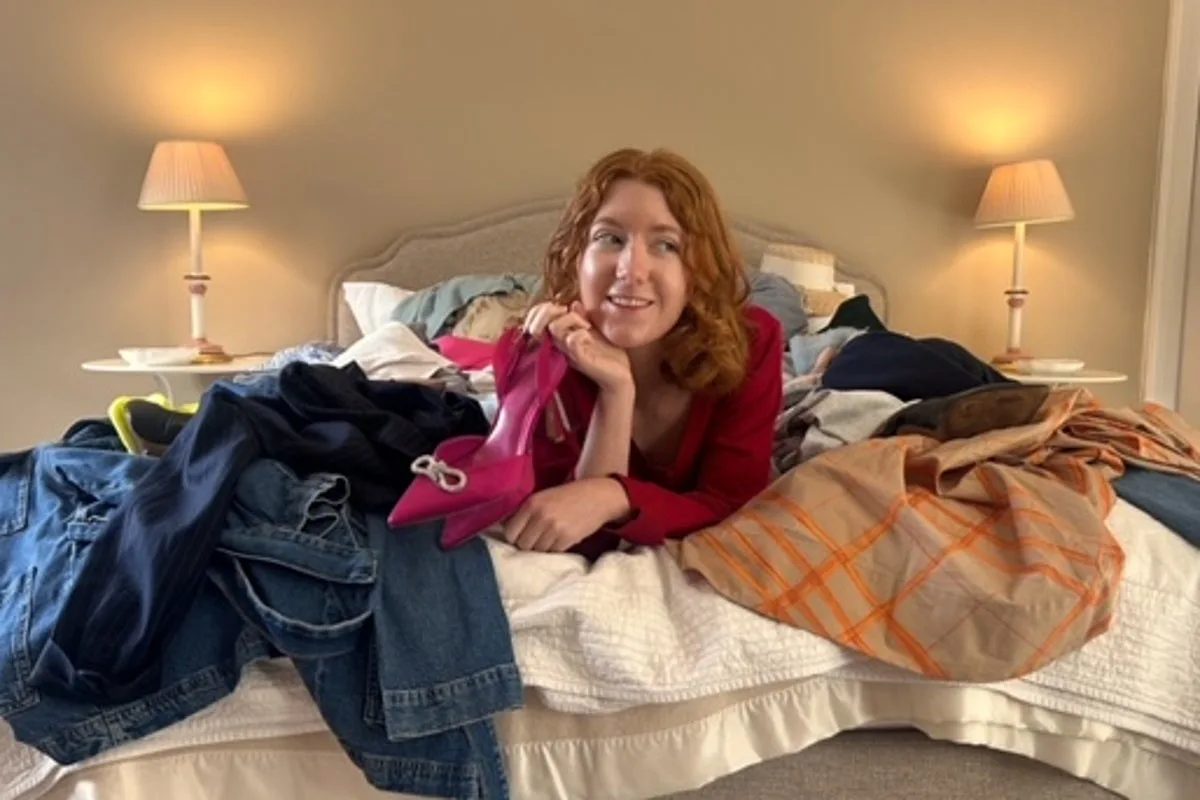
Like many people nowadays, I recently found myself in possession of a wardrobe packed full of items that I no longer wished to wear. Before making the trip down to my local charity shop, I thought I’d check to see if my sisters wanted anything.
“Sell them on Vinted!” they suggested, with a nod to the phrase “rags to riches”. So that’s what I did. I downloaded the app, managed to flog a few of the pieces, and have regretted it ever since. Why? Because I have now entered the Vinted vortex – a realm that online screams sustainability and disseminates anti-fast-fashion messaging, while in the real world often achieves the exact opposite.
It seems unfair to discredit the progress made by Vinted, an online second-hand marketplace that just last week boasted of its $8bn value. It has all but revolutionised the way we shop, helping to cement a more environmentally friendly approach to purchasing second-hand clothing as mainstream. But after joining the app, and talking with friends who have been on it for years, I’ve found myself face to face with what feels like its dark side – one that appears to care little for its carbon footprint or the ultimate takedown of fast fashion.
Vinted can encourage overconsumption; its business model is fuelled, if not dependent, upon our love for impulse buying and the ease with which we discard items. The doomscrolling element of the app only amplifies this. Presenting itself in the same way as social media platforms like Instagram and TikTok enables it to wield a similarly addictive quality. I have friends who spend hours – and I mean hours – scrolling on Vinted, something I’d argue is largely driven by the app’s design.
One friend described purchases on Vinted as an “addictive dopamine hit” which “cannot be matched by normal shopping”. It can lead to the purchase of countless products we neither want nor need – too many times has a Vinted package arrived at my door that I had all but forgotten about. Even worse, when we don’t return them, these unwanted items of clothing, shoes or accessories can end up going in – you’ve guessed it – the bin. “One man’s trash is another man’s… trash, plus shipping.”
And that’s where the next issue comes into play. The packaging and shipping of all the items sold creates a whole new dimension to the waste production associated with fast fashion and, since downloading the app, it’s shocked me how many items for sale cost less than the price of sustaining their unnecessary supply chain – a supply chain that arguably needn’t have existed in the first place. Decluttering our wardrobes has now become a mass procedure of packaging, shipping and online financial transactions, all coming with the very real possibility that said package will come flying back to your doorstep when the buyer decides that the item they ordered, perhaps drunk in bed after a night out, wasn’t exactly what they thought it was. So, in the end, we’re left with a worthless piece of clothing that pointlessly just enjoyed a first-class, carbon-fuelled trip across the country – or even overseas – while being packaged and repackaged more times than a re-gifted bottle of prosecco at Christmas. Nothing about this invokes a sense of care for the environment, and it begins to look uncomfortably similar to the world of fast fashion.




