
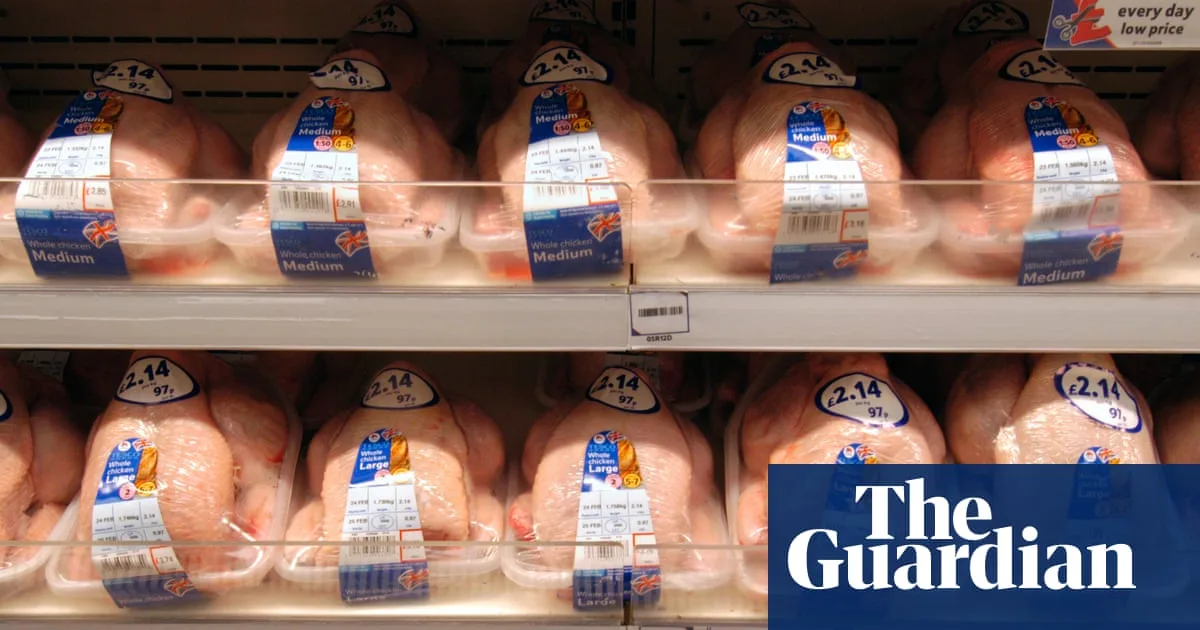
The UK could face gaps on supermarket shelves this summer if disruption caused by the Iran war continues, with shortages of carbon dioxide potentially hitting supplies of chicken, pork and fizzy drinks. Government ministers are drawing up contingency plans for a 'reasonable worst-case scenario' if the key shipping lane of the Strait of Hormuz does not reopen, disrupting supplies of CO2 required by the food industry.
Officials from departments including No 10, the Treasury and the Ministry of Defence have run a planning operation named Exercise Turnstone to rehearse various scenarios of how British industry could be affected by a long closure of the strait. The planning exercise run by the government’s Cobra emergency committee was based on multiple disruptive events happening at once, including the strait still being closed in June, a lack of a permanent peace deal between the US and Iran, and a mechanical failure at one of the UK’s key CO2 plants.
Business Secretary Peter Kyle called the leak 'unhelpful', telling Times Radio: 'The public need to be reassured that we are doing this kind of planning.' He added that supplies of CO2 were 'not a concern' for the UK economy. The boss of Tesco, Britain’s biggest retailer, said it was not aware of any problems with carbon dioxide availability across its supply chain.
CO2 is essential for the humane slaughter of livestock, packaging of fresh meats and produce, fizzy drinks and beer, as well as cooling systems. Any shortages would come at a difficult time for breweries expecting to be busy before this summer’s football World Cup. Beyond food, the gas is also needed for surgical procedures, MRI scans and cooling nuclear power plants.
The UK is one of Europe’s largest users of CO2. In March, Kyle said the government would invest £100m to reopen the mothballed Ensus bioethanol plant on Teesside over fears that the war in Iran could trigger shortages. On Thursday he said the decision to restart the plant for three months meant 'people should be reassured'. A government spokesperson said: 'Reasonable worst-case scenarios are a planning tool used by experts and are not a prediction of future events.'




