Rolls-Royce is expanding its Goodwood factory by nearly double as part of a £300m investment from owner BMW, driven by a surge in bespoke customisation from younger, tech-rich clients. The factory expansion aims to meet the “ever more complex” demands of customers, according to Julian Jenkins, Rolls-Royce’s director of sales and brand.
Bespoke requests grow more indulgent
At the West Sussex factory, special requests have become increasingly extravagant, including an interior lined with 3,000 iridescent feathers, a built-in champagne cooler, and a car built in homage to a customer’s dog. The average buyer is now 43, down from 56 in 2010, with many fortunes built in technology, cryptocurrency, and AI.
One car, built for a wealthy American couple, was devoted to their Labrador, Bailey. The dog’s face was pieced together on a rear panel using more than 180 individual slivers of wood, a four-month project, with paw prints engraved in the doors.
Customisation drives value
The average Rolls-Royce sells for about £500,000, up from about £300,000 a decade ago, driven largely by customisation work. A heavily personalised car can cost 25% more than the standard price, and seven-figure sums are “not unusual”, a spokesperson says. The company’s range includes the Phantom from £441,000, the Cullinan SUV from £345,000, the Spectre electric car from £333,000, and the Ghost from £290,000.
“The limits are set by the client,” says Jenkins. “We’ve seen some extremely complex and intricate commissions, and some of those can take multiple years. With that, there is value that comes as a consequence.”
Expansion amid industry strain
The expansion comes as carmakers face pressure from Chinese competition, soaring energy costs, and US tariffs. Jaguar Land Rover recently said it would cut 4,000 jobs, while Volkswagen is cutting 100,000 jobs by 2030. Shrinking demand in China, a key export market, has “obviously been significant”, Jenkins admits.
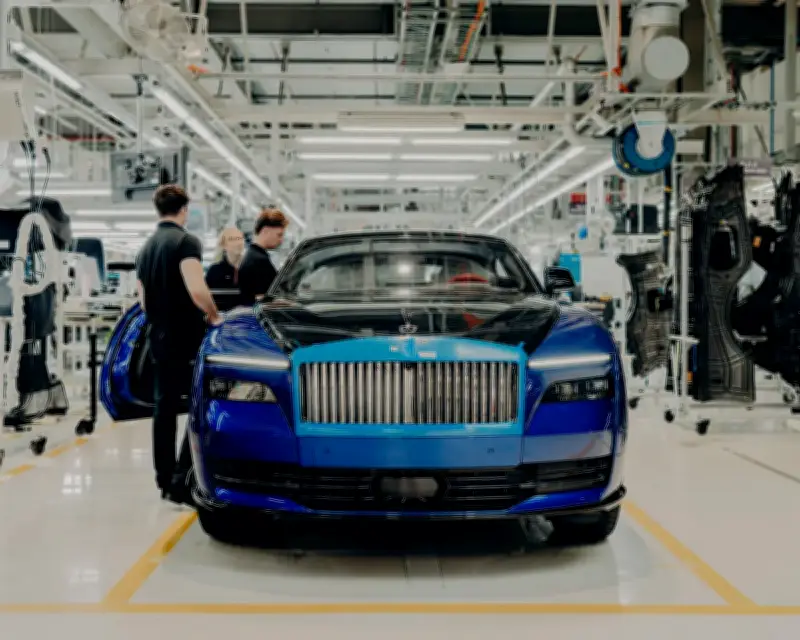
Electrification has also been part of the story. The Spectre, Rolls-Royce’s first EV launched in 2022, sold briskly at first but deliveries nearly halved in 2025, and the company scrapped its 2030 all-EV target. A revamped Spectre Series Two recently launched with a longer range and more power.
Handcrafted details
Every car is made to order at Goodwood, where 2,500 people work across a production line with 45 stations. A single car can take up to 600 hours to build, passing through more than 100 pairs of hands, including 14 artisans finishing personalised vehicles. A standard starlight ceiling contains up to 1,600 fibre-optic stars and takes around nine hours to thread by hand.
Andrew Hopkins, a lead craftsperson, studied furniture making before joining Goodwood in 2003. On whether he ever thinks a request is too much, he says: “Whether you like it personally, you don’t really take it into account. You learn quite fast not to be the taste police.”
Despite the slowdown, many of the youngest, tech-rich buyers still come from China. Jenkins recently opened a new dealership in Beijing and presented a car to a 26-year-old woman who had “fallen in love” with a custom design. “They are individuals that are very much on the way up in terms of their wealth creation,” he says, “but doing so at an incredible pace.”