
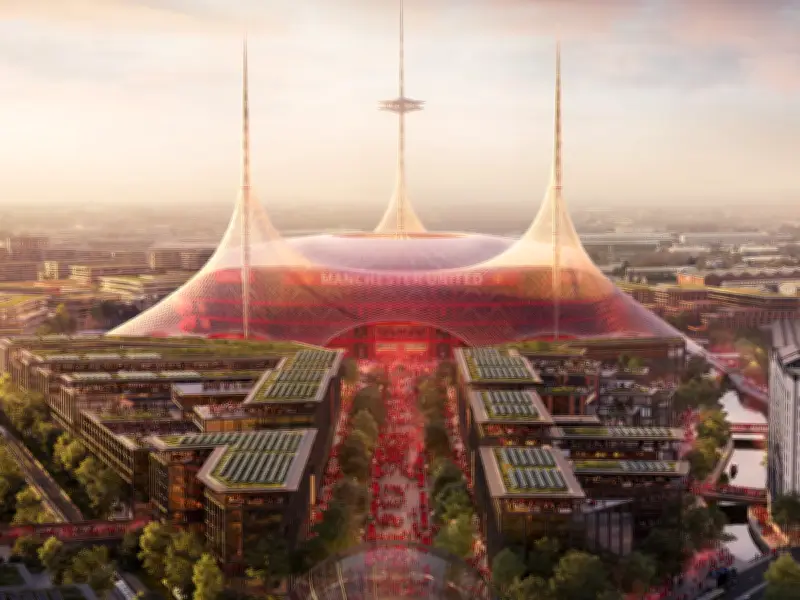
Manchester United's ambitious plans for a new 100,000-seater stadium, unveiled last year with a controversial 'circus tent' canopy design, may be scaled back as costs escalate. The club has now secured a different plot of land 350 metres north west of Old Trafford, allowing the project to accelerate, but the £400m canopy—described by architect Norman Foster as a 'vast umbrella'—is under threat due to financial pressures.
Land Acquisition and Design Progress
United initially sought to buy land from Freightliner behind the Stretford End but failed to reach a breakthrough. Instead, they have acquired a plot to the north west, enabling Foster + Partners to finalise the stadium's design. The club estimated the total cost at £2bn, but this is considered conservative amid rising construction costs. The canopy, primarily aesthetic rather than functional, was estimated to cost between £300m and £400m to build.
Sir Jim Ratcliffe praised the design as '10 out of 10' and said the brief to Foster was to build 'the world’s most iconic football stadium.' He added: 'We said to Norman that we would like a stadium where when anybody in the world sees that stadium, they’ll know it’s Manchester United.' However, the canopy's resemblance to a circus tent drew criticism, and its necessity is now being questioned.
Financial Constraints and Debt Concerns
United already carry a record £1.3bn debt, and the stadium will be privately financed through ongoing talks with stakeholders and investors, raising the possibility of further borrowing. The canopy's cost, which is mainly for visual impact, seems likely to be scrapped given the astronomical figures involved. The club must balance ambition with financial prudence.
Regeneration and Economic Impact
The stadium is part of a wider regeneration project for the Old Trafford area. A study by Oxford Economics found the project could add £7.3bn annually to the UK economy, create 92,000 jobs, lead to 17,000 new homes, and attract 1.8 million additional visitors each year. Collete Roche, CEO of United’s New Stadium Development, said: 'Today’s news highlights the progress we’re making towards a world-class new home for Manchester United and represents a significant milestone.' She emphasised preserving heritage and ensuring atmosphere, affordability, and accessibility for fans.
Next Steps and Public Consultation
On July 9, the Mayoral Development Corporation will publish the wider masterplan for the Old Trafford regeneration project, including details on a formal consultation period. Fans will learn more about the stadium's location and other specifics. Roche added: 'This is a generational opportunity that is fully aligned with both local and national growth ambitions.'
The club looks to Manchester City's Etihad campus as a model, where investment has transformed the area with the Co-op Live arena and a new hotel. United aim to have an even greater impact, but the final design—and whether the canopy survives—remains to be seen.




