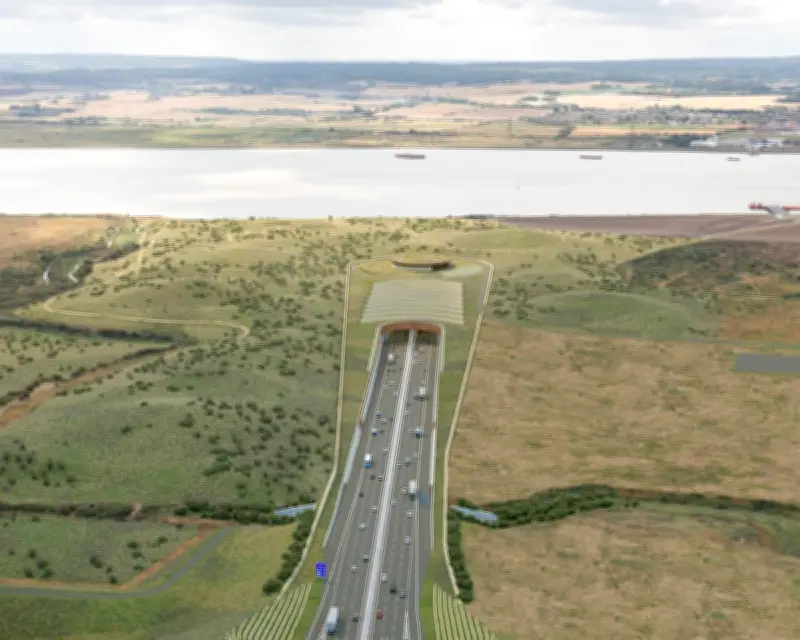
The UK government has allocated an additional £174 million for the Lower Thames Crossing, a proposed road tunnel connecting Kent and Essex, sparking concerns over the project's escalating costs. The total public spending on the tunnel now stands at £3.1 billion, with an expected private sector investment of £7.5 billion.
Costs Exceed HS2 Per Mile
The £11 billion project is already estimated to cost more per mile than the HS2 high-speed rail link between London and Birmingham. The extra £174 million will fund public works on both sides of the tunnel, drawn from existing budgets, according to the Department for Transport (DfT).
Project Timeline and Funding
The DfT took direct control of the project last year, removing National Highways as the lead agency. A private consortium is expected to obtain a perpetual license to operate the new tunnel and the existing Dartford tunnel, located about 7 miles west, starting in 2029. Completion is scheduled for 2034.

Chancellor Rachel Reeves and Transport Secretary Heidi Alexander support the project, calling it "vital" for easing congestion on the M25. However, the DfT has not yet published an "outline business case," a standard step before major works commence. Despite this, the government allocated £590 million in the 2025 spending review and £891 million in the autumn budget, totaling £1.48 billion, with an additional £174 million in a March road investment strategy document, bringing the total to £1.66 billion.
Criticism and Campaigner Response
Critics accuse the DfT of diverting funds from the National Highways budget without parliamentary approval. Rebecca Lush of the Transport Action Network described the project as "quickly running out of control," comparing it to HS2's spiraling costs and secrecy. She noted the irony of nationalizing railways while privatizing roads, highlighting policy incoherence.
A DfT spokesperson defended the project as vital infrastructure, stating that the £3.1 billion commitment includes funds to unlock private investment. They added that tolls will be regulated by an independent body to ensure fair pricing, though no decisions on user charges have been made.