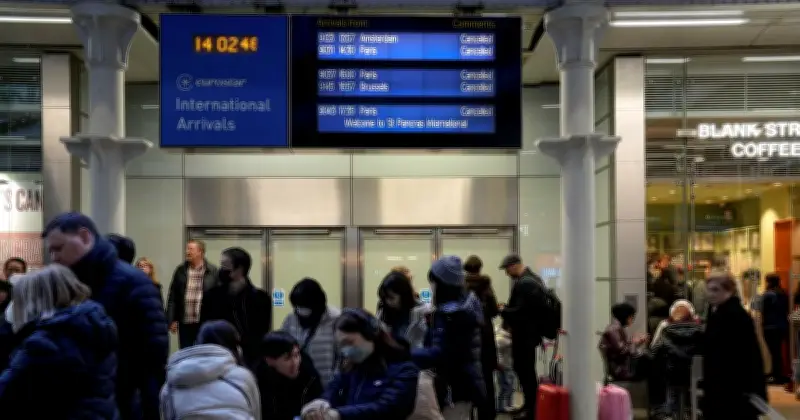
Virgin Trains and Trenitalia are moving to challenge Eurostar on London-Paris routes, potentially ending decades of dominance and lowering fares. Travel expert Simon Calder has welcomed the prospect, calling the amount passengers can be forced to pay for Eurostar tickets “absolutely scandalous”, particularly when booking at short notice.
New Operators Eye Channel Tunnel Routes
Virgin has cleared a major regulatory hurdle and plans to launch services from London to Paris, Brussels and Amsterdam from 2030. Trenitalia France is also pressing ahead with plans to run high-speed trains through the Channel Tunnel, potentially creating a three-way battle for passengers.
Speaking on The Travel Expert, the Telegraph's travel podcast, Calder said the arrival of competition could finally change the economics of travelling between London and Paris. He told co-host Greg Dickinson: “For the first time since Eurostar launch, we're going to see some competition, so in theory this should mean cheaper fares and more options.”
Current Fares Criticised as 'Scandalous'
Eurostar currently dominates the route, carrying around 80% of traffic between London and Paris, according to Calder. He said passengers booking close to their departure date can routinely face fares of more than £200 one way.
Calder said: “It is absolutely scandalous the amount of money you need to spend, particularly on a short-notice booking, typically over £200 one way.” He added that airlines can offer flights for less than half the price in some cases. “It's ridiculous, and I can't wait until we've got hopefully three different operators between London and Paris, Eurostar, of course, plus Trenitalia and then Virgin Trains.”
Regulatory Approvals and Infrastructure Plans
Virgin has received approval from the Office of Rail and Road to use the crucial Temple Mills International depot in east London. The regulator said the decision unlocks around £700million of investment and will allow Virgin to progress its plans for international services. Virgin is planning to order 12 new Alstom trains and hopes to begin services in 2030.
Virgin's proposed network would initially include 13 daily return services between London and Paris, four to Brussels and three to Amsterdam once its full timetable is introduced. Trenitalia France has been expanding its high-speed network in France and has plans for a London service through the Channel Tunnel. The company is expected to expand its fleet to at least 19 trains, while its wider investment programme includes the purchase of new Frecciarossa trains. A new maintenance centre is also being developed in France.
Trenitalia Could Sidestep Key Obstacle
Trenitalia would not necessarily need to rely on the Temple Mills depot in Britain. As Dickinson explained on the podcast, the company plans to use a depot on the French side of the Channel for servicing its trains. That could sidestep one of the biggest obstacles facing would-be Eurostar competitors – the shortage of suitable maintenance facilities in Britain.
The Office of Rail and Road has said there is capacity for additional trains at the depot, but its decision last year approved access for Virgin while rejecting applications from Trenitalia, Evolyn and Gemini. Trenitalia's approach therefore opens up the possibility of another operator entering the market without taking up space at Temple Mills.
Competition Could Transform Market
Calder believes the prospect of three operators fighting for passengers could transform the London-Paris market. He compared it with Spain, where several operators compete on high-speed routes. He said: “It just means that people are getting fantastic service and great fares. Competition through the Channel Tunnel absolutely cannot arrive early enough for me.”
The potential shake-up comes after more than 30 years in which Eurostar has effectively had the Channel Tunnel passenger market to itself. Eurostar services began in 1994 and it has remained the sole international passenger train operator using the tunnel.
Existing Discount Options and Airline Advantage
There are already ways for passengers to cut the cost of a Eurostar journey. Dickinson highlighted Eurostar Snap, which offers discounted tickets to passengers prepared to give up some flexibility. Travellers booking within 14 days can choose whether they want to travel in the morning or afternoon, but Eurostar chooses the precise train and passengers cannot select their seats. The service is not available to children under 14, but savings of around 50% can be possible.
For passengers who need to travel at a specific time, the Eurostar Lowest Fare Finder remains another option. But Calder warned that the headline lead-in fares of £39 one way or £78 return can be difficult to find unless travellers book well ahead. That leaves airlines with a powerful advantage on price for last-minute journeys.
The hope is that Virgin and Trenitalia will finally force Eurostar to respond – giving travellers what they have been missing for decades: a genuine choice of trains, timetables and fares across the Channel.