UK Manufacturers Grapple with Sharpest Cost Inflation Surge Since 1992 Black Wednesday
New survey evidence indicates that UK manufacturers are enduring the most rapid one-month acceleration in costs since the aftermath of Black Wednesday in 1992. This surge is primarily driven by the conflict in the Middle East, which has escalated oil prices and disrupted economic stability.
PMI Data Reveals Economic Impact of Middle East Conflict
The closely monitored purchasing managers’ index (PMI) underscores the profound effect of the Middle East conflict on the UK economy. Growth has decelerated sharply across both manufacturing and services sectors, while cost pressures have intensified significantly.
Chris Williamson, the chief business economist at S&P Global Market Intelligence, which compiles the data, stated: “Output growth across manufacturing and services has slowed to a crawl as companies attributed lost business directly to the events in the Middle East. This includes heightened risk aversion among customers, surging price pressures, higher interest rates, and disruptions to travel and supply chains.”

He added: “Inflationary pressures have surged higher due to rising energy prices and fractured supply chains.”
Retail Sector Also Shows Signs of Economic Weakness
In a separate indicator of economic frailty, the CBI’s retail sector survey reported that March witnessed the fastest annual decline in sales volumes since April 2020, during the Covid lockdown period. Although the survey did not explicitly blame the Middle East war, the balance of retailers reporting rising sales plummeted to -52% in March, down from an already weak -43% in February.
Martin Sartorius, the lead economist at the business lobby group, commented: “Retailers indicate that weak economic conditions continue to burden household spending, with subdued activity also evident across the broader distribution sector.”
Manufacturing Cost Inflation Reaches Highest Level Since 2022
According to the PMI survey, cost inflation in the manufacturing sector jumped to its highest level since October 2022. This marks the largest month-on-month change since the fallout from Black Wednesday in 1992. The cost index, which gauges manufacturers’ expectations of rising prices, was 14 points higher in March compared to the previous month, as reported by S&P. This contrasts with a 17-point increase in October 1992.
Sterling experienced a sharp decline following Black Wednesday, which drove up import costs after the government at the time raised interest rates in an unsuccessful attempt to remain within the European exchange rate mechanism.
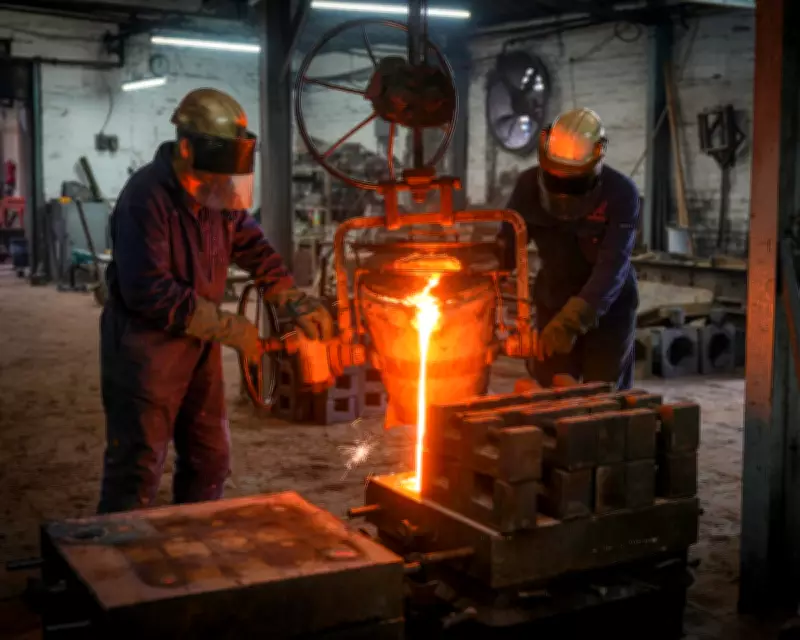
S&P noted that the rapid cost increases are mainly linked to fuel, transportation, and energy-intensive raw materials. Energy-intensive companies, such as foundries, have been particularly affected by the rise in costs driven by higher oil prices.
Composite PMI Indicates Slower Economic Expansion
The composite PMI index, which encompasses both services and manufacturing, stood at 51 in March. This suggests the economy was still expanding, as 50 marks the breakeven between growth and contraction. However, the pace of expansion slowed sharply from the 53.7 recorded in February.
Emily Sawicz, a director and industrials senior analyst at RSM UK, remarked: “Despite some resilience, geopolitical tensions remain a key concern for UK manufacturers – highlighting that conditions remain highly uncertain. The recovery many anticipated for 2026 now appears likely to be delayed at best, as rising energy costs and persistent inflation risks threaten to slow momentum.”
She warned: “Should these pressures intensify, the sector’s fragile recovery could even revert to decline later in the year.”
Decline in New Orders and Export Sales
Looking forward, companies reported a decline in new orders and falling export sales, including the fastest drop in new orders from abroad since April of the previous year. S&P mentioned: “Anecdotal evidence pointed to the postponement of new projects in the Middle East and the impact of reduced international travel.”

Jake Finney, a senior economist at PwC, emphasized that the survey highlights the challenges for the Bank of England in setting interest rates in the coming months. He said: “The conflict is pushing up prices while also weighing on demand. The key judgment for monetary policy committee members will be how long the conflict is likely to last and whether higher energy prices will trigger a broader resurgence in inflation pressures.”
Background on the Middle East Conflict and Government Response
Now in its fourth week, the US-Israel war on Iran has triggered a surge in global oil and gas prices. It has also caused disruptions to supply chains for various products due to infrastructure destruction in the Gulf and the effective closure of the Strait of Hormuz.
Chancellor Rachel Reeves is scheduled to address the House of Commons on Tuesday, outlining the government’s considerations for cushioning the impact on consumers if the disruptions prove to be prolonged.