Michigan Bets on Space as Next Frontier for Job Creation and Economic Growth
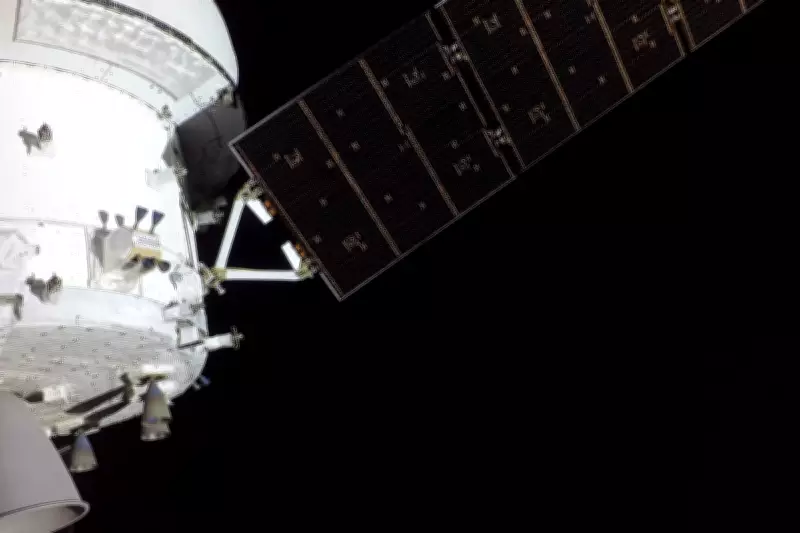
Michigan is playing a pivotal role in the United States space industry, with significant contributions to the historic Artemis II rocket mission. When the U.S. launched its first crewed space mission in five decades this month, Michigan-made products were integral to the journey.
Components such as blades and nozzles in the four engines of the Artemis II rocket were supplied by Moeller Aerospace in Harbor Springs, a key state supplier to NASA contractors. Additional equipment was tooled by Elmet Technologies in Lewiston, while NASA utilized solar particle forecasts from the University of Michigan.
In total, at least 78 Michigan-based entities contributed to the mission, according to Mark Ignash, director of strategic initiatives at Michigan’s Office of Defense and Aerospace Innovation. "These are companies we don’t realize that we’ve got in our backyard," Ignash told Bridge Michigan. He aims to change this perception by fostering a dedicated space sector to stimulate business growth in the state.

Building a Space Economy in Michigan
Ignash and other officials argue that the nation’s expanding space economy—encompassing telecommunications, navigation, agriculture, and celestial research—represents a bold new frontier for economic development. "We are in the second space race, commercially and in defense, and people just don’t realize that yet," Ignash emphasized.
The Michigan Economic Development Corp. is actively seeking proposals to establish the state’s first Space Innovation Hub. With a budget of up to $1.2 million allocated for the first year, this hub is an initial step toward connecting and expanding space-centered businesses across Michigan.
Ignash highlighted that space offers a lucrative opportunity for the state, leveraging its research, engineering, and industrial expertise. Nationally, space-related spending, including satellites and rockets, is projected to surge from approximately $630 billion in 2023 to $1.8 trillion by 2035, as reported by the World Economic Forum.
Strategic Initiatives and Historical Context
Space development is a key component of the strategic plan to boost defense and aerospace, announced in February by Governor Gretchen Whitmer. "From our skilled workforce and world-class universities to our robust supply chains, advanced testing environments, and manufacturing infrastructure, Michigan has unique capabilities and assets," Whitmer stated in introducing the plan.
While other pillars of the state plan, such as aviation and unmanned systems (drones), are more familiar to the public and business circles, Ignash noted that the increased commercialization of space is a transformative development today. "We’ve not seen this kind of space activity since the 1960s," he remarked, referencing Michigan’s historical role in space development, including contributions from the missile lab near Willow Run Airport and ties to Apollo spacecraft research and manufacturing.
Current research continues across several universities, and Michigan manufacturers still produce space-related parts and technology. For instance, Houghton’s Orbion, recently purchased for its electric propulsion systems, exemplifies ongoing innovation.
Future Prospects and Collaborative Efforts
The envisioned Space Innovation Hub is expected to include a physical location and other connections, such as data sharing, to foster collaboration across both peninsulas. Collaboration around space-related endeavors is already intensifying, with a state networking group growing from a dozen participants to 150 this year. Specialty areas include space research, remote sensing, and digital engineering.
Another area with potential for growth is in-space assembly and manufacturing (ISAM), which involves work performed by humans or robots after launch to maintain equipment for future projects. However, opportunities such as rocket launch sites are not currently on the agenda, despite a $2.5 million study announced in 2019 that later prompted an ongoing criminal investigation. A test site could be considered, as outlined in a 2025 plan.

The state will evaluate bidders for the space hub after the June 1 deadline. Looking ahead, Ignash expressed hope that current momentum will lead to increased federal funding through NASA and other programs. "We’re not creating a sector here," he clarified. "We are really just putting some wind behind the sails and saying, if we all unify in a single direction, we can probably do a lot more."
This story was originally published by Bridge Michigan and distributed through a partnership with The Associated Press.