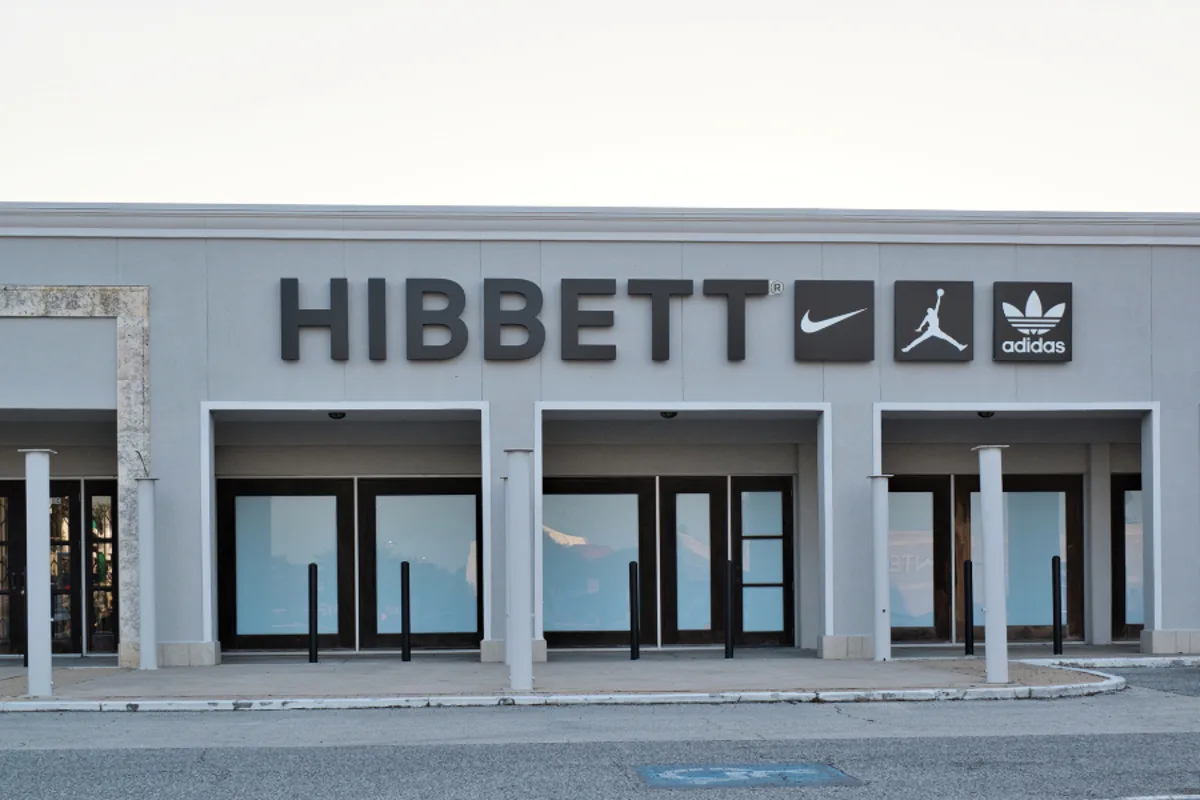
JD Sports has announced plans to close approximately 175 Hibbett stores across the United States over the next three years, as part of a strategy to focus on fewer, more profitable locations. The British retailer acquired Hibbett, an Alabama-based sporting goods chain, for about $1.1 billion in 2024 to expand in North America and strengthen its position in the sneaker and sportswear market.
Since the acquisition, JD Sports has faced increased competition, particularly from Dick's Sporting Goods, which bought Foot Locker for $2.5 billion and has seen success with its larger, experience-focused House of Sport stores. In response, JD Sports is shifting its approach by cutting underperforming stores and concentrating on stronger locations.
Chief Financial Officer Dominic Platt stated on an earnings call that the company aims to build “fewer, bigger, and better” stores that generate higher sales and allow for greater investment in technology and customer experience. “We will see the beginning of the closure of the stores in North America with Hibbett, 175 stores probably over around three years,” Platt said.

CEO Régis Schultz explained that smaller stores often lack the profitability to justify their operation. “The problem of our small stores is that you need someone to open, you need someone to close. When sales are going down a little bit, you have no leverage, whereas with a larger store, you have leverage because you can invest in technology,” he said.
JD Sports has already begun reshaping the Hibbett store base, with the number of locations dropping from 999 at the start of fiscal 2026 to 982 by year-end, following a mix of closures and new openings, according to WWD.