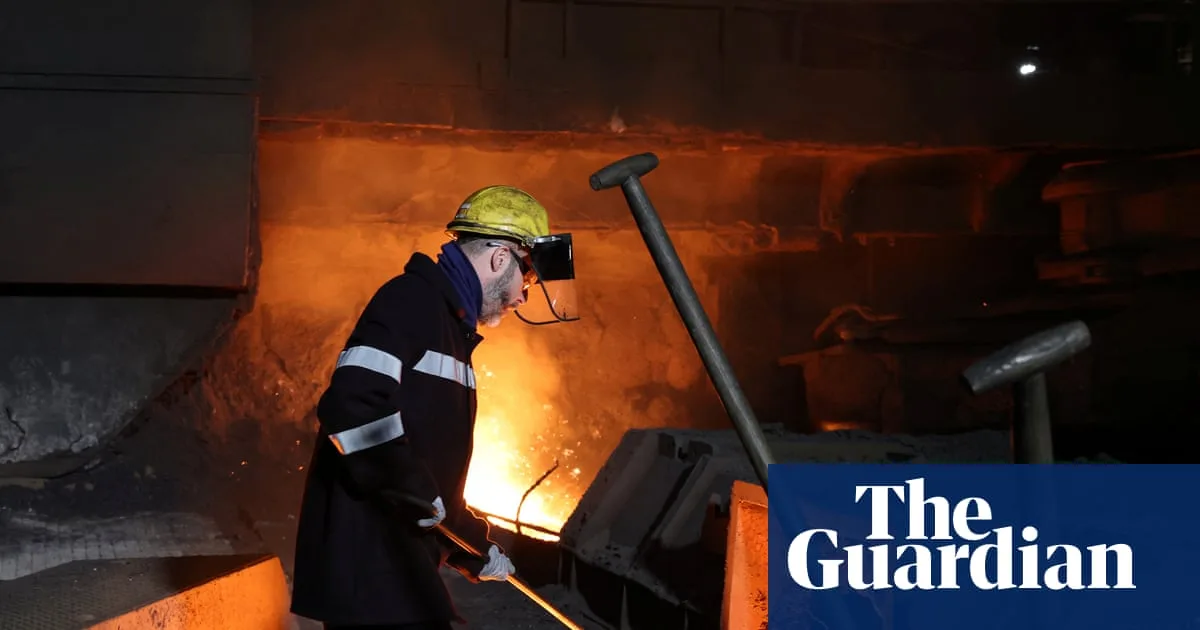
UK Government to Nationalise British Steel Amidst Billion-Pound Loss Fears
Government to Nationalise British Steel Despite Cost Concerns

UK Government Set to Fully Nationalise British Steel Within Weeks

The government under Prime Minister Keir Starmer is preparing to renationalise British Steel in the coming weeks, a move aimed at securing the future of this strategically critical industry. This decision comes despite significant concerns over potential financial losses that could ultimately cost taxpayers billions of pounds.

Emergency Measures and Ongoing Operations

For nearly a year, the government has been effectively running the Chinese-owned steel business after invoking emergency legislation to prevent the closure of the UK's last remaining blast furnaces. However, because the operation remains legally owned by Jingye, the government has been unable to sell any assets or make strategic decisions about its management.

According to reports from both the Financial Times and The Guardian, full public ownership is now imminent. This approach has found unexpected support from Nigel Farage's Reform UK party, which views the preservation of domestic steel production as essential for national interests.

Wide Pickt banner — collaborative shopping lists app for Telegram, phone mockup with grocery list

Mounting Financial Concerns and Global Challenges

The nationalisation move raises substantial questions about costs, particularly as the government faces the challenge of sustaining the business amid a global tariff war initiated by former US President Donald Trump. A recent National Audit Office report delivered sobering financial projections, indicating that British Steel's losses could escalate to £1.5 billion by 2028.

Current operations are consuming approximately £1.3 million daily, with no established budget, repayment schedule, or defined end date for government support. Between April 2025 and January 2026 alone, the Department for Business and Trade has already spent £377 million classified as a loan to the company, plus an additional £15 million on advisory services and £359 million covering operational expenses including raw materials and payroll.

Trade Measures and Strategic Objectives

Ministers recently announced new tariffs on foreign steel imports as part of broader trade measures designed to protect domestic production for critical national infrastructure and defence needs. The government aims to increase the proportion of UK-made steel used domestically from 30% to 50%.

Starting in July, overall quota levels for steel imports will be reduced by 60% compared to current arrangements. Any steel entering the UK above these reduced quotas will face a substantial 50% tariff. Government officials have stated these measures will ensure the UK steel sector's viability in the face of global overcapacity challenges.

Industry and Government Perspectives

A government spokeswoman emphasised: 'We have been clear that safeguarding UK steelmaking is our priority. We continue to engage with the owner to find a solution that protects workers, production and the national interest, and we will not comment further while discussions are ongoing.'

Gareth Stace, director general of trade body UK Steel, told The Guardian that nationalisation 'would provide vital certainty for the workforce, the company's customers and the wider supply chain at a critical moment.' He added: 'Maintaining domestic production capability for British Steel's products is essential not only for economic growth but also for our national security and resilience. This will hopefully mark the beginning of a clear and credible long-term plan for British Steel.'

Historical Context and Future Projections

The Department for Business and Trade originally intervened to save British Steel's Scunthorpe blast furnaces from closure last year, preventing substantial job losses and serious industrial disruption. While Jingye and the DBT had engaged in discussions about transitioning to electric arc furnaces between 2022 and 2025, no agreement was reached.

Emergency legislation enabled DBT to issue formal instructions for British Steel to continue operating its blast furnaces. The NAO acknowledged that the government department acted swiftly to mobilise an on-site team and secure essential raw materials.

Pickt after-article banner — collaborative shopping lists app with family illustration

However, spending is projected to reach £615 million by June, and if current expenditure rates continue, costs could surpass £1.5 billion by 2028. The NAO report noted that DBT has established no repayment schedule, and there is little indication that British Steel will be capable of repaying the substantial government loan.