Ford's Kentucky Battery Plant Idled, 1,600 Workers Laid Off Amid EV Slowdown
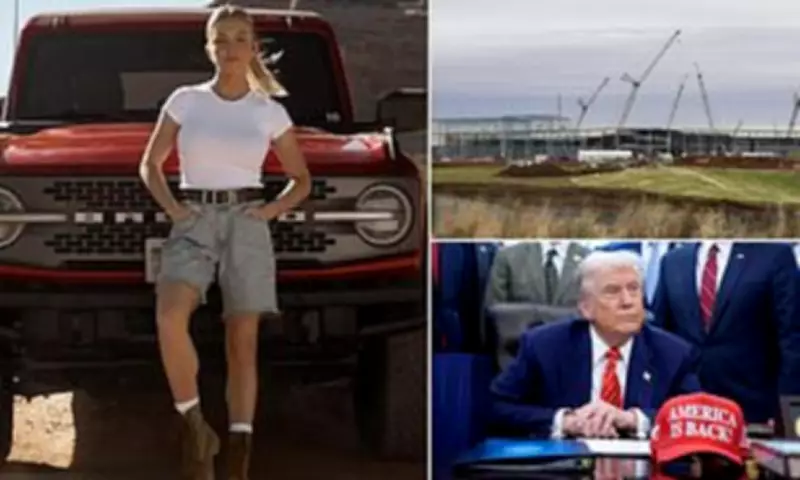
Just four months after its grand opening, a $5.8 billion Ford-backed battery plant in Glendale, Kentucky, is now sitting idle, leaving 1,600 workers without jobs. The sprawling 1,500-acre facility, a joint venture between Ford and South Korean battery manufacturer SK On, launched in summer 2025 with promises of stable, high-paying factory employment, hailed as a transformative project for the region.
Policy Shifts and Economic Fallout
By December 2025, optimism had evaporated as Ford and SK On ended their partnership at the site. Ford announced it would idle the plant for approximately 18 months, shifting production toward energy storage systems instead of automotive batteries. The company attributes this decision to a slowdown in electric vehicle demand, partly blamed on changes in federal policy under President Donald Trump.
Kentucky's Democratic Governor Andy Beshear placed the blame squarely on Trump, stating, 'Those are 1,600 Kentuckians that lost their jobs solely because of Donald Trump pushing that big, ugly bill, eliminating the credits that had people interested and excited to buy EVs.' He added, 'I bet many, if not most, of them voted for him, and he basically fired them.'

Worker Struggles and Contradictions in 'America First' Agenda
For affected workers, the political blame game is secondary to immediate hardships. Derek Dougherty, 28, who had just signed a lease near the plant before being laid off, said, 'I've been homeless for years and this was supposed to be the grounding moment. We just started renting our apartment over here because of this job. Now that job's not there.'
The collapse exposes a contradiction in Trump's 'America First' agenda, which vows to revive US manufacturing and protect blue-collar workers. Critics argue that his rollback of EV incentives and environmental regulations slowed demand just as billions were invested in new American battery plants, leaving communities like Glendale to pay the price.
Regulatory Changes and Market Forecasts
During his presidency, Trump weakened national vehicle emissions standards and attempted to block California from setting stricter clean-car rules, reducing pressure on automakers to push EVs. He also vowed to scrap a federal tax credit of up to $7,500 per EV and cut government support for charging infrastructure.
A Ford spokesperson noted that policy shifts significantly disrupted long-term strategy, contributing to the plant's closure. Originally, analysts projected EVs could comprise 45% of US auto sales by 2030, but forecasts have since been revised sharply lower to between 9% and 18%.
Worker Perspectives and Future Plans
Not all workers view the issue purely through a political lens. Joe Morgan, who left a 24-year career to earn $38 an hour as a maintenance technician at the plant, said, 'Taking away the tax credits did play a little bit of a role in not selling EVs. But honestly, I think Ford made a bad decision when they came out with an F-150 they wanted to make all electric.'
Despite the setback, Ford asserts that the broader BlueOval complex is not dead. A separate subsidiary battery plant at the site is expected to employ over 2,100 workers when it opens in late 2026 or early 2027, focusing on energy storage systems for utilities, data centers, and commercial applications. BlueOval SK employees will have opportunities to apply for jobs at the new subsidiary.
Broader Industry Context and Challenges
Globally, China leads the EV market, followed by the United States, where Tesla commands about half the market share. Automakers are adopting a wait-and-see approach as they assess potential Trump proposals to rescind tax credits and impose new tariffs.
Recently, US Transportation Secretary Sean Duffy announced that states receiving federal funds for EV charging infrastructure must install chargers made entirely with US-produced components, a shift from the previous 55% domestic-content requirement. Duffy stated, 'Now we're ensuring that if Congress wants to see these chargers built, we put America First. Doing so will unleash American manufacturing, protect our national security, and prevent taxpayer dollars from subsidizing our foreign adversaries.'

However, industry experts caution that producing chargers with 100% US-made parts may be nearly impossible under current supply-chain conditions, potentially hindering EV sector growth. On Tuesday, Ford announced its biggest annual loss since before the 2008 financial crisis, with its failed push into electric cars cited as a key factor.