China's Automotive Exports Accelerate as Global Energy Shock Fuels EV Transition
The China Association of Automobile Manufacturers reported on Friday that the nation's passenger car exports experienced a significant acceleration during March. This development comes as Chinese automakers intensify their efforts to capture overseas market share, with particular focus on new energy vehicles.
Export Figures Reveal Dramatic Growth
According to the industry association's data, passenger car exports jumped by 82.4% year-on-year last month, reaching approximately 748,000 vehicles. This represents a substantial increase from the 586,000 vehicles exported during February. The most remarkable growth occurred within the new energy vehicle segment, which includes both battery electric vehicles and plug-in hybrids.
Exports of new energy passenger vehicles surged more than 140% in March compared to the same period last year, totaling 363,000 units. This figure also marks a 31% increase from the approximately 276,000 units of such vehicles exported during February.

Strategic Overseas Expansion and Market Conditions
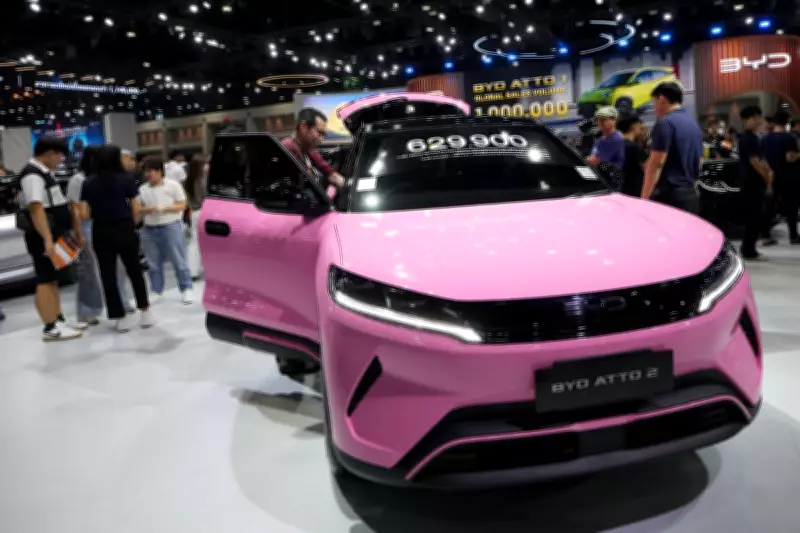
Major Chinese automotive manufacturers, including industry leaders BYD and Geely Auto, have been strategically expanding their international presence. These companies have been establishing production facilities outside China and increasing their marketing efforts in foreign markets.
Industry analysts suggest that the global energy shock and rising fuel prices, partially attributed to the ongoing conflict involving Iran, could be accelerating consumer interest in electric vehicles worldwide. Chris Liu, a Shanghai-based senior analyst at advisory group Omdia, commented on this potential shift.
"The impact of the Iran conflict hasn't fully shown up in March data yet, but it can act as a trigger," Liu explained. "In many markets that are structurally well suited for EVs, adoption has been slow simply because consumers lacked urgency. A sharp rise in fuel prices changes that dynamic significantly."
Domestic Market Challenges Contrast with Export Success
The strong overseas performance of Chinese automakers comes against a backdrop of domestic market challenges. Passenger car sales within China fell by 19.2% last month compared to the previous year, reaching nearly 1.7 million units. This marks the fifth consecutive month of year-on-year declines for domestic passenger car sales.
Several factors have contributed to this domestic weakness, including reduced government support for new energy vehicle purchases, fierce competition among automotive brands within China, and a prolonged property sector slump that has diminished consumer appetite for major purchases.
Industry Outlook and Analyst Perspectives
Despite domestic challenges, industry analysts remain optimistic about the overall trajectory of Chinese automakers. Paul Gong, head of China autos research at UBS investment bank, believes the domestic sales weakness will be temporary and that overseas growth will help offset domestic declines.
"For the overall industry, the overseas market's sales volume growth is more than enough to offset domestic decline on a full-year basis," Gong stated. He predicted that overseas passenger car sales by Chinese automakers might grow by 20% or more this year compared to last year.
Chinese automotive brands have been making significant inroads in various international markets over recent months, particularly in regions such as Europe, Latin America, and Southeast Asia. This geographical diversification strategy appears to be paying dividends as domestic market conditions remain challenging.
The combination of strategic international expansion, competitive product offerings, and changing global energy dynamics has positioned Chinese automakers for continued export growth, particularly within the rapidly expanding electric vehicle segment.