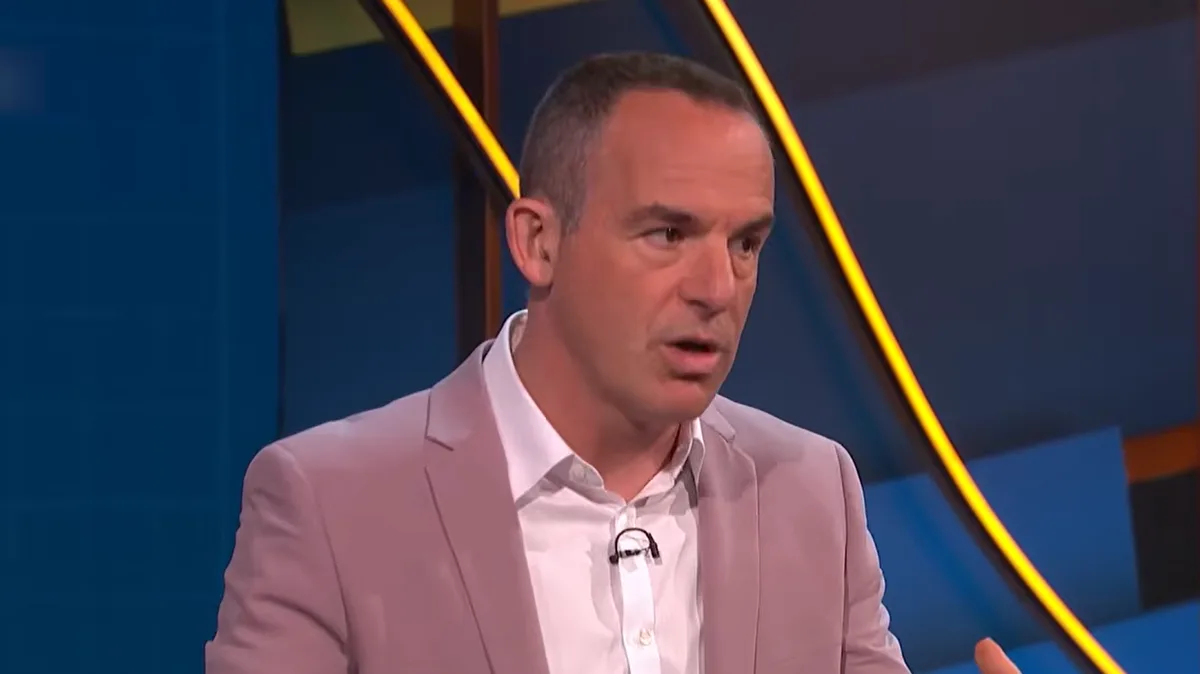
Martin Lewis has issued a stark warning to anyone who has already booked a holiday for this summer. The personal finance expert urged those who have paid for breaks with major holiday companies and airlines, including TUI, Jet2, Ryanair, Wizz, easyJet and British Airways, to take immediate action.
Appearing on his ITV show, he warned that failing to take out insurance after booking could leave holidaymakers with nothing if plans go awry. With the ongoing situation in the Middle East raising concerns over jet fuel supplies, Mr Lewis cautioned that delaying insurance could mean losing everything if something goes wrong before the trip.
Why You Must Get Insurance Immediately
Mr Lewis stressed that travel insurance should be purchased the moment a holiday is booked. He explained: "The reason you do that is because half of the cover you're paying for is in case something happens that stops you going before the trip. And if you don't have the travel insurance in place, you've got no cover. So, you may as well have it in place."
He added: "If you've booked and you don't have it yet, just get it now. Get it done as soon as possible."
A viewer called David shared his experience: "I booked flights to Australia for a family group of seven to travel in March next year. I took out insurance immediately. One of our group is now pregnant and can't travel on the dates planned. It costs £5,000 to reschedule, which I'm happy to report the insurance covered."
Group Travel Insurance Advice
Mr Lewis also weighed in on complications for larger groups: "If it's a family group and one can't go, they'll often cover you. But if there's a large group of friends going, you often all get independent travel insurance. Well, then if one can't go, it's only the person who has that cover. So, you'd need a group insurance policy so that if one can't go, you all can't go."
DIY Bookings vs Package Holidays
During his Money Show Live on ITV, Mr Lewis addressed an audience member who asked: 'If my flight's cancelled due to no jet fuel, will I definitely receive all my money back, even for my hotel booking?'
Mr Lewis clarified that holidaymakers would forfeit hotel booking expenses if they arranged accommodation separately from flights, as they would not be safeguarded under consumer regulations. He stated: "No. If you booked a package holiday where you booked everything in one, then under the package holiday regulations, if your flight went you would get everything back."
He continued: "Package holidays give you a certain level of extra security that you wouldn't get if you did a DIY booking where you bought your hotel and flight separately." The reason, he said, is that the hotel reservation itself remains valid: "If you lose your flight and you've DIY booked, there's nothing wrong with your hotel. The issue is you can't get there. Your hotel is still there. It's not faulty. It's not cancelling. So, you don't have those consumer rights."
If the accommodation provider hasn't breached any terms, guests might consider credit or debit card protection, but that offers no remedy either. Mr Lewis said: "You would then say, 'What about using a credit card or debit card protection?' It won't work because there's nothing faulty. And that's just giving you the same replica rights that you would have with the retailer."
Travel Insurance Limitations
Finally, holidaymakers might look to travel insurance. Mr Lewis revealed: "We were checking 40 travel insurance policies. Of those, only a few would have covered you for the knock-on eventuality of your flight being cancelled due to jet fuel and then your hotel costs. Only about three or four, and most of those were package bank accounts where it's linked to your bank account. Only one standalone provider. So we need to be blunt at the moment. There is a big risk in those circumstances."
He advised: "If you're booking, you want something with free or limited cancellation quite short before. So you could just cancel it. You should always talk to the provider."
He added: "If you are in that position, once you understand you have no rights and they say, 'Well, we'll give you a voucher and you can come back in 6 months,' you suddenly realise you're doing well, not badly, right? If you didn't have free cancellation and this is going to be a problem if we get to that jet fuel shortage. Government are saying there isn't one at the moment and they're working on consolidating flights and doing things so there won't be one, but people's hotel costs if they book separately and other knock-on costs are potentially at risk."
Direct Insurance Through Bank
Another viewer, Michelle, asked: "What if your holiday insurance is direct through your bank account? When I've told them I'm going away, they said I don't need to tell them. Does this mean if something happens before I go, I'll still be covered?"
Mr Lewis explained: "Effectively, what you've got is an ongoing rolling annual travel policy that keeps auto renewing without you doing everything. If you're booking a single trip policy, you get the insurance as soon as you book. You pay for that. Once you've paid for it, you have the travel insurance. So, if anything happens from that point onwards, you're covered."
Regarding annual policies, he stressed: "On an annual policy, if you don't have cover, you need to start it ASAB. You need starting not your holiday dates. You need that annual cover starting now. Or if you start it the date you go on holiday, you're not covered. So, it's all lost. Now, if you've already got cover in place and it lasts until after the holiday ends, no problem. Michelle, you've got an ongoing rolling annual travel insurance policy provided by your bank. So, you're fine. You don't need to notify them. You're always covered unless you go over the maximum number of days in a year or on a trip."
He added: "If you have an annual policy that covers you now, but let's say you're going on that trip and your annual policy ends on the last day of July, what you need to do is get a new annual policy that starts the day your old policy ends. Now, if something were to happen now to that holiday in August and you've got the policy that ends before the holiday starts, the vast majority of annual policies would cover you even though the policy is after the close date because the event happened while you're still within the term."