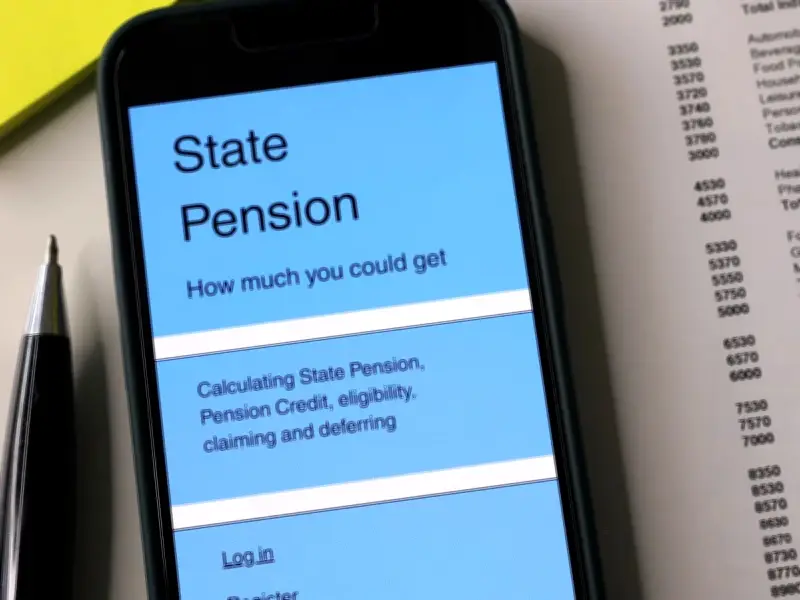
Pensions experts have warned that 35 years of National Insurance contributions may not guarantee a full New State Pension in the UK, with some people needing more or fewer years to qualify for the maximum weekly amount of £241.30 in the 2026/27 tax year.
The warning comes from State Pensions UK, a volunteer-run Facebook group with no connection to the DWP but with in-depth knowledge of the State Pension system. The group helps people "navigate through it successfully" by answering questions from followers seeking advice about their State Pension.
Two different State Pensions exist
There are two State Pensions available depending on an individual's circumstances. The Basic State Pension is paid to those who reached State Pension age before April 6, 2016, while the New State Pension applies to those who reached it on or after that date.
The Basic State Pension was historically paired with the Additional State Pension (State Earnings-Related Pension Scheme, or SERPS), meaning many people received extra money on top of the basic flat amount depending on their past earnings and whether they "contracted out" of workplace pensions.
The New State Pension was introduced as a single flat-rate amount designed to simplify the complex, multi-tiered retirement system and make future state pension costs more manageable.
How the 2016 calculations affect your pension
State Pensions UK explained that two calculations were done in April 2016, one under the old system rules and one under the new system rules. Whichever was higher became your starting amount.
Calculation 1 under the old rules used 30 years, which would give a full Basic State Pension of £184.90 currently. Added to this was additional pension from all the earnings-related schemes of GRB/SERPS and S2P, which could add another £220pw, making a possible total of around £400pw. Deducted was any contracted-out period.
Calculation 2 under the new rules used 35 years to give a full New State Pension of £241.30pw currently, with no additions and a deduction for any contracted-out period.
The administrator said: "If your Starting Amount was equal to or greater than the full New State Pension, you would still get this but could not improve on it even if making further contributions. You would have a Protected Amount in this case."
"If your Starting Amount was less than the full New State Pension, then any contributions from April 2016 onwards added 1/35ths of the new state pension to your Starting Amount up to the maximum New State Pension." It added this is currently £6.89pw.
How many years might you need?
The expert advised: "Due to these calculations, it means that someone with a pre-April 2016 NI Record could need anything from 26 to 50 years to get a full new state pension. Even 50 years may not have got you a full pension as you didn't have enough years from 2016 onwards."
She added: "In general, those who need fewer years will not have contracted out or if they did, only for a short period. Those who need more years are those who did contract out for a good number of years."
It is possible to have contracted out and receive a full New State Pension, with anyone having at least 30 pre-2016 years and nine years after that unable to fail to do so now.
She warned: "You must continue to pay NI up until State Pension Age if you are still working and earning over the NI threshold." However, if you have reached the maximum and your forecast says that you cannot improve it any more, then there's no need to pay NI if you're not working, as your pension will not be affected.