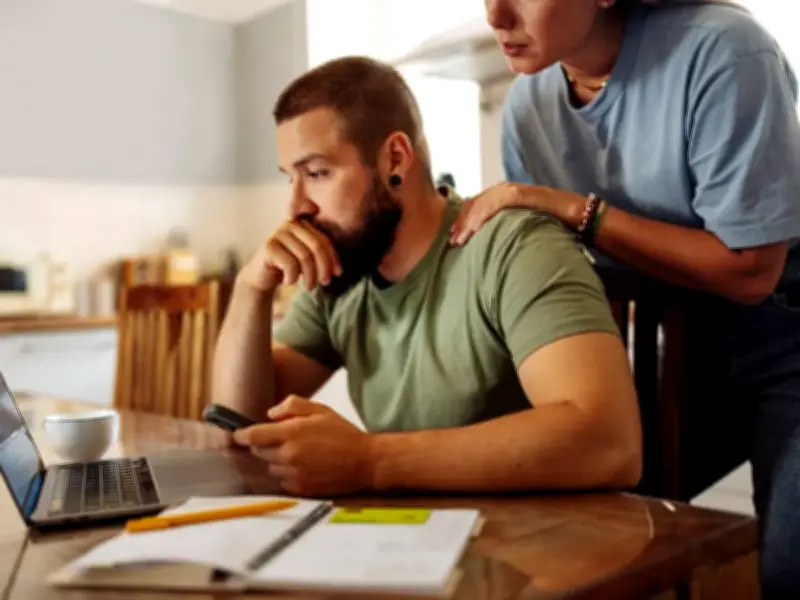
Nearly half of UK adults have made a financial decision on their own that they later regretted, and the silence that leads to such choices is costing Brits nearly £1,600 a year, new research has found.
A poll of 2,000 adults revealed that 46% had made a financial decision alone that they later regretted. As a result, they estimated they have lost an average of just over £394 across the last three months, totalling a potential £1,578 a year.
Holidays and credit purchases add to the cost
A third (32%) have gone on holidays or attended stag or hen dos they could not really afford to avoid embarrassment or disappointing others, spending an average of £543 on these types of events in the last six months.
21% have made a purchase using finance or credit without fully understanding the total cost, including interest and fees, increasing their final bill by £250 on average.
Pensions and family finances avoided
It also emerged that 37% have shied away from asking questions about their pensions because they feel too complicated to discuss. This silence about money extends to those closest to us, as 22% feel uneasy discussing earnings with family, while 17% feel the same with their close friends and 12% with their partner.
Embarrassment (20%) and fear of being judged (20%) are the most common reasons people avoid talking about money, as 40% admitted they worry about their savings more than they let on to others.
Encouraging open conversations
The study was commissioned by Nest, which has partnered with financial psychotherapist Vicky Reynal to talk about what has been dubbed the 'cost of silence', in a bid to encourage Brits to talk about income and understand their finances.
Vicky Reynal said: "Many of us know that we should ask more questions about money. But our inner critic convinces us that not knowing is a personal failing, rather than something almost everyone struggles with."
"So, to avoid the discomfort and protect our own self-image, we nod along, sign on the dotted line or say yes to things we can't afford."
"But this ends up costing us far more, financially and emotionally, than the temporary awkwardness of asking and talking about it."
"A good place to start is with a specific question rather than a big confession. Asking a friend, 'how did you find your energy deal?' feels far less daunting than talking about your finances as a whole."
More than half (54%) of UK adults would be more likely to talk about money if they knew it could help them avoid costly mistakes, according to research by OnePoll.
Access to clear, jargon-free financial information (53%) and conversation starters (39%), as well as seeing people talk more openly about their finances (41%), would help people feel more comfortable discussing money.
It also emerged that 34% have saved earnings or avoided a financial mistake after speaking to someone first. Of those, 51% felt more confident in their choice after discussing it, while 41% felt relieved and more in control of their money.
Nearly a third (32%) found talking about money was much easier than they expected, and a quarter (25%) wished they had brought it up sooner.
Deborah Perkins, member proposition director at Nest Pensions, said: "Money is still a huge taboo for us Brits, and while this silence can feel like the easy option in the moment, it comes at a cost, sometimes immediately and sometimes down the line."
"Every unasked question and avoided conversation adds up, whether that's a purchase made without understanding the full cost or feeling too embarrassed to say no to something out of budget."
"You don't need to have all the answers to start the conversation. Speaking to someone before making a financial decision, even just asking a question, could save you a lot of money."