Investors Grow Impatient Over $140 Million Ponzi Scheme Recovery
Seven months after the dramatic collapse of an alleged $140 million Ponzi scheme that reached the highest echelons of Republican politics in Georgia and Alabama, numerous investors are expressing growing frustration over the slow pace of recovering their lost funds.
Political Connections and Investor Desperation
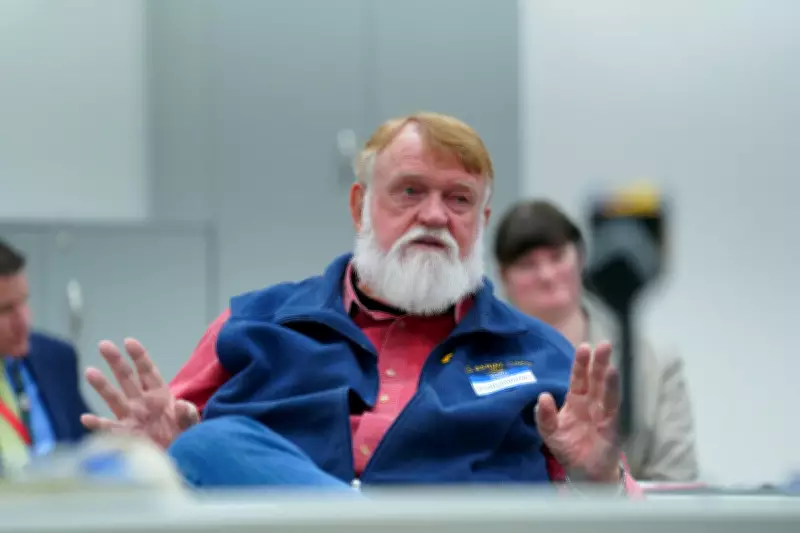
"We feel like we're never going to see it, as old as we are," stated Thomas Todd, a 77-year-old retired business owner, during a meeting with Georgia Secretary of State Brad Raffensperger on Monday. Todd revealed he lost $750,000 to First Liberty Building & Loan, money he had intended to use for funding Christian missions, which he described as "God's money."
The alleged scheme, led by Brant Frost IV who had decades of involvement in conservative political circles, promised investors "Wall Street returns for Main Street investors" with annual interest rates reaching up to 16%. According to a U.S. Securities and Exchange Commission lawsuit, Frost allegedly misappropriated $17 million for personal use, family members, and affiliated companies, while loaning millions more that borrowers never repaid.

Political Fallout and Regulatory Scrutiny
The collapse has created significant political ramifications, particularly as Raffensperger is currently campaigning for governor. His office's anti-fraud efforts could become a pivotal issue in May's Republican primary election. Meanwhile, Republican state lawmakers are advocating to transfer securities regulation responsibilities from Raffensperger's office to the Georgia Department of Banking and Finance, criticizing the secretary of state's securities division for failing to detect the wrongdoing before the company's collapse.
Among those affected by the scheme were entities connected to prominent Republican figures, including a company operated by former Georgia GOP Chairman David Shafer, Alabama State Auditor Andrew Sorrell, and a political action committee controlled by Sorrell. Many grassroots Republicans reportedly lost money, while others were attracted through advertisements on conservative talk shows hosted by figures like Erick Erickson, Hugh Hewitt, and Charlie Kirk.
Recovery Efforts and Financial Complexities
A federal court has appointed receiver Gregory Hays to manage the recovery process for defrauded investors. In a January 30 report, Hays detailed the immense challenge of piecing together 48,000 financial transactions while facing resistance from some borrowers attempting to retain real estate and other collateral pledged to secure loans.
As of December 31, Hays reported having $3.59 million in assets available. Subsequent efforts have included auctioning five luxury vehicles surrendered by the Frost family, generating nearly $139,000, and selling the First Liberty office in Newnan, an Atlanta suburb, for $581,000, though this transaction requires settling a $160,000 lien on the property first. Additionally, Frost's Patek Philippe watch was sold for $10,000.
Hays has also successfully recovered more than $300,000 from over 1,000 political donations made by the Frost family using investor funds exceeding $1 million, many of which supported far-right Republican insurgent candidates. However, Hays has already spent $412,000 on recovery efforts, costs that will ultimately be deducted from investor funds. He cautioned that asset recovery "will be an expensive and protracted process."
Regulatory Debate and Legislative Proposals
During a recent House Banks and Banking Committee hearing, Assistant Commissioner of Securities Noula Zaharis defended her department's efforts, explaining that Ponzi schemes are inherently difficult to detect because "schemes like this are set up to create an illusion and they are schemes that pay." She warned that transferring regulatory responsibilities on July 1, as proposed by House Bill 934, could disrupt ongoing regulatory activities.
Republican state Representative Carter Barrett of Cumming expressed skepticism about the current regulatory framework, stating, "I just don't really see a system or plan in place to preemptively identify these things and eliminate these bad actors before they get too far gone."

Raffensperger's office has recently appointed lawyer Jason Doss as an investigative agent and is advocating for new state legislation that would empower the office to order fraudsters to directly repay investors. Currently, the office is limited to pursuing civil actions against wrongdoers and sharing information with receivers and state and federal prosecutors.
The possibility of federal criminal charges remains uncertain, with a spokesperson for Atlanta U.S. Attorney Theodore Hertzberg declining to comment on Monday. As investors continue to await resolution, the case highlights ongoing tensions between regulatory oversight, political accountability, and the complex realities of financial fraud recovery.