

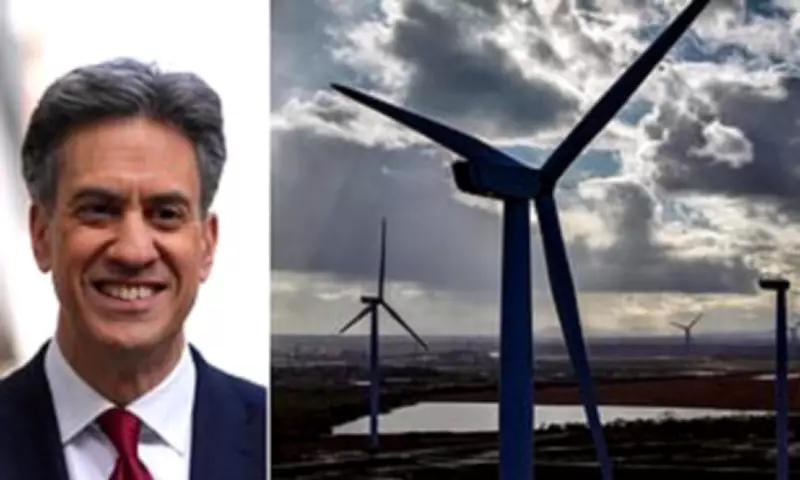
Labour's ambitious net zero strategy is facing significant scrutiny over potential national security implications. The government plans to tear up existing planning regulations to permit the construction of wind turbines reaching up to 100 feet, or 30 metres, in height near businesses, educational institutions, and agricultural operations without requiring formal planning permission.
Defence Radar Interference Concerns
While Energy Secretary Ed Miliband champions these measures as essential for achieving 95% clean power by 2030, defence experts have raised serious concerns about radar interference. The government itself has acknowledged that such wind turbines "can cause interference with radar and navigation systems" that are critical for missile defence operations.
Military Apprehensions
A senior defence source revealed to the Mail on Sunday that wind farms proposed under Miliband's programme interfere with radar-based defensive domes. The source indicated that government hesitation regarding investment in an 'Iron Dome' style missile defence system stems from the necessity to scale back wind farm development.

"Wind turbines present a major obstacle for anti-missile systems because of the impact they have on the radar needed to guide them," the defence source explained. The Royal Air Force has issued warnings that turbine blades reflect electromagnetic pulses emitted by radar equipment designed to detect incoming aircraft and missiles.
Technical Challenges
This reflection creates problematic background noise for system operators, with each turbine blade potentially generating false returns that could disrupt multiple sites simultaneously. Defence analysts fear that cluttered radar signals might enable enemy missiles to penetrate Britain's defensive systems undetected.
"We are really lagging behind other countries on this," another defence source stated. "Ministers keep saying, 'We have to be mindful of the cost implications, and there's lots of competition for resources.' Fine. But then what's the cost of a missile landing in the middle of London, Manchester or Birmingham? We are sitting ducks."
International Precedents
The United States paused construction of five wind farms in December due to "emerging national security risks" surrounding radar interference. Similarly, the Swedish government blocked more than a dozen offshore wind farm projects in 2024 over concerns they could interfere with missile detection systems, particularly amid heightened fears of Russian aggression.
Scale of Development
Miliband has committed to doubling England's onshore wind capacity to 29 gigawatts by 2030, allocating £1.1 billion annually for offshore wind developers. This ambitious target requires tripling current wind capacity and could lead to further relaxation of planning rules governing turbine construction.
The proposed 30-metre turbines would stand as tall as Rio de Janeiro's Christ the Redeemer statue and significantly exceed the 20-metre height of the Angel of the North sculpture. Under the new regulations, detached homeowners could install 15-metre turbines without planning permission, while 11.1-metre turbines could be placed in gardens or atop apartment buildings.
Government Response and Conditions
The Department for Energy Security and Net Zero has indicated that plans to permit turbine construction near sensitive locations would include "an extra condition" to mitigate risks of defence radar failure. The government maintains that these measures will enable businesses, schools, and farms to reduce energy costs and optimise land use.
Political Considerations
Additional complications arise from Labour's political positioning regarding international partnerships. While Israel leads in anti-drone technology with its Iron Dome system designed to intercept short-range rockets, the Starmer government faces internal party pressure regarding cooperation with Tel Aviv due to strong pro-Palestine sentiment within Labour ranks.

Defence Investment Context
A Ministry of Defence spokesperson emphasised ongoing commitments to British industry and innovation, noting 1,200 major contracts signed since July 2024 and plans to increase spending with small and medium enterprises by £2.5 billion by May 2028. The government has overseen what it describes as "the biggest uplift in defence spending since the Cold War," with £270 billion investment across the current parliamentary term.
The RAF has stated plainly: "We need to ensure that we can continue to operate safely." As Britain pursues ambitious renewable energy targets, balancing climate objectives with national security requirements presents a complex challenge for policymakers navigating competing priorities in an increasingly uncertain global security environment.





