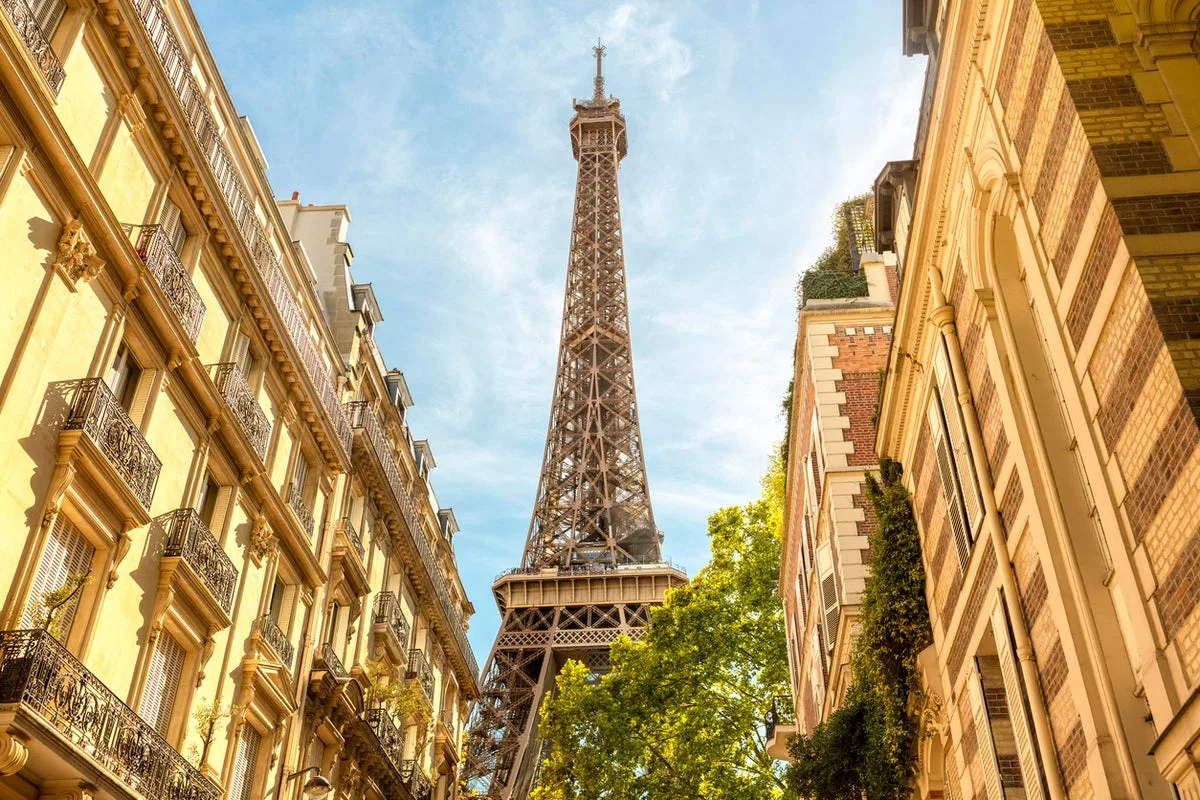
The Eiffel Tower, originally named the Tour de 300 mètres, was built for the 1889 World's Fair to mark the centenary of the French Revolution. Designed by engineers Maurice Koechlin and Émile Nougier under Gustave Eiffel's supervision, it was intended as a technological marvel and a record-breaking structure. However, during summer heatwaves, the tower grows even taller than its original 300-metre height due to thermal expansion.
Eiffel chose puddled iron for its construction, a material he knew well from previous projects. This ferrous material can withstand high stress, allowing for a large yet lightweight tower. The tower weighs 7,300 tonnes, comparable to the 6,300 tonnes of air it encloses. Like other lattice structures from the same period, such as the Garabit Viaduct and the Forth Bridge, the Eiffel Tower expands when temperatures rise.
Thermal expansion occurs because increased temperature causes atoms to vibrate more, increasing the average distance between them. The puddled iron and steel components have a coefficient of expansion of about 12x10⁻⁶ per degree Celsius. This means a one-metre iron bar expands by 12 microns for each degree rise. While this seems negligible, the tower's height of 300 metres and temperature swings of up to 100°C—from winter lows below -20°C to summer highs around 40°C, with metal surfaces possibly exceeding 70°C in direct sunlight—lead to noticeable growth.
Simple calculations show that a 300-metre iron bar would expand by about 0.36 metres (36 centimetres) for a 100°C temperature increase. Thus, on a hot summer day, the Eiffel Tower can become over 30 centimetres taller. This vertical expansion is more pronounced than in bridges, which experience complex movements, but the tower's simple triangular lattice allows it to grow mainly upward. Engineers account for this when maintaining the structure, ensuring it remains safe and functional despite the seasonal changes.