

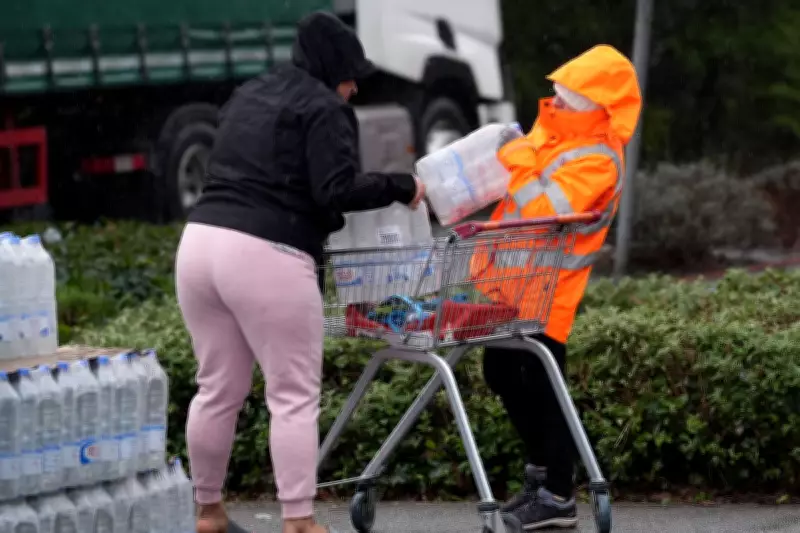
The chairman of South East Water has publicly admitted that the company failed in its fundamental duty to supply water to customers, following a series of severe outages that left thousands of households without drinking water for extended periods. Executives faced intense questioning from MPs on the Parliamentary Environment, Food and Rural Affairs Committee on Tuesday, scrutinising their handling of multiple supply interruptions across Kent and Sussex.
Widespread Disruption and Customer Hardship
Significant water supply failures have plagued the region in recent months. Tunbridge Wells experienced a sustained outage throughout November and December, affecting approximately 24,000 properties in and around the Kent town, where residents were deprived of drinkable water for nearly two weeks. Further disruptions struck thousands of properties in Kent and Sussex in January, with South East Water attributing the problems to Storm Goretti, which caused burst pipes and power cuts.
Customers endured severe hardship, lacking tap water for drinking, showering, bathing, and even flushing toilets. The crisis forced several schools to close, compounding the disruption for families. Chairman Chris Train told MPs unequivocally, "We failed on the basic objective of delivering water to customers and therefore that is a failure and we recognise that failure." He added, "We failed our customers."

Accountability and Leadership Under Scrutiny
Committee chairman Alistair Carmichael pressed Mr Train to rate his team's performance on a scale of one to ten, arguing that such accountability is essential from a non-executive director. Mr Train declined to provide a numerical score, describing the situation as "complex" but reiterated, "That degree of accountability is that we accept that we failed in our primary duty and we could have done better with all of the factors."
When challenged on why understanding the extent of the failure matters to customers, Mr Train stated, "Failure is failure, and we have failed, and what's important is that we as an organisation learn from that in order that we don't fail at any point in the future. It is absolutely untenable for customers to be without water."
Chief executive David Hinton, who previously rated the company's response to the November incident as eight out of ten, also refused to score the January outages. He admitted the performance was "disappointing," particularly as many vulnerable customers were left without alternative water supplies. "My expectation is that we deliver to all priority service customers and that the bottled water stations are completely resourced the whole time, and customers can get access to alternative water at all times. So whenever we do not meet that particular yardstick, then I'm disappointed," Mr Hinton said.
Bonus Surrender and Leadership Defence
Mr Train revealed to the committee that chief executive David Hinton, who receives a £400,000 annual salary, has surrendered any bonus the board might have awarded him this year. Despite this, MPs repeatedly questioned why there had been no changes to the leadership team, given the significant failings and widespread criticism from the Prime Minister, shareholders, customers, and various public and private bodies.
Asked how severe performance would need to become to trigger leadership changes, Mr Train defended the current team, stating, "We have looked as you would expect us to do at what the appropriate leadership of the organisation is going forward. The board has given its commitment and its backing to Dave and the executive team going forward as the right solution for delivering what is best for South East Water customers." He added that the firm is "bolstering" the executive with external hires to broaden leadership capabilities.

Pressed on eroding customer confidence in the leadership, Mr Train continued to defend the team, saying, "We are accountable for where we are. We as a board, we have to step back and ask the questions that you're asking. We have to look at the broad context of the organisation. We have to look at the context of the industry and the sector and we have to do what we think is best in the best interest of South East Water customers." Labour MP Jenny Ridell-Carpenter responded sharply, "We might be asking the right questions but you're coming up with the wrong answers."
Regulatory Action and Ongoing Skepticism
This parliamentary grilling follows Ofwat's announcement in March of plans to fine South East Water £22 million for water supply failures between 2020 and 2023, impacting over 286,000 people. The regulator found the company "lacked ownership" in addressing root causes, failed to maintain critical infrastructure, and responded in a "slow and disorganised" manner. The investigation highlighted shortages of bottled water, insufficient tankers, and inadequate support for vulnerable customers.
Mr Hinton was previously questioned by MPs about the November and December failures, but days later, Mr Carmichael expressed that he and his colleagues remained "deeply sceptical" about South East Water's version of events presented to the committee. The company has pledged to undertake actions to improve operational resilience following an independent review, but public trust remains a significant challenge.





