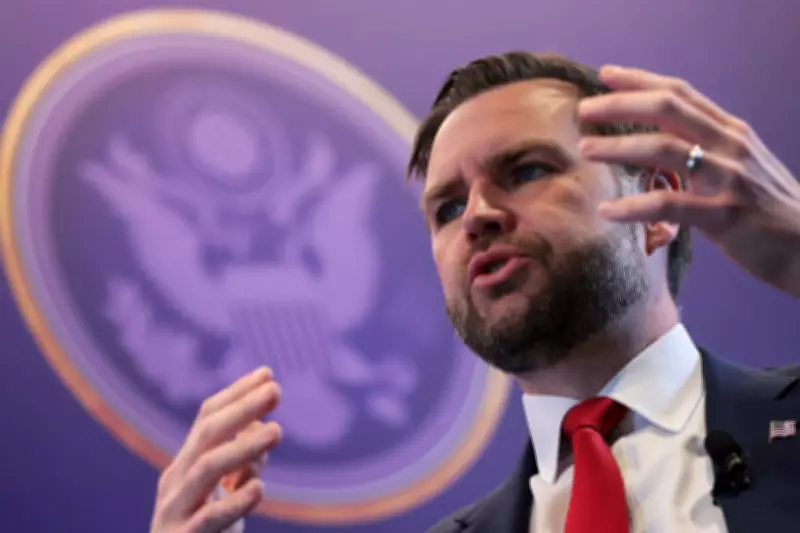
US Vice President JD Vance has launched a sharp critique of the United Kingdom's energy policy, labelling the nation's gas and electricity costs as a "scandal" that leaves middle-class citizens struggling. Speaking at an election rally in Hungary on Wednesday, Vance asserted that hardworking Britons "can't afford to heat their home, can't afford to transport themselves to work" because governmental decisions have made energy prohibitively expensive.
Vance's Claims Amid Global Energy Turmoil
Vance's remarks come against a backdrop of soaring global energy prices, which have been significantly driven by the conflict in Iran initiated under former US President Donald Trump. Tehran's retaliation, including the closure of the Strait of Hormuz, triggered a blockade that sent oil and gas costs skyrocketing worldwide. Although a recent two-week conditional ceasefire caused oil prices to fall by 14 per cent, households across the UK and beyond continue to face steep increases in energy and fuel bills.
Despite this context, Vance placed blame squarely on the UK government, stating, "If you look at the cost of electricity in the United Kingdom, which is way underinvested in their energy resources, UK families are paying four times, five times, six times what United States citizens are paying for electricity." He added that lower US costs result from "smart decisions," urging British leadership to change course.

Impact on UK Consumers and Economy
The practical effects of the energy crisis are already evident in the UK. On Wednesday, the average price of diesel surpassed 190p per litre, marking a surge of more than a third since the onset of the Iran war. Industry leaders warn that inflation will continue to rise in the coming weeks, with the Food and Drink Federation predicting grocery inflation could hit 9-10 per cent later this year. Wider UK inflation is also tipped to approach 4 per cent in the second half of 2026, compounding financial pressures on consumers.
Political Pressure Over North Sea Drilling
Vance's comments follow repeated calls from Donald Trump for UK Prime Minister Sir Keir Starmer to expand domestic oil and gas drilling in the North Sea. Trump has accused the government of making it "impossible" for oil companies to develop these reserves, noting that the UK now produces just one-third of the energy it did in 1999. He highlighted the North Sea as "one of the greatest reserves anywhere in the world," linking underuse to "catastrophically low" energy levels and high prices.
This issue has intensified pressure on Starmer's administration, with apparent divisions within his own cabinet over whether to permit more drilling. Last week, the government denied reports that Energy Secretary Ed Miliband would approve the first major North Sea field project in nearly a decade. However, Chancellor Rachel Reeves expressed willingness to support exploration at sites like Rosebank and Jackdaw. Meanwhile, opposition parties, including the Conservatives and Reform UK, have joined calls to boost North Sea oil and gas supplies to alleviate the crisis.
A Controversial Omission in Vance's Critique
Critics point out that Vance's assessment notably omits the role of US foreign policy in exacerbating the energy price surge. By focusing solely on UK governmental decisions, he overlooks how Trump's war in Iran directly contributed to global market disruptions. This selective framing has sparked debate about the transparency of political narratives surrounding energy affordability and international conflicts.
As the UK grapples with these challenges, the interplay between domestic policy, global events, and political rhetoric remains a key factor in shaping public perception and economic outcomes. The ongoing energy crisis underscores the complex dynamics at play, with implications for households, industries, and political stability in the months ahead.