

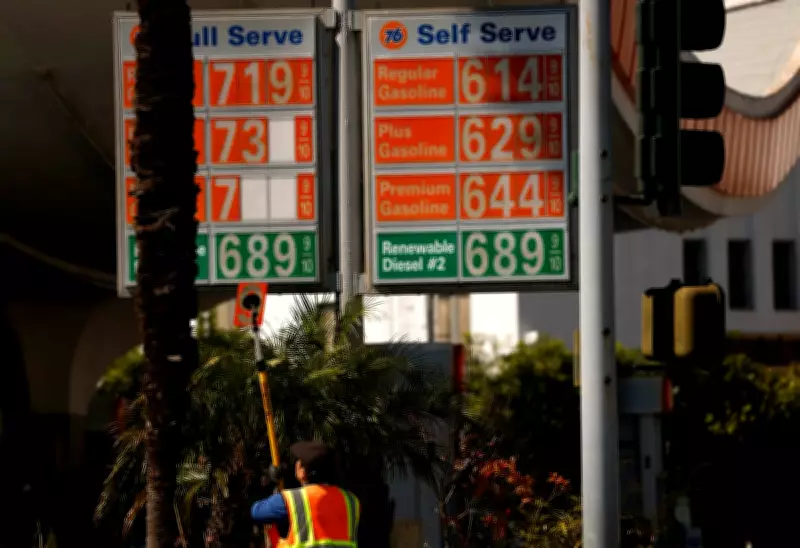
Petrol prices across the United States are experiencing unprecedented volatility and sharp increases as the military conflict between the US-Israel coalition and Iran enters its third consecutive week. The ongoing hostilities have severely disrupted critical oil infrastructure and shipping routes in the Middle East, sending shockwaves through global energy markets and directly impacting American consumers at the fuel pump.
Analysts Predict Further Price Hikes at the Pump
Leading petroleum analyst Patrick De Haan stated on Monday that the national average cost for regular gasoline could climb to between $3.80 and $3.85 per gallon. He further cautioned that the psychologically significant threshold of $4 per gallon remains a distinct possibility in the near future, depending on how the conflict evolves. The price for diesel fuel, which is essential for commercial trucking and rail transport, is projected to reach an even steeper range of $5.05 to $5.15 per gallon nationwide.
Dramatic Regional Variations in Fuel Costs
While the national average has risen sharply, certain regions of the country are facing far more severe price inflation. According to data from Consumer Reports, California has been particularly hard-hit, with state-wide averages exceeding $5 per gallon. In some areas of Los Angeles, individual service stations have been reported charging consumers in excess of $8 per gallon, placing a significant strain on household budgets and local economies.

The surge represents a dramatic acceleration from late February. On February 28th, just before the initial US and Israeli strikes on Iran, the national average for regular gasoline sat comfortably below $3 per gallon. In the approximately three weeks since, that average has skyrocketed to $3.70, marking a staggering 23 percent increase in a remarkably short timeframe.
Global Oil Markets in Turmoil
The root cause of the price spike lies in the turmoil engulfing global oil markets. Brent crude, the international benchmark for oil prices, experienced significant volatility, briefly climbing to $106 per barrel early Monday before retreating to around $103. Similarly, US crude oil prices, after touching $100 per barrel on Sunday, fell back to approximately $94 by mid-morning.
This instability is a direct consequence of military actions threatening key energy assets. Recent US strikes targeted Kharg Island, a vital oil processing and export hub for Iran. Compounding the crisis, Tehran has continued its strategy of blocking commercial shipping through the Strait of Hormuz, a critical maritime chokepoint through which roughly one-fifth of the world's internationally traded oil supply normally flows.
Industry Leaders Voice Concerns to White House
The situation has grown so concerning that top executives from major oil corporations have reportedly issued stark warnings to White House officials. According to reports from the Wall Street Journal, these industry leaders expressed deep anxiety that the blockade of the Strait of Hormuz could lead to a severe worsening of market conditions.
ExxonMobil CEO Darren Woods cautioned that prices could continue their upward trajectory if supply issues emerge for refined petroleum products. He also highlighted the risk of market speculators exacerbating price increases. Executives from other energy giants, including ConocoPhillips and Chevron, echoed these concerns about the broadening disruption to global energy supplies.
Financial Markets React to Energy Uncertainty
The fluctuating oil prices have contributed to a jittery atmosphere on Wall Street. US stock markets opened higher on Monday following a brief dip in crude prices, with the S&P 500 index rising approximately one percent by 11:00 AM Eastern Time. While shares in major petroleum companies showed only minor fluctuations during the morning's trading, the overall trend since the conflict began has seen these stocks reach all-time highs, reflecting the increased value and strategic importance of energy assets during the crisis.

As the war in Iran shows no immediate signs of abating, American drivers and the broader economy face the prospect of sustained high fuel costs. The interconnectedness of global energy supply chains means that geopolitical instability thousands of miles away continues to have a direct and palpable impact on everyday life and economic stability in the United States.





